 Bug FAQ
Eastern Comma
Polygonia comma · Order: Lepidoptera · Family: Nymphalidae
Also called: Common Anglewing

It lives near water sources such as woods, ponds, and marshes, feeds on sap, rotting fruit, salts, minerals, and dung, while its caterpillars eat a variety of trees and shrubs. Adults overwinter in the winter form or migrate south, and the species can be confused with similar commas, but the shape of the comma mark helps tell them apart.
Source: Wikipedia
What it eats
Adults rarely visit flowers; they obtain nutrients from sap, rotting fruit, salts, minerals, and dung. Caterpillars feed on a range of host plants including birch, hackberry, hops, nettles, currants, gooseberries, basswood, elm, and clearweed.
Source: Wikipedia
Life cycle
Females lay green eggs singly or in small clusters under host-plant leaves and stems. Winter-form adults overwinter, and some individuals migrate south for the winter.
Source: Wikipedia
Where it comes from
Native to North America, belonging to the Nymphalidae family, subfamily Nymphalinae.
Source: Wikipedia
Lookalikes
The dark form can be mistaken for the dark form of the Question Mark butterfly, but the comma mark shape differs. The pale form may be confused with the Satyr Comma, which occurs more to the north and west.
Source: Wikipedia
Where it is found in the US
Recorded in 43 of 51 states and DC. Most records: Ohio, Illinois, Vermont, Pennsylvania, Virginia, Maryland, Michigan, New York.
Darker = more records. Counts are museum and citizen-science records, not population size.
Source: GBIF
Status: native in North America; native in Canada; native in United States. Source: iNaturalist
Months it is reported in the US
Source: GBIF
More photos
Questions people ask
Where can I find an Eastern Comma?
Look in wooded areas near water such as rivers, ponds, marshes, or swamps.
Source: Wikipedia
How can I tell it apart from similar butterflies?
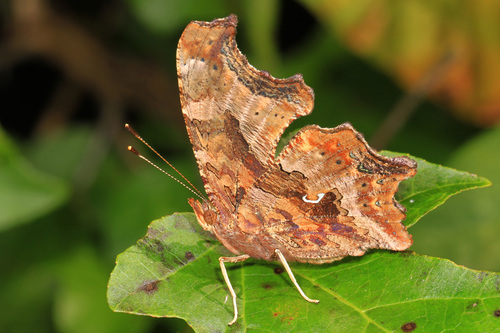
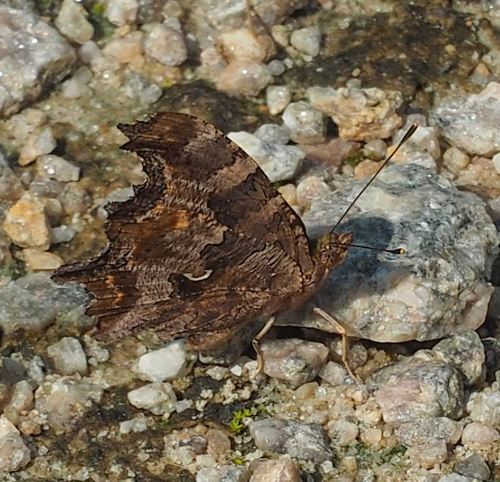
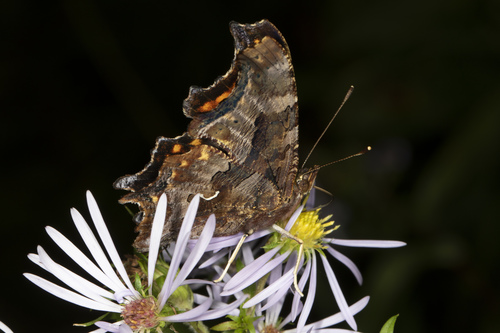
Check the shape of the silvery comma mark on the underside of the hindwing; it differs from the Question Mark and Satyr Comma species.
Source: Wikipedia
Same family (Nymphalidae)






Sources
- Wikipedia: https://en.wikipedia.org/wiki/Polygonia_comma
Look it up elsewhere: GBIF · iNaturalist · BugGuide · ITIS · Wikipedia
Text written 2026-10-22 from the sources above and checked sentence by sentence against them. Data fetched 2026-10-22.