 Bug FAQ
Eastern Beach Tiger Beetle
Habroscelimorpha dorsalis · Order: Coleoptera · Family: Carabidae
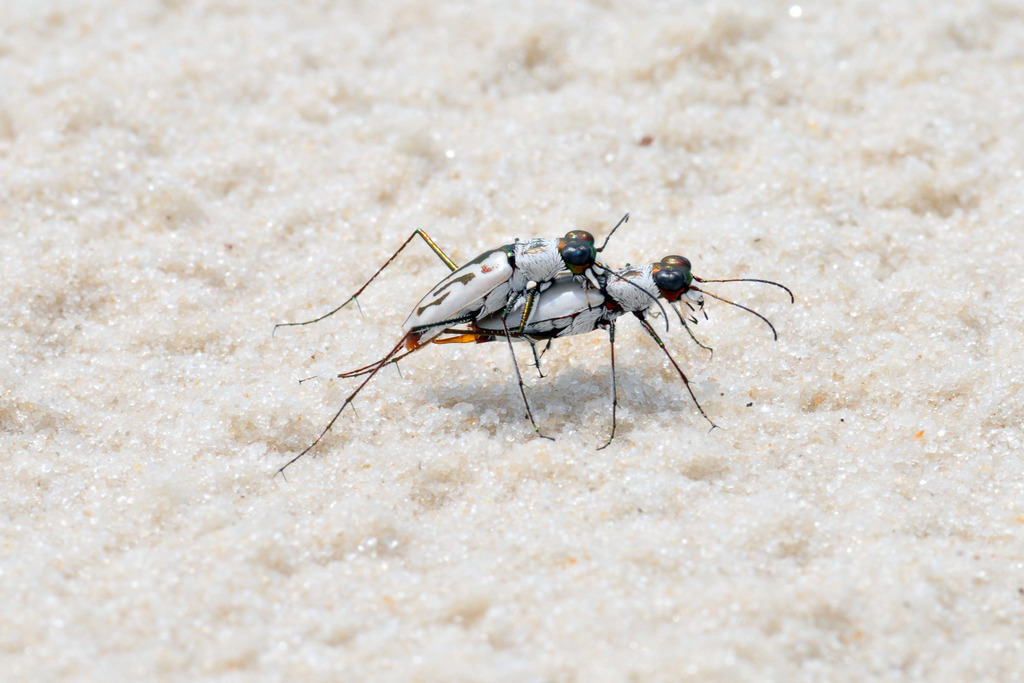
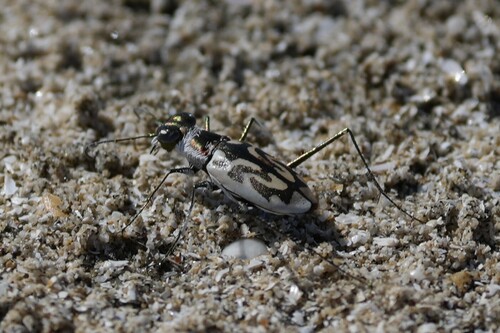
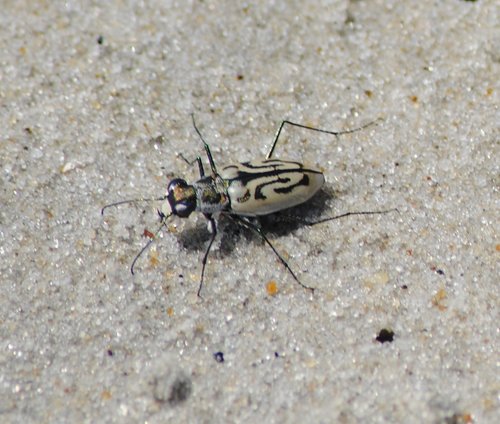
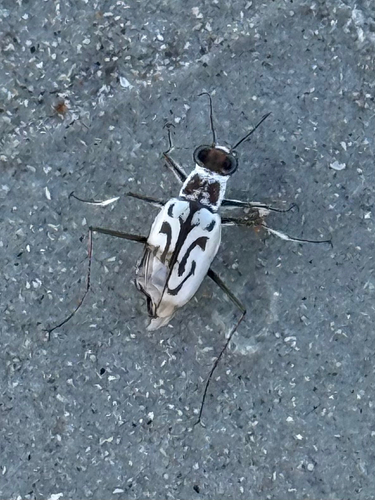
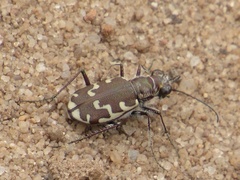
The eastern beach tiger beetle is 13 to 15 mm long and has a bronze-green head and thorax with long, slender legs; its wing covers are pale with narrow bronze markings that help it blend into light sand. It lives on broad, fine-sand beaches that are exposed to tides, prefers warm climates above 15 °C, and is found across Central and North America.
Source: Wikipedia
How to recognize it
Its pale colors let it hide on light sand.
Source: Wikipedia
Size
Adults measure 13 to 15 mm in length.
Source: Wikipedia
Where it lives
The species prefers climates where average temperatures exceed 15 °C and rainfall is moderate to arid.
Source: Wikipedia
What it eats
It eats small invertebrates such as flies, ants and amphipods, and will also scavenge dead fish and crabs.
Source: Wikipedia
Life cycle
The whole life cycle takes two years. After overwintering, adults emerge in late May-June, reach the third instar, overwinter again, then pupate the following spring and emerge as adults.
Source: Wikipedia
When you see it
Adults appear from mid-June to mid-August, peak in mid-July, and decline by September. Mating occurs from mid-July to early August when weather is warm and humid.
Source: Wikipedia
Where it comes from
It occurs in Central America and North America.
Source: Wikipedia
Where it is found in the US
Recorded in 18 of 51 states and DC. Most records: Florida, Virginia, South Carolina, Georgia, Maryland, New York, Texas, North Carolina.
Darker = more records. Counts are museum and citizen-science records, not population size.
Source: GBIF
Status: native in North America; native in United States. Source: iNaturalist
Months it is reported in the US
Source: GBIF
More photos
Questions people ask
When can I expect to see adult eastern beach tiger beetles?
Adults show up from mid-June through mid-August, with the highest numbers in mid-July.
Source: Wikipedia
What do eastern beach tiger beetles eat?
They hunt small invertebrates like flies, ants and amphipods, and will also scavenge dead fish and crabs.
Source: Wikipedia
Where does this beetle live?
It lives on broad, fine-sand beaches that are exposed to tidal action and prefers warm, moderately dry climates.
Source: Wikipedia
Same family (Carabidae)


Sources
- Wikipedia: https://en.wikipedia.org/wiki/Habroscelimorpha_dorsalis
Look it up elsewhere: GBIF · iNaturalist · BugGuide · ITIS · Wikipedia
Text written 2026-10-23 from the sources above and checked sentence by sentence against them. Data fetched 2026-10-23.