 Bug FAQ
Early Bumble Bee
Bombus pratorum · Order: Hymenoptera · Family: Apidae
Also called: Early Humble-Bee, Early-Nesting Humble-bee
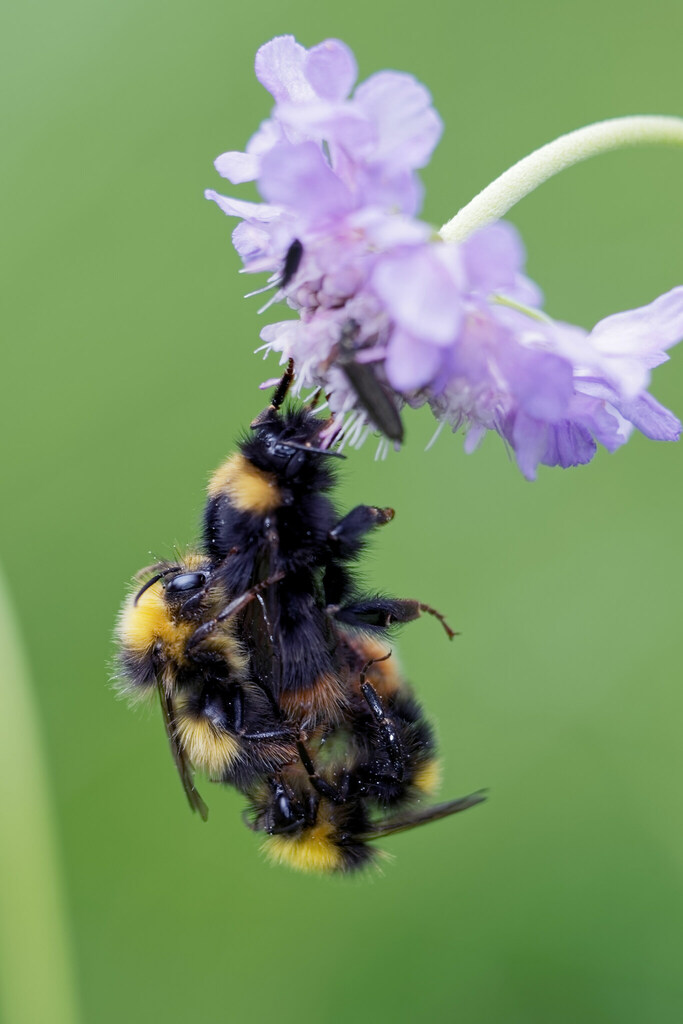
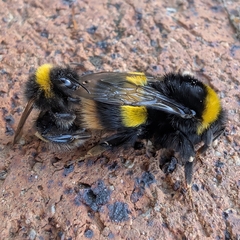
The early bumblebee is a small species found across most of Europe and parts of Asia, nesting above ground in places like bird or abandoned rodent nests. Queens are black with yellow collars and a red tail; workers look similar but often lack the abdominal yellow band, while males have a broader yellow collar and also a red tail.
Source: Wikipedia
How to recognize it
Queens are black with a yellow band around the thorax and another on the first abdominal segment, plus a red tail; males have a wider yellow collar, yellow on the first two abdominal segments and a red tail; workers resemble queens but often miss the abdominal yellow band.
Source: Wikipedia
Size
Queens measure 15 to 17 mm long, workers 10 to 14 mm, and males 11 to 13 mm.
Source: Wikipedia
Where it lives
They live in many open habitats such as fields, parks, scrubland and light forest, building nests above ground often in bird nests or abandoned rodent nests.
Source: Wikipedia
What it eats
They pollinate a variety of short-corolla flowers like white clover, thistles, sage, lavender, asters, cotoneaster and Allium, and they are not picky about nectar sources.
Source: Wikipedia
Life cycle
Queens emerge from hibernation in early spring, already fertilized from the previous summer, and start new colonies; some may skip hibernation and produce a second generation in a year.
Source: Wikipedia
When you see it
Adults are on the wing from March to July, and in milder southern areas they can appear as early as February.
Source: Wikipedia
Where it comes from
The species is widely distributed across most of Europe and parts of Asia.
Source: Wikipedia
Lookalikes
They share many traits with other Bombus species, including monandrous mating and pollen collection, and are distinguished from related stingless bees by male genitalia features.
Source: Wikipedia
Where it is found in the US
Recorded in 1 of 51 states and DC. Most records: Illinois.
Darker = more records. Counts are museum and citizen-science records, not population size.
Source: GBIF
Questions people ask
Are they a garden pest?
They are good pollinators and not reported to damage plants or crops.
Source: Wikipedia
Same family (Apidae)


Sources
- Wikipedia: https://en.wikipedia.org/wiki/Early_bumblebee
Look it up elsewhere: GBIF · iNaturalist · BugGuide · ITIS · Wikipedia
Text written 2026-10-22 from the sources above and checked sentence by sentence against them. Data fetched 2026-10-22.