 Bug FAQ
Drake Mackerel
Ephemera vulgata · Order: Ephemeroptera · Family: Ephemeridae
Also called: Drake Mackerel Mayfly

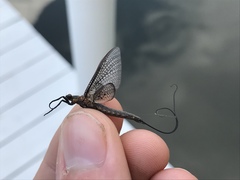
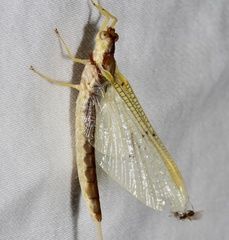
The drake mackerel is a mayfly that looks duller and is a bit smaller than the similar green drake (Ephemera danica). It breeds in slow-moving rivers and still waters such as ponds and is found across most of Europe. Its nymphs live in sediment rich in organic matter, and in polluted sites they can accumulate heavy metals.
Source: Wikipedia
How to recognize it
The wings show heavy veining and each abdominal segment has a pair of dark side markings.
Source: Wikipedia
Size
Adults and subimagos are slightly smaller and have a duller colour than the green drake.
Source: Wikipedia
Where it lives
It mainly breeds in sluggish rivers and still waters like ponds.
Source: Wikipedia
Life cycle
The species typically has a two-year life cycle, with the nymph stage lasting most of that time and the adult living only briefly in summer.
Source: Wikipedia
When you see it
Swarming occurs from June to August, usually in the morning and evening, and is influenced by temperature and cloud cover.
Source: Wikipedia
Where it comes from
It occurs throughout most of Europe.
Source: Wikipedia
More photos


Questions people ask
When are drake mackerel mayflies active?
They swarm between June and August, mainly in the morning and evening, depending on temperature and cloud cover.
Source: Wikipedia
Same family (Ephemeridae)




Sources
- Wikipedia: https://en.wikipedia.org/wiki/Ephemera_vulgata
Look it up elsewhere: GBIF · iNaturalist · BugGuide · Wikipedia
Text written 2026-10-23 from the sources above and checked sentence by sentence against them. Data fetched 2026-10-22.