 Bug FAQ
Emergent Mayfly
Hexagenia bilineata · Order: Ephemeroptera · Family: Ephemeridae
Source: Wikipedia
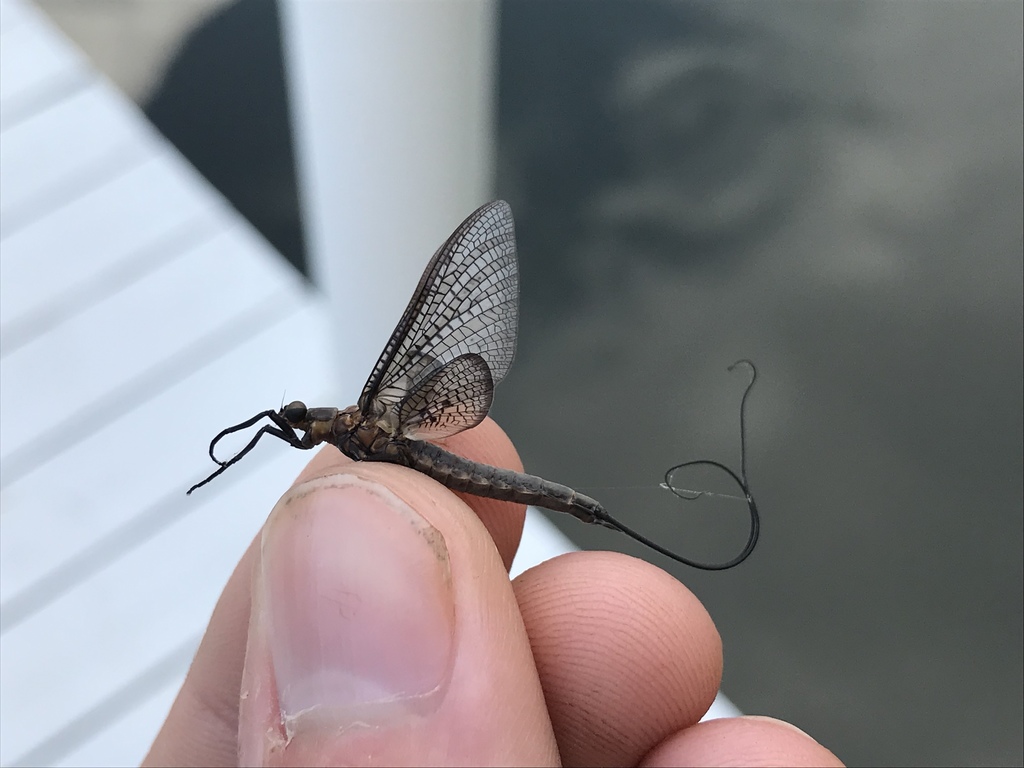
Adult Emergent Mayflies appear in summer near still or slow water and males form dusk swarms. Nymphs live buried in mud and silt, filter organic detritus for food, and may emerge after 13-22 weeks depending on location.
Source: Wikipedia
How to recognize it
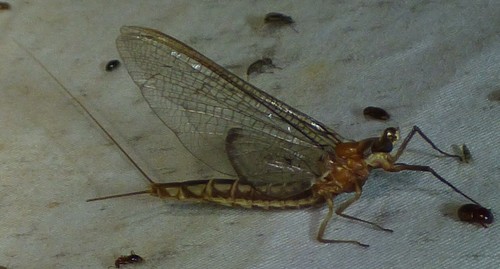
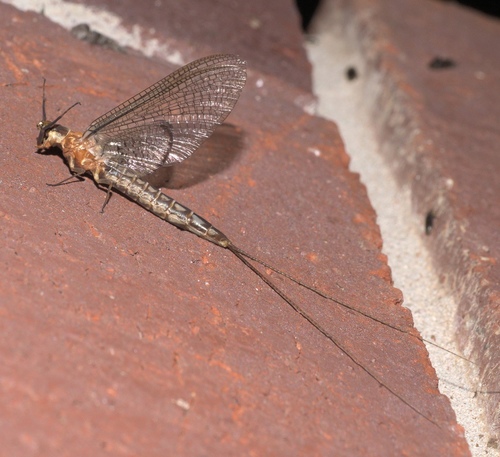
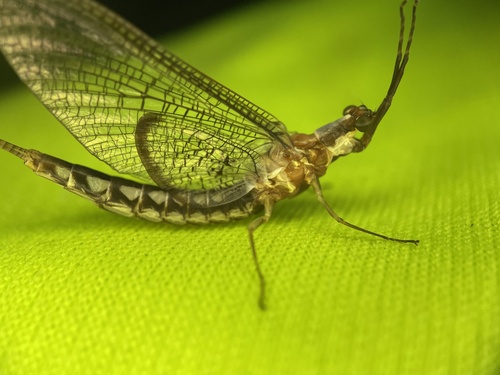
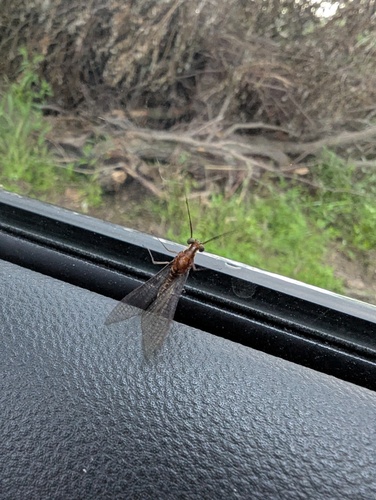
Subimagoes are more delicate, have transparent wings, longer slender legs, smooth cerci, larger eyes and a brown-cream patterned body.
Source: Wikipedia
Is it a pest in the house?
Large swarms can strip branches from riverside trees, cover houses and reduce visibility. They are attracted to lights and can accumulate in yards, on roads and bridges.
Source: Wikipedia
Where it lives
Adults are found near still or slow-moving water in summer. Nymphs burrow in mud and silt of shallow lakes and slow streams or rivers.
Source: Wikipedia
What it eats
They create a water current in the burrow to obtain oxygen and filter organic detritus for food.
Source: Wikipedia
Life cycle
In warm lab conditions it can develop from egg to adult in 13 weeks, but in the wild it usually has one generation per year, with some individuals taking 14-22 months.
Source: Wikipedia
When you see it
Adults appear in summer. Male imagos gather in dusk swarms.
Source: Wikipedia
Where it comes from
It is native to North America, especially the Upper Mississippi Valley.
Source: Wikipedia
Lookalikes
It is generally more abundant than Hexagenia limbata, which becomes more common north of Keokuk, Iowa.
Source: Wikipedia
Where it is found in the US
Recorded in 30 of 51 states and DC. Most records: Illinois, Kansas, Texas, Ohio, Georgia, Oklahoma, Alabama, Tennessee.
Darker = more records. Counts are museum and citizen-science records, not population size.
Source: GBIF
Status: native in North America; native in Canada; native in United States. Source: iNaturalist
Months it is reported in the US
Source: GBIF
More photos
Questions people ask
Why do mayflies swarm around my house?
Males gather in dusk swarms and are attracted to lights, so they can accumulate on houses and nearby structures.
Source: Wikipedia
When do they appear?
Adults emerge in summer, with males forming swarms around dusk.
Source: Wikipedia
Same family (Ephemeridae)


Sources
- Wikipedia: https://en.wikipedia.org/wiki/Hexagenia_bilineata
Look it up elsewhere: GBIF · iNaturalist · BugGuide · ITIS · Wikipedia
Text written 2026-10-22 from the sources above and checked sentence by sentence against them. Data fetched 2026-10-22.