 Bug FAQ
Douglas fir glow-worm
Pterotus obscuripennis · Order: Coleoptera · Family: Lampyridae
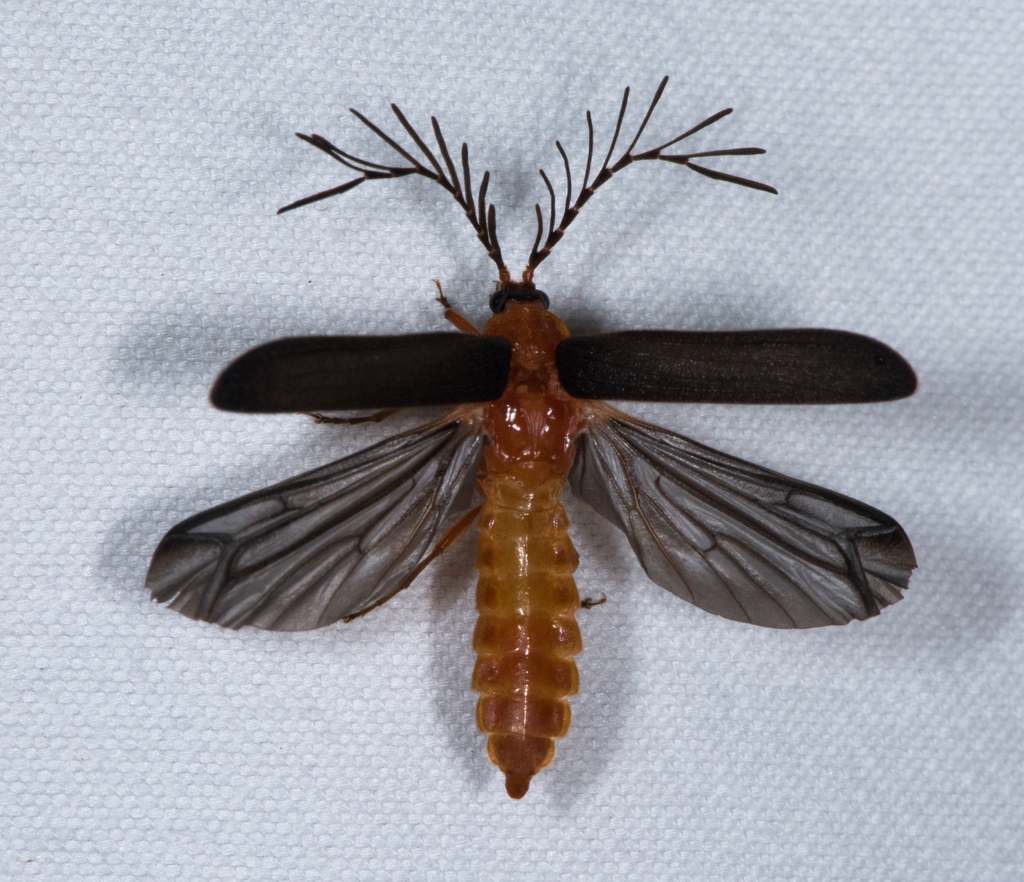
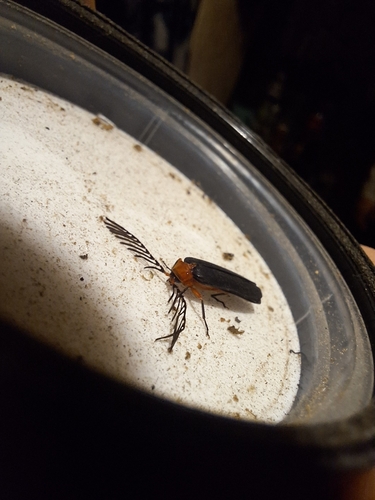
Adult males are small, winged and cannot produce light, while females are larger, wingless and look like larvae. The larvae are black with pale gaps, glow brightly while feeding, and hunt slugs and snails.
Source: Wikipedia
How to recognize it
Larvae are mostly black with cream-white spaces between segments and they produce light.
Source: Wikipedia
Size
Males are 9.5 to 12 mm long, have wings and can fly, and they do not glow. Females are 25 to 35 mm long, look like larvae, have no wings and cannot fly.
Source: Wikipedia
What it eats
Larvae feed on slugs and snails. After catching prey they use a tail appendage to wipe off the slug’s mucus.
Source: Wikipedia
Life cycle
While feeding, larvae glow brightly. They can survive up to three months without food. After a meal they hide and stay inactive for 2 to 20 days.
Source: Wikipedia
Where it comes from
Its native range is the western coast of North America, spanning Washington to California.
Source: Wikipedia
Where it is found in the US
Recorded in 5 of 51 states and DC. Most records: California, Oregon, Washington, Nevada, Arizona.
Darker = more records. Counts are museum and citizen-science records, not population size.
Source: GBIF
Status: native in North America; native in United States. Source: iNaturalist
Months it is reported in the US
Source: GBIF
More photos
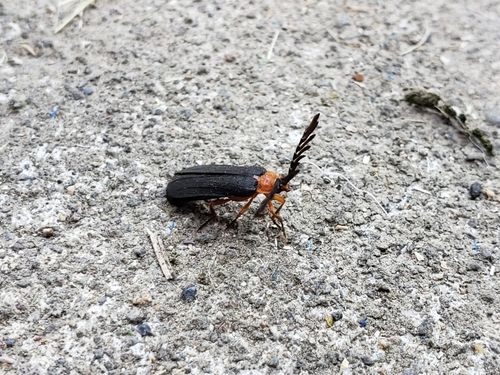
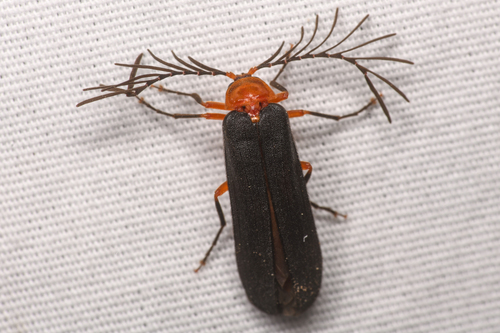
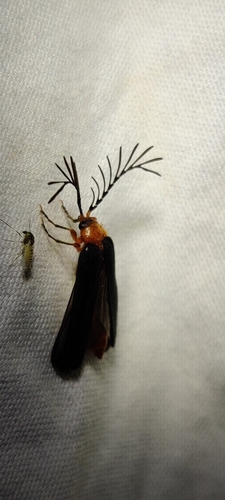
Questions people ask
What do the larvae eat?
The larvae prey on slugs and snails, cleaning off the mucus with a tail appendage.
Source: Wikipedia
Same family (Lampyridae)


Sources
- Wikipedia: https://en.wikipedia.org/wiki/Pterotus_obscuripennis
Look it up elsewhere: GBIF · iNaturalist · BugGuide · ITIS · Wikipedia
Text written 2026-10-25 from the sources above and checked sentence by sentence against them. Data fetched 2026-10-25.