 Bug FAQ
Double Cousin Firefly
Photinus consanguineus · Order: Coleoptera · Family: Lampyridae
Also called: Consanguineous Firefly
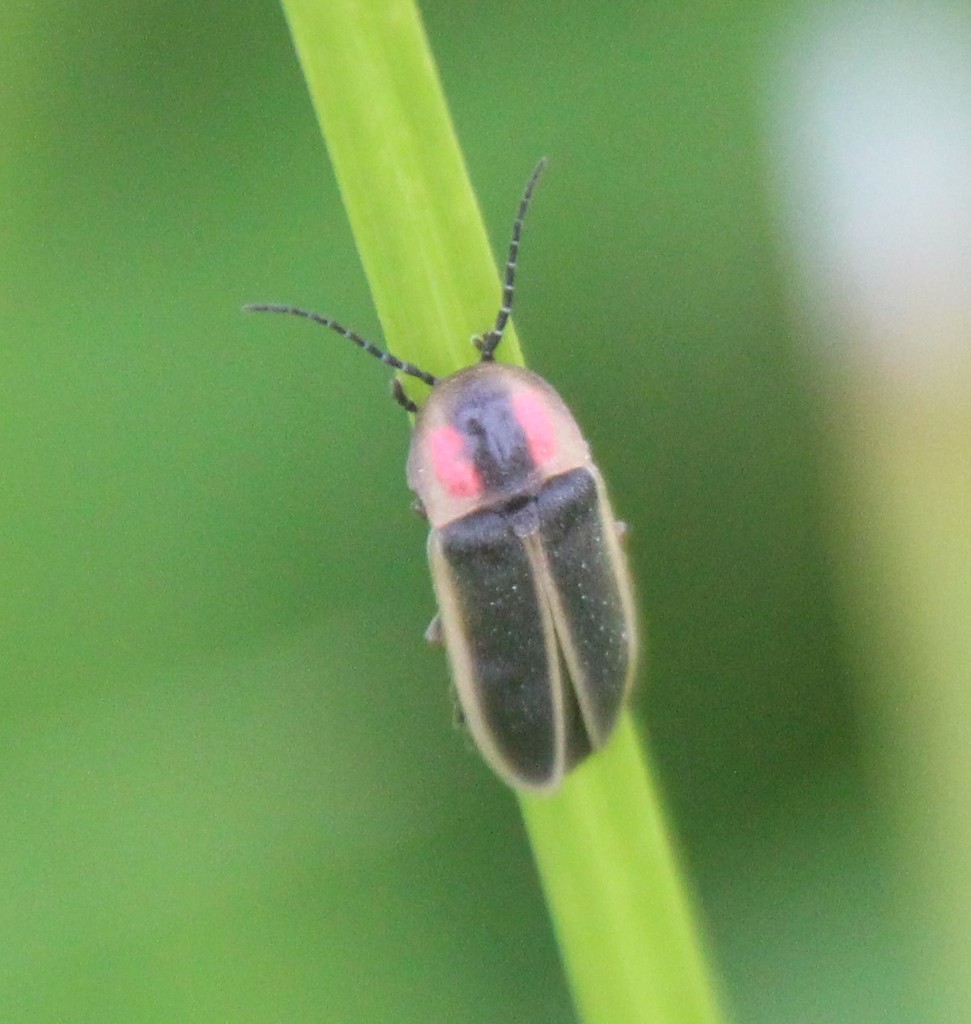
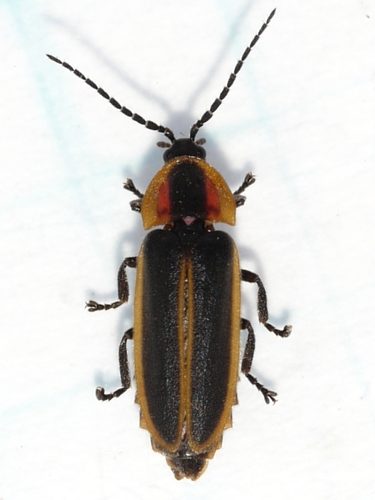
Photinus consanguineus is a medium-sized firefly about 10 mm long, with a pale yellow pronotum marked by a black rectangle edged in red or pink and dark elytra that have light-colored margins. Adults live in the eastern United States from Texas eastward and in parts of eastern Canada, while the larvae live underground, are bioluminescent, and feed on soft-bodied invertebrates. Males fly 0.5 to 1.5 m above ground and flash to attract females, and the species is easily confused with Photinus macdermotti and Photinus greeni.
Source: Wikipedia
How to recognize it
The pronotum is pale yellow with a central black rectangle outlined in red or pink. The elytra are dark with distinct light-colored margins.
Source: Wikipedia
Size
Adults are about 10 mm (0.4 in) long.
Source: Wikipedia
Where it lives
Larvae live below the soil surface, are bioluminescent, and eat snails, worms, and other soft-bodied invertebrates.
Source: Wikipedia
Life cycle
The species undergoes four stages: egg, larva, pupa, and adult. Most of its life is spent as a bioluminescent larva living underground and feeding on soft-bodied invertebrates.
Source: Wikipedia
When you see it
Adult males fly 0.5 to 1.5 m above ground and flash to attract females.
Source: Wikipedia
Where it comes from
It occurs in the eastern United States from Texas eastward and in eastern Canada, including Manitoba, Nova Scotia, and Ontario.
Source: Wikipedia
Lookalikes
It looks almost identical to Photinus macdermotti and Photinus greeni.
Source: Wikipedia
Where it is found in the US
Recorded in 20 of 51 states and DC. Most records: Massachusetts, New Jersey, Pennsylvania, New York, Florida, Ohio, Louisiana, Texas.
Darker = more records. Counts are museum and citizen-science records, not population size.
Source: GBIF
Months it is reported in the US
Source: GBIF
More photos
Questions people ask
What does Photinus consanguineus look like?
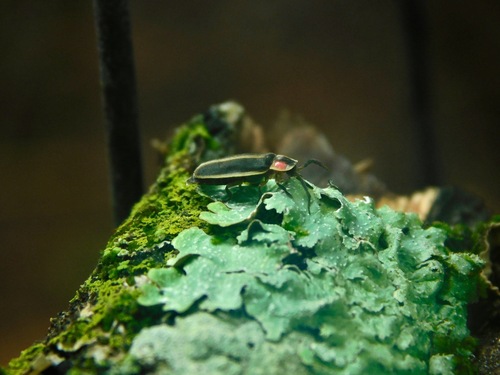
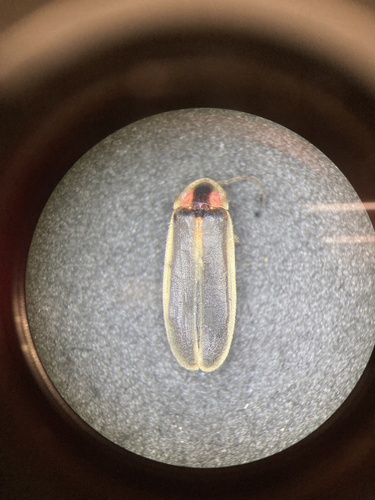
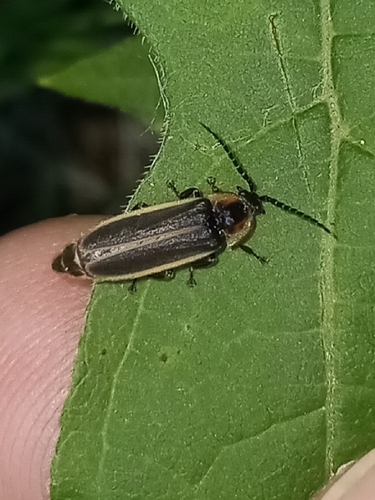
It has a pale yellow pronotum with a black rectangle edged in red or pink and dark elytra with light margins.
Source: Wikipedia
Where are they found?
They live in the eastern United States from Texas eastward and in eastern Canada, including Manitoba, Nova Scotia, and Ontario.
Source: Wikipedia
When are the adults active?
Adult males fly 0.5 to 1.5 m above ground and flash to attract females.
Source: Wikipedia
Same family (Lampyridae)


Sources
- Wikipedia: https://en.wikipedia.org/wiki/Photinus_consanguineus
Look it up elsewhere: GBIF · iNaturalist · BugGuide · ITIS · Wikipedia
Text written 2026-10-28 from the sources above and checked sentence by sentence against them. Data fetched 2026-10-28.