 Bug FAQ
Double-banded Carpenter Bee
Xylocopa caffra · Order: Hymenoptera · Family: Apidae
Also called: Banded Large Carpenter Bee, Doubleband Carpenter Bee, White-banded Large Carpenter Bee, Yellow Banded Large Carpenter Bee
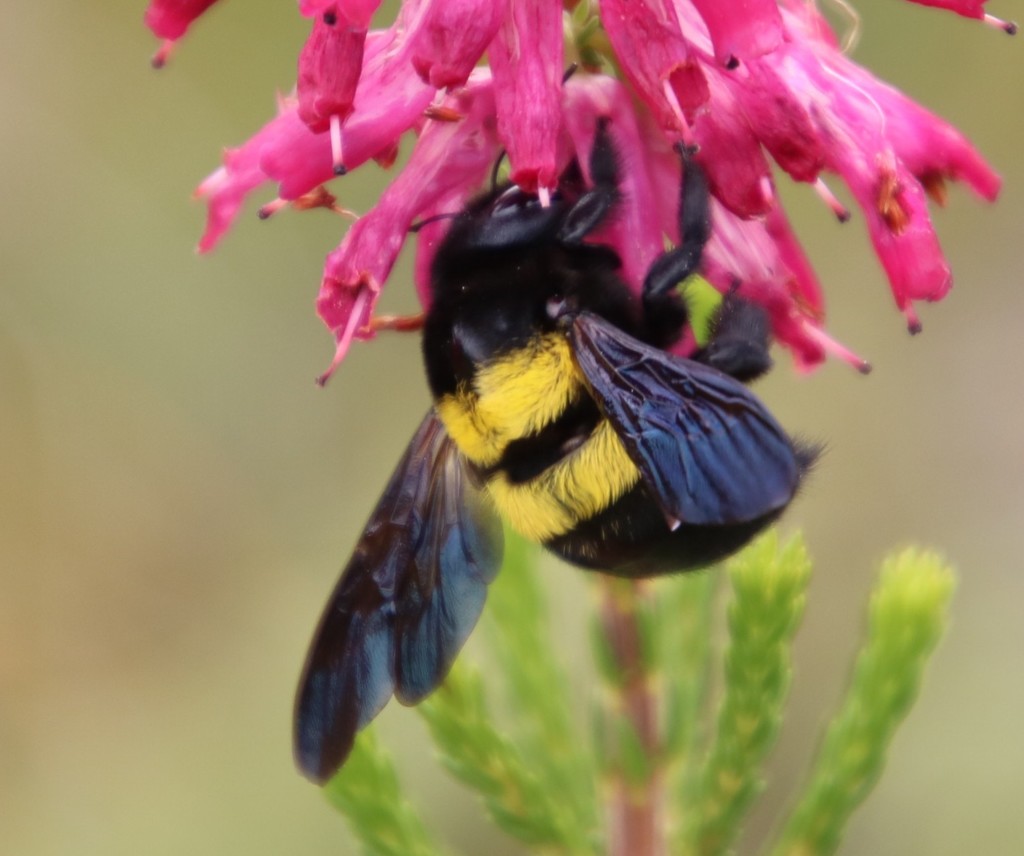
They live in many habitats from moist coasts to dry savannahs, nesting solitary in Aloe, Agave, tree branches or timber. They are Afrotropical, ranging across west, central and southern Africa, Madagascar and some Indian Ocean islands.
Source: Wikipedia
How to recognize it
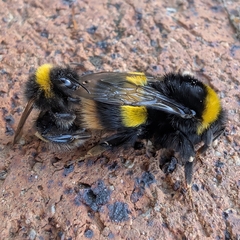
Females have two white or yellow bands on the hind thorax and first abdominal segment; males are uniform greenish-yellow.
Source: Wikipedia
Where it lives
Found in moist coastal settings to dry savannahs.
Source: Wikipedia
What it eats
Adults use many plants for nectar and pollen.
Source: Wikipedia
Life cycle
Females carry phoretic mites in an abdominal chamber called the acarinarium.
Source: Wikipedia
Where it comes from
Occurs from west to central and southern Africa, plus Madagascar and some Indian Ocean islands.
Source: Wikipedia
Same family (Apidae)


Sources
- Wikipedia: https://en.wikipedia.org/wiki/Xylocopa_caffra
Look it up elsewhere: GBIF · iNaturalist · BugGuide · ITIS · Wikipedia
Text written 2026-10-23 from the sources above and checked sentence by sentence against them. Data fetched 2026-10-22.