 Bug FAQ
Ditch Jewel
Brachythemis contaminata · Order: Odonata · Family: Libellulidae
Also called: Common Amberwing
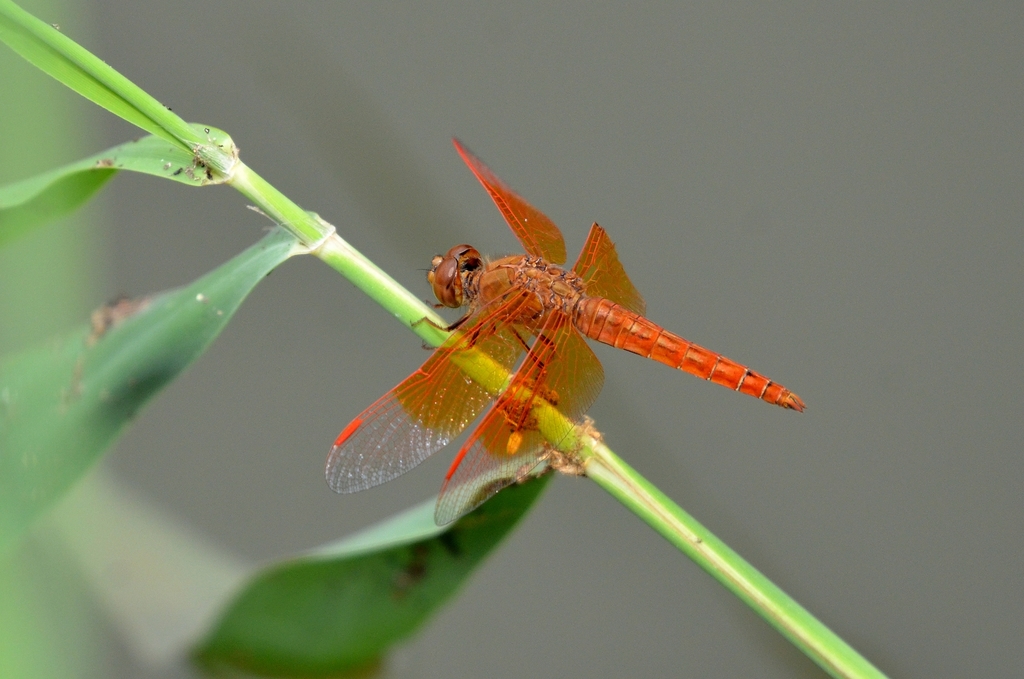
The ditch jewel is a small dragonfly with brown-capped yellow-green eyes and an olivaceous-brown thorax marked with reddish and brown stripes. Males have transparent wings with a bright orange band near the base, while females lack the orange band and are paler yellow-green. It lives in weedy, slow-moving waters such as ponds, lakes, sewage canals and ditches across many Asian countries.
Source: Wikipedia
How to recognize it
The thorax is olive-brown with a reddish-brown stripe on the humeral area and two brown stripes on each side. Males have transparent wings with a broad bright orange band from the base to near the pterostigma; females have transparent wings tinted yellow at the extreme base and lack the orange band. The abdomen is ochre-red with dorsal and sub-dorsal brown stripes.
Source: Wikipedia
Where it comes from
It occurs in many Asian countries.
Source: Wikipedia
Lookalikes
Females look like males but are paler yellow-green.
Source: Wikipedia
More photos


Questions people ask
Where can I find ditch jewels?
They are common in slow-moving, weed-filled waters such as ponds, lakes, sewage canals and ditches across Asia.
Source: Wikipedia
How can I tell male and female ditch jewels apart?
Males have a bright orange band on their transparent wings; females lack this band and are a paler yellow-green.
Source: Wikipedia
Same family (Libellulidae)

Sources
- Wikipedia: https://en.wikipedia.org/wiki/Brachythemis_contaminata
Look it up elsewhere: GBIF · iNaturalist · BugGuide · Wikipedia
Text written 2026-10-22 from the sources above and checked sentence by sentence against them. Data fetched 2026-10-22.