 Bug FAQ
Dingy Fritillary
Clossiana improba · Order: Lepidoptera · Family: Nymphalidae
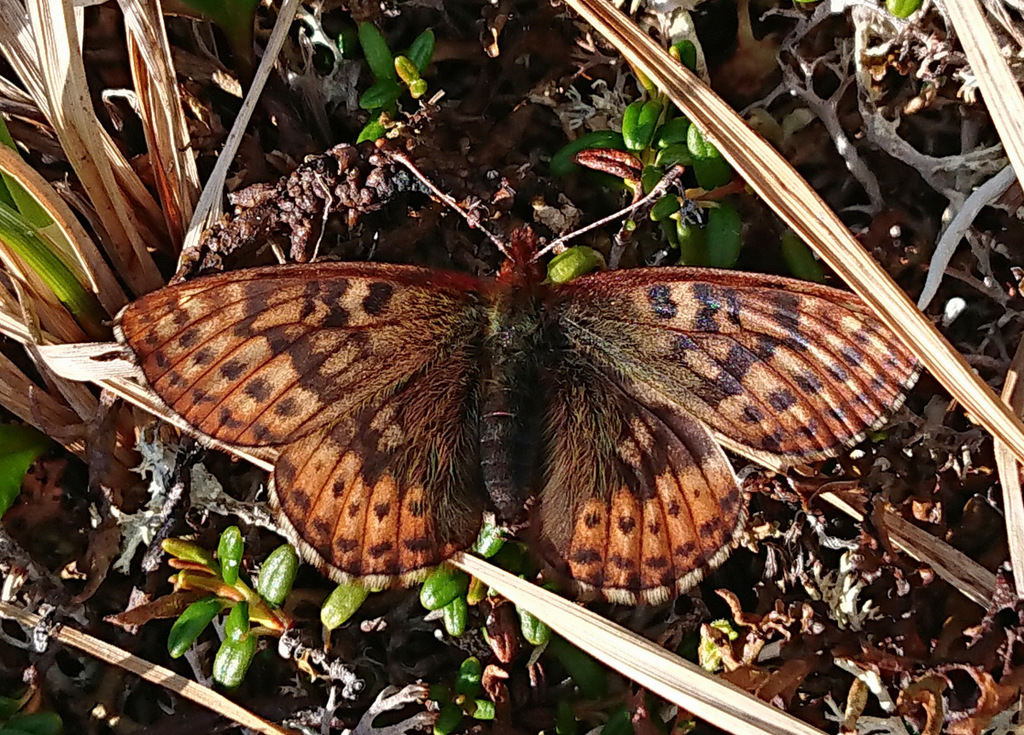
The dingy fritillary is a butterfly in the Nymphalidae family. It lives in alpine and tundra areas, especially near the Norway-Sweden-Finland border in Europe. Its caterpillars feed on a moss-like plant called Polygonum viviparum in Europe and on Arctic willow species in North America.
Source: Wikipedia
How to recognize it
Boloria improba, known as the dingy fritillary, belongs to the butterfly family Nymphalidae.
Source: Wikipedia
What it eats
European larvae probably eat Polygonum viviparum, while North American larvae feed on Salix arctica and Salix reticulata nivalis.
Source: Wikipedia
Where it comes from
In Europe it occurs only in a small border region of Scandinavia between Norway, Sweden and Finland.
Source: Wikipedia
Where it is found in the US
Recorded in 4 of 51 states and DC. Most records: Alaska, Wyoming, Colorado, Ohio.
Darker = more records. Counts are museum and citizen-science records, not population size.
Source: GBIF
Status: native in North America; native in Canada. Source: iNaturalist
Months it is reported in the US
Source: GBIF
More photos
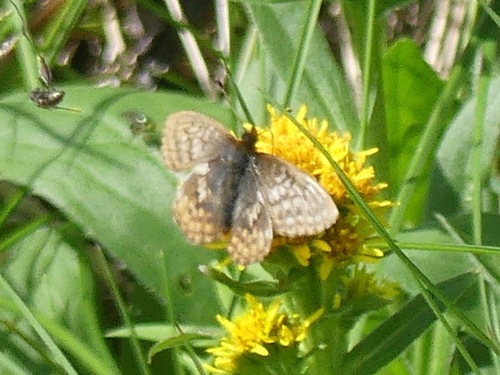
Same family (Nymphalidae)




Sources
- Wikipedia: https://en.wikipedia.org/wiki/Boloria_improba
Look it up elsewhere: GBIF · iNaturalist · BugGuide · ITIS · Wikipedia
Text written 2026-10-24 from the sources above and checked sentence by sentence against them. Data fetched 2026-10-24.