 Bug FAQ
Dingy Dusk-darter
Zyxomma petiolatum · Order: Odonata · Family: Libellulidae
Also called: Brown Dusk Hawk, Dingy Duskflyer, Long-tailed Duskdarter, Slender Duskdarter
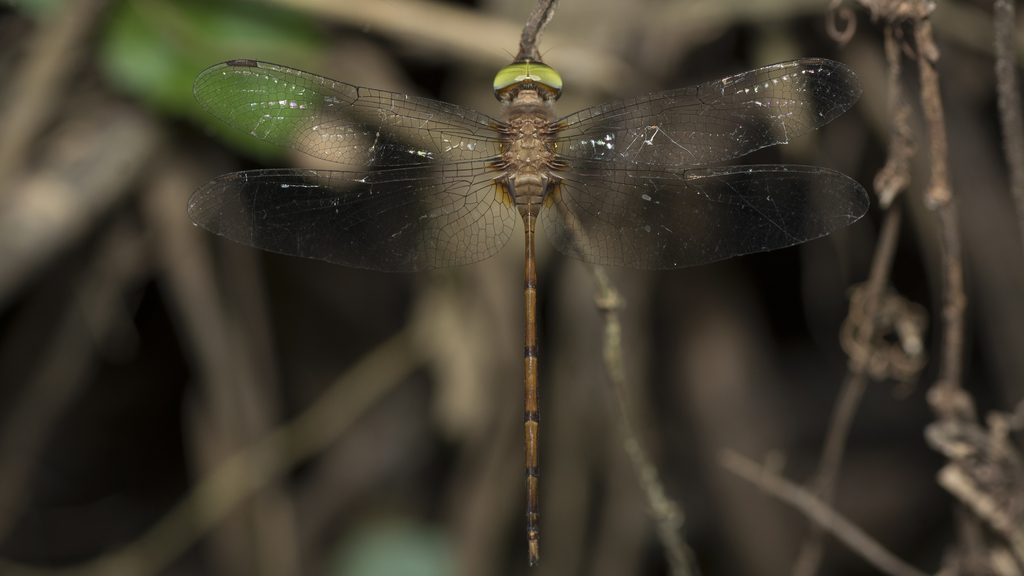
The Dingy Dusk-darter is a medium-sized dragonfly with a chocolate-brown body and emerald-green eyes; females look like males. It is active at dusk and on overcast days, flying low over water to catch midges and mosquitoes.
Source: Wikipedia
How to recognize it
Chocolate-brown body with emerald-green eyes; females resemble males.
Source: Wikipedia
Size
Medium-sized dragonfly.
Source: Wikipedia
What it eats
Flies low over water in the evening, hunting midges and mosquitoes.
Source: Wikipedia
Life cycle
Primarily active at twilight but may also be seen on overcast days.
Source: Wikipedia
When you see it
Active in the evening and on overcast days.
Source: Wikipedia
Questions people ask
When are Dingy Dusk-darters most active?
They are most active at dusk and can also be seen on overcast days.
Source: Wikipedia
What do they eat?
They hunt midges and mosquitoes, flying low over water in the evening.
Source: Wikipedia
What do they look like?
They are medium-sized, chocolate-brown dragonflies with emerald-green eyes; females look like males.
Source: Wikipedia
Same family (Libellulidae)

Sources
- Wikipedia: https://en.wikipedia.org/wiki/Zyxomma_petiolatum
Look it up elsewhere: GBIF · iNaturalist · BugGuide · Wikipedia
Text written 2026-10-23 from the sources above and checked sentence by sentence against them. Data fetched 2026-10-22.