 Bug FAQ
Dicyphus hesperus
Dicyphus hesperus · Order: Hemiptera · Family: Miridae
Source: Wikipedia
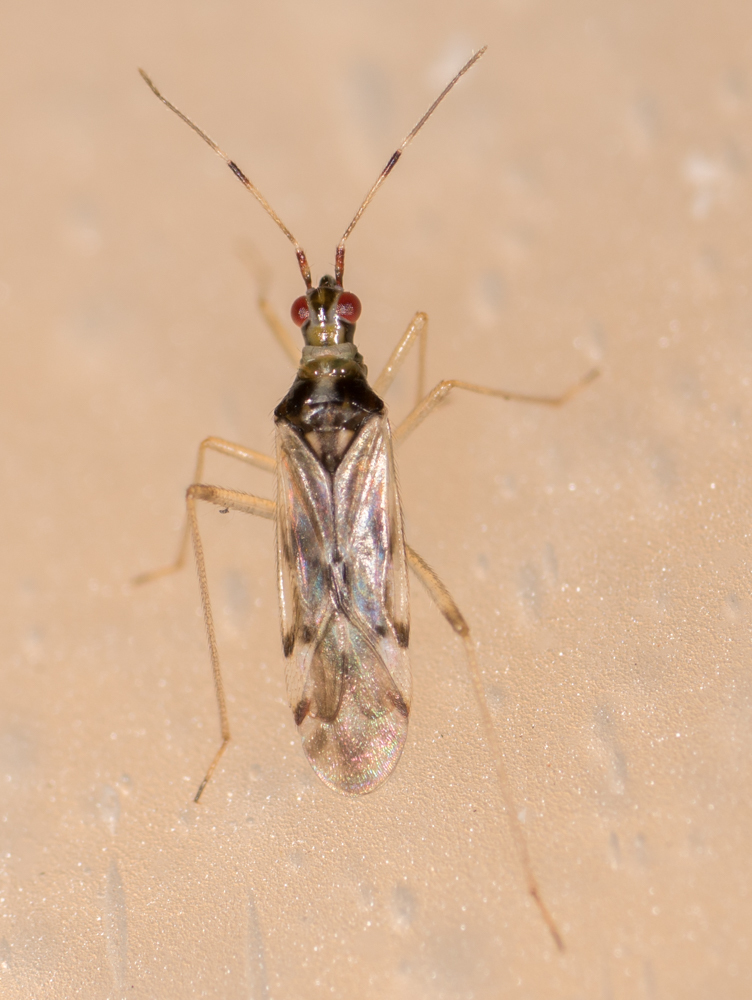
Dicyphus hesperus is a true bug in the Miridae family that lives in North America and is used to control whiteflies on tomatoes. It is an omnivore that feeds on both plant tissue and other insects, and if it cannot find suitable plant material it will die even when whiteflies are present. When plant food is scarce it may damage green tomato fruits, though the damage is not severe enough to affect ripe fruit.
Source: Wikipedia
How to recognize it
It belongs to the true bug family Miridae.
Source: Wikipedia
Is it a pest in the house?
It is used in biological control of insect pests. It can cause some damage to green tomato fruits when alternative plant food is lacking, but does not downgrade ripe fruit.
Source: Wikipedia
How to get rid of it
Introducing non-indigenous generalist predators like this bug can be risky because of unknown ecological effects if they escape.
Source: Wikipedia
Where it lives
It is native to North America and is employed to control agricultural pests such as whitefly on tomatoes.
Source: Wikipedia
What it eats
It is a generalist predator that also feeds on plant tissues. As an omnivore it alternates between plant and animal food, and will die without suitable plant tissue even if whiteflies are present.
Source: Wikipedia
Where it comes from
It is native to North America.
Source: Wikipedia
Where it is found in the US
Recorded in 8 of 51 states and DC. Most records: California, Alaska, Arizona, Utah, Idaho, South Carolina, Washington, Colorado.
Darker = more records. Counts are museum and citizen-science records, not population size.
Source: GBIF
Status: native in North America; native in Canada. Source: iNaturalist
Months it is reported in the US
Source: GBIF
More photos
Questions people ask
Is Dicyphus hesperus used for pest control?
Yes, it is released to control whiteflies on tomato crops.
Source: Wikipedia
Is it risky to introduce Dicyphus hesperus into a garden?
Introducing non-native generalist predators can pose ecological risks if they escape into the wider environment.
Source: Wikipedia
Same family (Miridae)
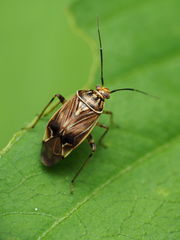 North American Tarnished Plant BugLygus lineolarisDamages trees, gardens or crops
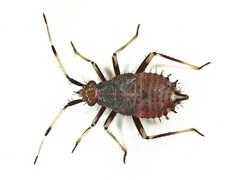 Red-spotted Plant BugDeraeocoris ruber
 Alfalfa Plant BugAdelphocoris lineolatusDamages trees, gardens or crops
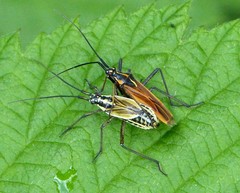 Meadow Plant BugLeptopterna dolabrataDamages trees, gardens or crops
 Four-lined Plant BugPoecilocapsus lineatusDamages trees, gardens or crops
 Lygus pratensisDamages trees, gardens or crops
Sources
- Wikipedia: https://en.wikipedia.org/wiki/Dicyphus_hesperus
Look it up elsewhere: GBIF · iNaturalist · BugGuide · ITIS · Wikipedia
Text written 2026-10-27 from the sources above and checked sentence by sentence against them. Data fetched 2026-10-27.