 Bug FAQ
Diaprepes Root Weevil
Diaprepes abbreviatus · Order: Coleoptera · Family: Curculionidae
Also called: Root weevil, Sugarcane Root Borer
Source: Wikipedia
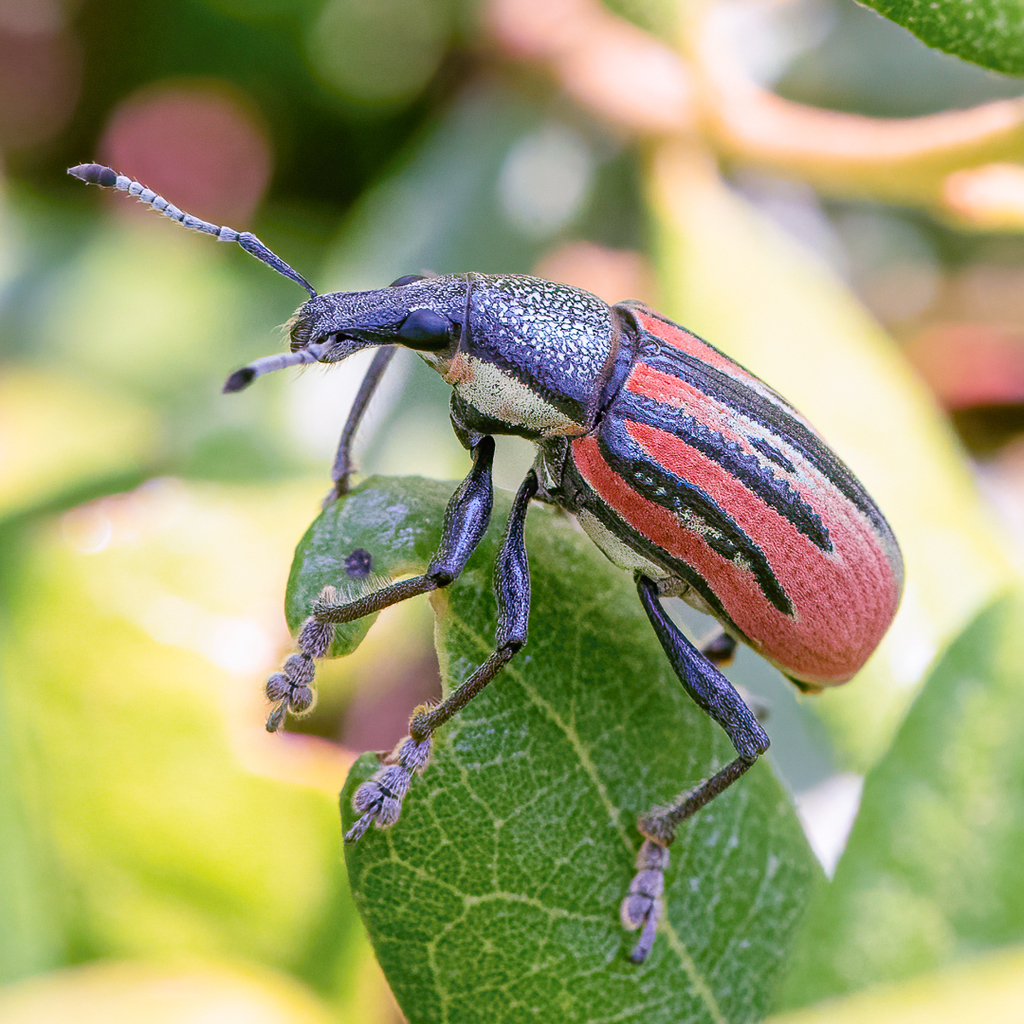
Adults are about 1 cm long with glossy black elytra marked by yellow-orange scales; larvae are pale, plump grubs up to 2.5 cm long. Females lay up to 5,000 eggs on leaves, the larvae drop to the soil and burrow to feed on plant roots, killing or weakening the host.
Source: Wikipedia
How to recognize it
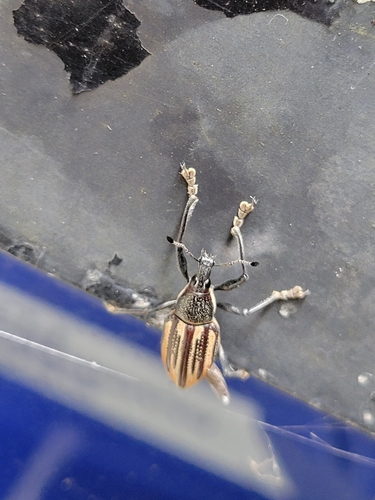
Its legs have adhesive pads that let it cling to very smooth surfaces.
Source: Wikipedia
Is it a pest in the house?
Larvae eat the taproot, which can kill the plant by depriving it of water and nutrients and by making it vulnerable to fungal infections.
Source: Wikipedia
How to get rid of it
Biological controls under study include ants, parasitic wasps, a virus, Bacillus thuringiensis, and a fungal adulticide. The nematode Steinernema riobravis is applied in irrigation water to combat the pest in Florida fields.
Source: Wikipedia
What it eats
Adults feed on foliage of citrus, avocado, nursery stock, sugarcane, potatoes and ornamental plants. Larvae cause the most damage by feeding on plant roots.
Source: Wikipedia
Life cycle
A female can lay about 5,000 eggs in clusters on leaves, then folds and glues the leaves together. After about a week, larvae hatch, fall to the ground and burrow to the host plant’s roots.
Source: Wikipedia
When you see it
The species was first introduced to the United States in Florida in 1964 and has since become a major citrus pest there.
Source: Wikipedia
Where it comes from
The weevil originates from the Caribbean region.
Source: Wikipedia
Where it is found in the US
Recorded in 14 of 51 states and DC. Most records: Florida, Texas, California, Louisiana, Georgia, South Carolina, Alabama, Mississippi.
Darker = more records. Counts are museum and citizen-science records, not population size.
Source: GBIF
Months it is reported in the US
Source: GBIF
More photos


Questions people ask
How does the Diaprepes root weevil damage plants?
The larvae drop to the soil after hatching and feed on the plant’s taproot, killing or weakening it and opening the way for fungal infections.
Source: Wikipedia
What crops are affected by this weevil?
It attacks citrus, avocado, nursery stock, sugarcane, potatoes and ornamental plants.
Source: Wikipedia
How can I control a Diaprepes root weevil infestation?
Biological agents such as certain ants, parasitic wasps, a virus, Bacillus thuringiensis, a fungal adulticide, and the nematode Steinernema riobravis are being used or studied for control.
Source: Wikipedia
Same family (Curculionidae)
 Green Immigrant Leaf WeevilPolydrusus formosusDamages trees, gardens or crops
 Black Vine WeevilOtiorhynchus sulcatusDamages trees, gardens or crops
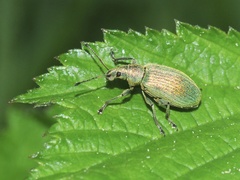 Nettle weevilPhyllobius pomaceusDamages trees, gardens or crops
 Asian Oak WeevilCyrtepistomus castaneusDamages trees, gardens or crops
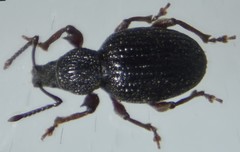 Strawberry Root WeevilOtiorhynchus ovatusDamages trees, gardens or crops
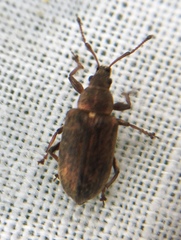 Common Leaf WeevilPhyllobius pyriDamages trees, gardens or crops
Sources
- Wikipedia: https://en.wikipedia.org/wiki/Diaprepes_abbreviatus
Look it up elsewhere: GBIF · iNaturalist · BugGuide · ITIS · Wikipedia
Text written 2026-10-22 from the sources above and checked sentence by sentence against them. Data fetched 2026-10-22.