 Bug FAQ
Deraeocoris flavilinea
Deraeocoris flavilinea · Order: Hemiptera · Family: Miridae
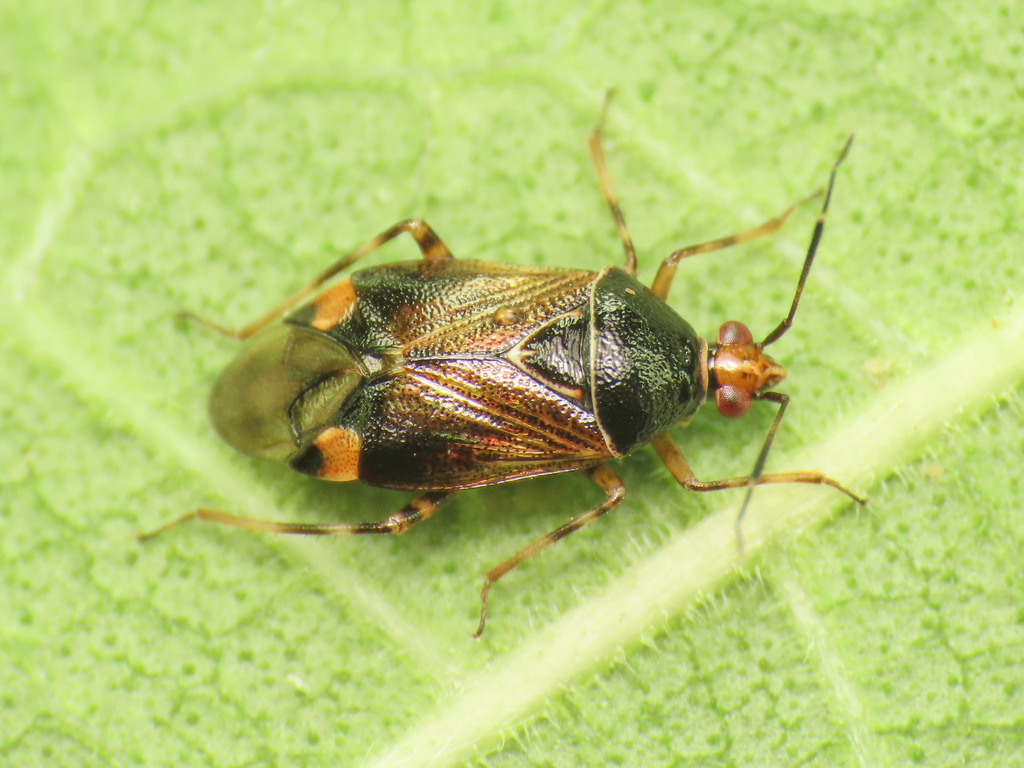
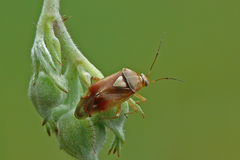
Deraeocoris flavilinea is a plant bug about 7 to 8 mm long. Males are much darker than the orange females, and both sexes have narrowly pale front and rear pronotum margins, a variable cuneus, and paler sides on the scutellum.
Source: Wikipedia
How to recognize it
Males are darker than the orange females, and the front and rear edges of the pronotum are narrowly pale. The cuneus varies in appearance and the sides of the scutellum are paler in both sexes.
Source: Wikipedia
Size
Adults measure 7 to 8 mm in length.
Source: Wikipedia
Life cycle
The species was first recorded in the United Kingdom in 1996.
Source: Wikipedia
Lookalikes
It belongs to the plant-bug family Miridae.
Source: Wikipedia
More photos


Questions people ask
How can I identify Deraeocoris flavilinea?
Look for a 7 to 8 mm bug with darker males, orange females, pale pronotum edges, a variable cuneus, and paler scutellum sides.
Source: Wikipedia
When was Deraeocoris flavilinea first recorded in the UK?
It was first recorded in the United Kingdom in 1996.
Source: Wikipedia
What family does Deraeocoris flavilinea belong to?
It is a member of the Miridae family, the plant bugs.
Source: Wikipedia
Same family (Miridae)
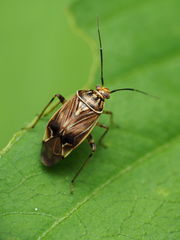 North American Tarnished Plant BugLygus lineolarisDamages trees, gardens or crops
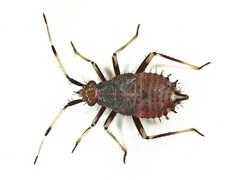 Red-spotted Plant BugDeraeocoris ruber
 Alfalfa Plant BugAdelphocoris lineolatusDamages trees, gardens or crops
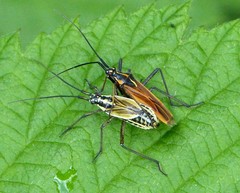 Meadow Plant BugLeptopterna dolabrataDamages trees, gardens or crops
 Four-lined Plant BugPoecilocapsus lineatusDamages trees, gardens or crops
 Lygus pratensisLygus pratensisDamages trees, gardens or crops
Sources
- Wikipedia: https://en.wikipedia.org/wiki/Deraeocoris_flavilinea
Look it up elsewhere: GBIF · iNaturalist · BugGuide · Wikipedia
Text written 2026-10-22 from the sources above and checked sentence by sentence against them. Data fetched 2026-10-22.