 Bug FAQ
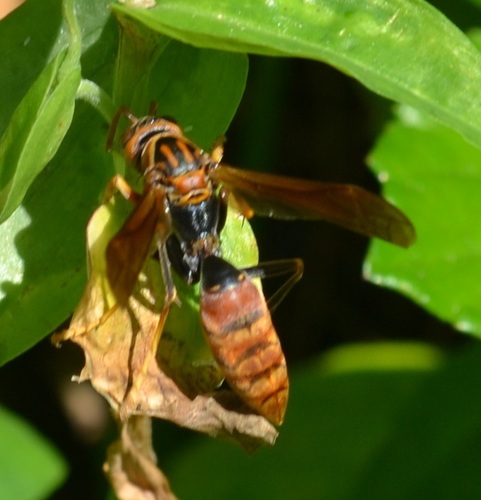
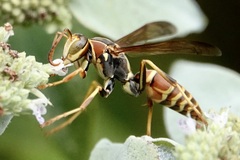
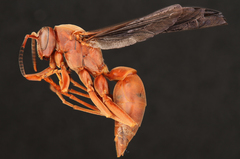
Dark-waisted Paper Wasp
Polistes jokahamae · Order: Hymenoptera · Family: Eumenidae
Also called: Dark-waist Paper Wasp, Paper wasp
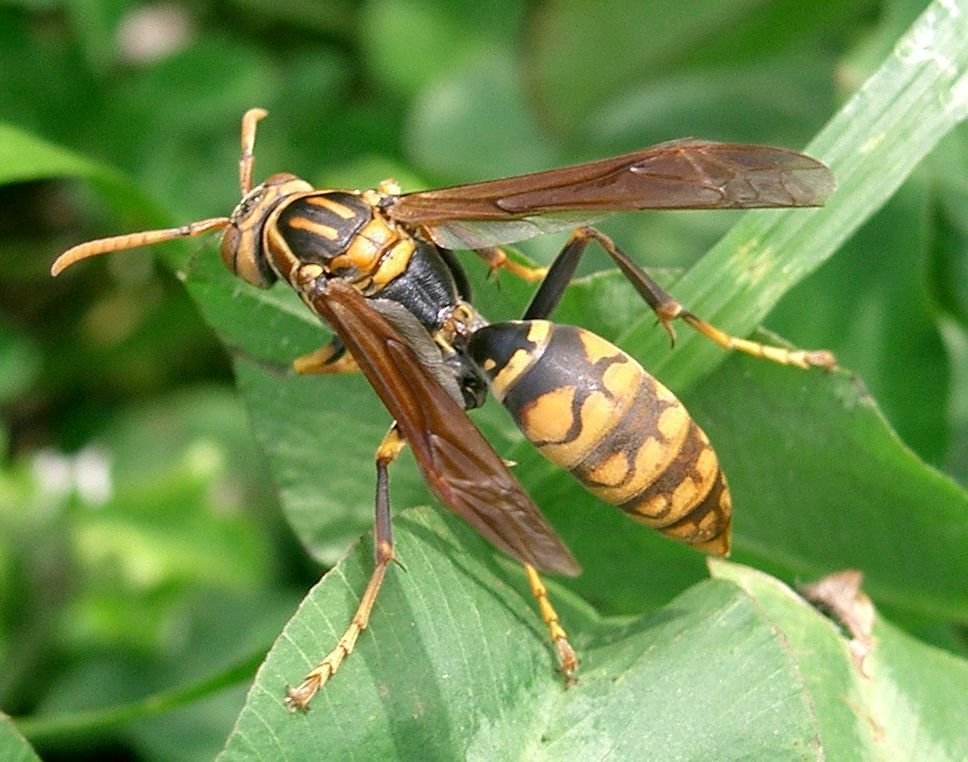
It lives in Japan (except Hokkaido), China, India and Vietnam, and feeds mainly on caterpillars such as those of swallowtail butterflies and spongy moths. Queens emerge from diapause in late March, start new nests in mid-April to early May, and produce workers, then later gynes and males.
Source: Wikipedia
What it eats
It hunts caterpillars, including swallowtail butterfly and spongy moth larvae, which it chews and rolls into tissue balls to bring back to the nest.
Source: Wikipedia
Life cycle
Queens break diapause in late March and start new nests from mid-April to early May. The first workers appear in summer, followed by a second brood of future queens and a third brood of males.
Source: Wikipedia
Where it comes from
It occurs in Japan (except Hokkaido), China, India and Vietnam.
Source: Wikipedia
Where it is found in the US
Recorded in 1 of 51 states and DC. Most records: Hawaii.
Darker = more records. Counts are museum and citizen-science records, not population size.
Source: GBIF
Months it is reported in the US
Source: GBIF
More photos
Questions people ask
What do dark-waisted paper wasps eat?
They mainly eat caterpillars, such as those of swallowtail butterflies and spongy moths, which they chew and carry back to the nest.
Source: Wikipedia
When do dark-waisted paper wasps start new nests?
Queens emerge from diapause in late March and found new nests between mid-April and early May.
Source: Wikipedia
Same family (Eumenidae)

Sources
- Wikipedia: https://en.wikipedia.org/wiki/Polistes_jokahamae
Look it up elsewhere: GBIF · iNaturalist · BugGuide · Wikipedia
Text written 2026-10-23 from the sources above and checked sentence by sentence against them. Data fetched 2026-10-22.