 Bug FAQ
Dark Evening Brown
Melanitis phedima · Order: Lepidoptera · Family: Nymphalidae
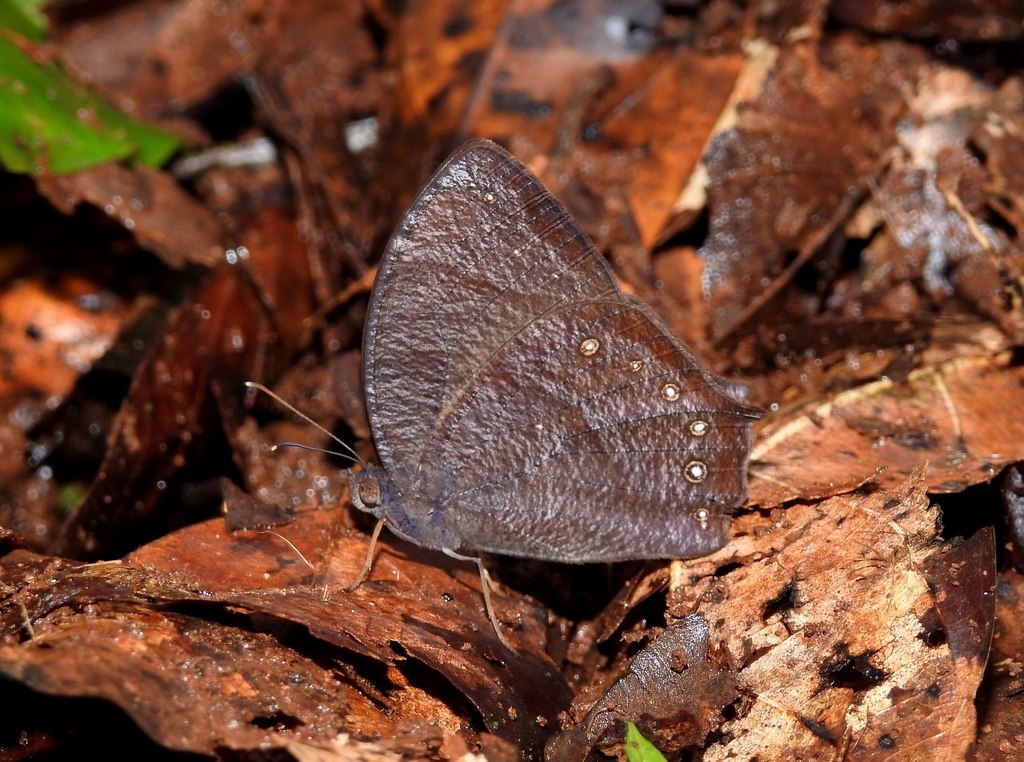
The dark evening brown butterfly has a dusky brown upper side with lighter outer edges and brown fringe, and its wings show several small white-pupilled eye spots (ocelli). It lives in South and Southeast Asia, is most often seen flying at dusk.
Source: Wikipedia
How to recognize it
Upperside is dusky fuliginous-brown with paler outer borders and brown cilia. Forewing has four small obscure white-pupilled ocelli; hindwing has a series of six submarginal ocelli, the anal one is paired, and the others are larger with white pupils.
Source: Wikipedia
Where it lives
Found in South and Southeast Asia. Active at dusk.
Source: Wikipedia
When you see it
Seen flying at dusk.
Source: Wikipedia
Where it comes from
Native to South and Southeast Asia.
Source: Wikipedia
More photos
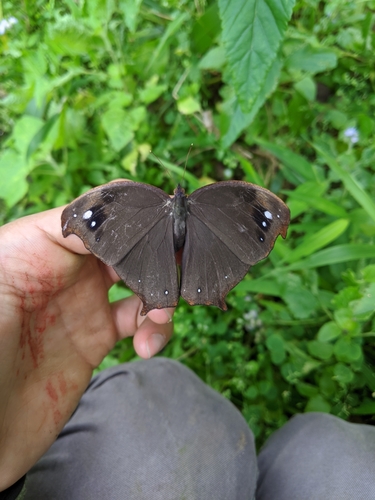
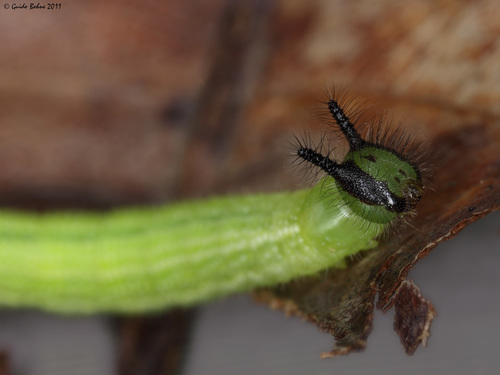
Questions people ask
What do the eye spots on the wings look like?
The forewing has four small, faint white-pupilled spots, while the hindwing shows six larger submarginal spots, with the anal spot appearing as a pair.
Source: Wikipedia
Same family (Nymphalidae)






Sources
- Wikipedia: https://en.wikipedia.org/wiki/Melanitis_phedima
Look it up elsewhere: GBIF · iNaturalist · BugGuide · Wikipedia
Text written 2026-10-22 from the sources above and checked sentence by sentence against them. Data fetched 2026-10-22.