 Bug FAQ
Dancing Amber
Telchinia serena · Order: Lepidoptera · Family: Nymphalidae
Also called: Dancing Acraea, Orange Acraea, Small Orange Acraea
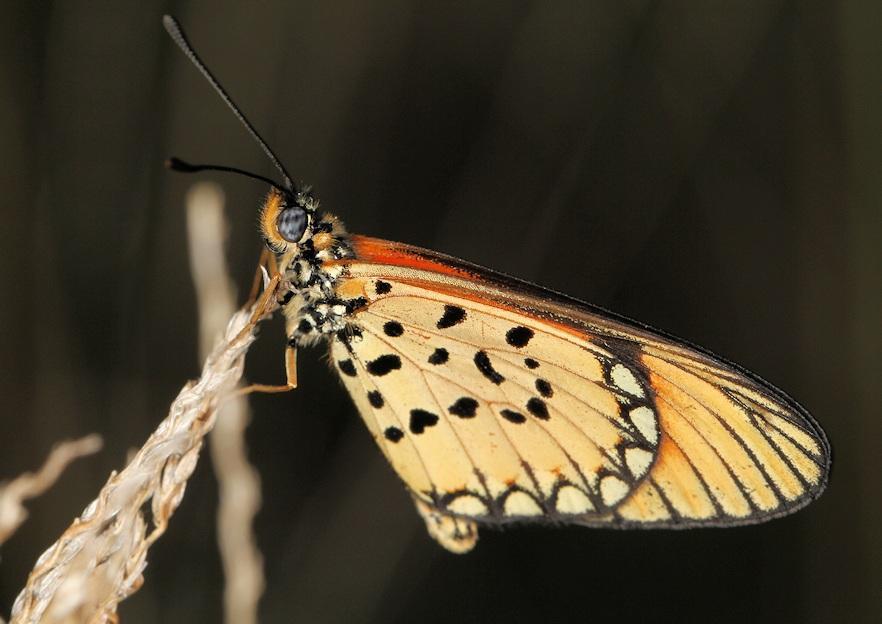
Dancing Amber is a very variable butterfly found across sub-Saharan Africa and from Yemen to the Cape. It is common and occurs everywhere in its range except Arabia, with many loosely defined local races. It has often been confused with the small orange acraea and the tawny coaster.
Source: Wikipedia
How to recognize it
Both sexes look similar, with a subapical band on the forewing that is separate from the red-yellow basal area; the band may be red-yellow or whitish in females, and both wings have distinct yellow marginal spots.
Source: Wikipedia
Size
The species is common and highly variable, especially among females.
Source: Wikipedia
Same family (Nymphalidae)






Sources
- Wikipedia: https://en.wikipedia.org/wiki/Acraea_serena
Look it up elsewhere: GBIF · iNaturalist · BugGuide · Wikipedia
Text written 2026-10-22 from the sources above and checked sentence by sentence against them. Data fetched 2026-10-22.