 Bug FAQ
Dainty Swallowtail
Papilio anactus · Order: Lepidoptera · Family: Papilionidae
Also called: Dingy Swallowtail, Small Dingy Swallowtail
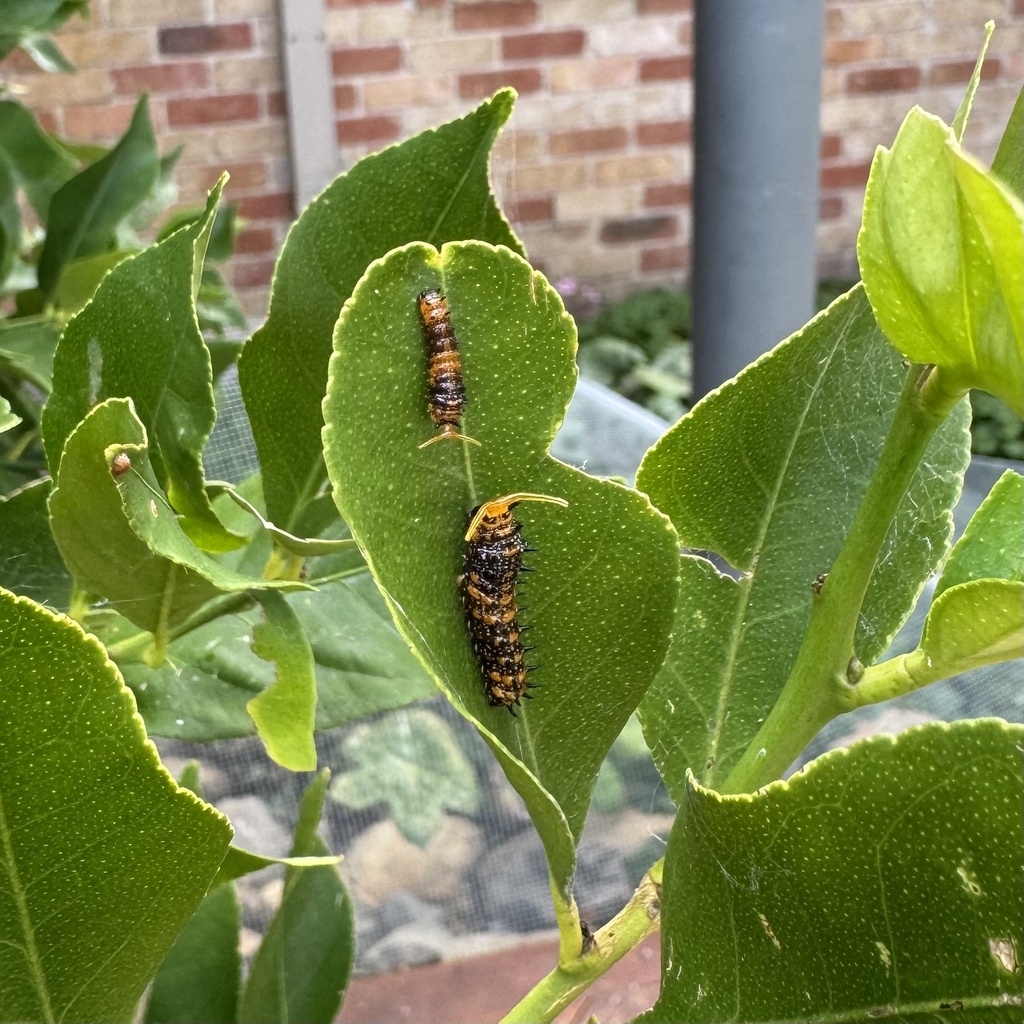
The dainty swallowtail is a medium-sized butterfly native to Australia that has also been recorded in New Caledonia. Its caterpillars have dark bodies with bristly spines and a distinctive white upside-down V on the last instar. It lays large pale-yellow eggs that turn orange before the larvae emerge, and the larvae feed mainly on citrus plants.
Source: Wikipedia
Size
The species is medium in size for a swallowtail butterfly.
Source: Wikipedia
Where it lives
It occurs in Australia and has also been found in New Caledonia, where it may be introduced or a vagrant.
Source: Wikipedia
What it eats
Caterpillars feed almost exclusively on native and introduced citrus species and also on Geijera parviflora.
Source: Wikipedia
Life cycle
Eggs are relatively large, pale yellow and become orange just before the larvae hatch. In warm areas the larvae pass through five instars, while in colder areas they may have six before pupating.
Source: Wikipedia
Questions people ask
What do the caterpillars look like?
Young caterpillars are dark with bristly spines and a black head; later instars show a white upside-down V on the front.
Source: Wikipedia
Where can I find the dainty swallowtail?
It is native to Australia and has also been recorded in New Caledonia.
Source: Wikipedia
What plants do the larvae eat?
They feed mainly on citrus species and also on Geijera parviflora.
Source: Wikipedia
How many larval stages does it have?
In warm areas there are five instars; in colder areas there can be six before pupation.
Source: Wikipedia
Same family (Papilionidae)
Sources
- Wikipedia: https://en.wikipedia.org/wiki/Papilio_anactus
Look it up elsewhere: GBIF · iNaturalist · BugGuide · Wikipedia
Text written 2026-10-22 from the sources above and checked sentence by sentence against them. Data fetched 2026-10-22.