 Bug FAQ
Crotch's Bumble Bee
Bombus crotchii · Order: Hymenoptera · Family: Apidae
Also called: Crotch Bumble Bee
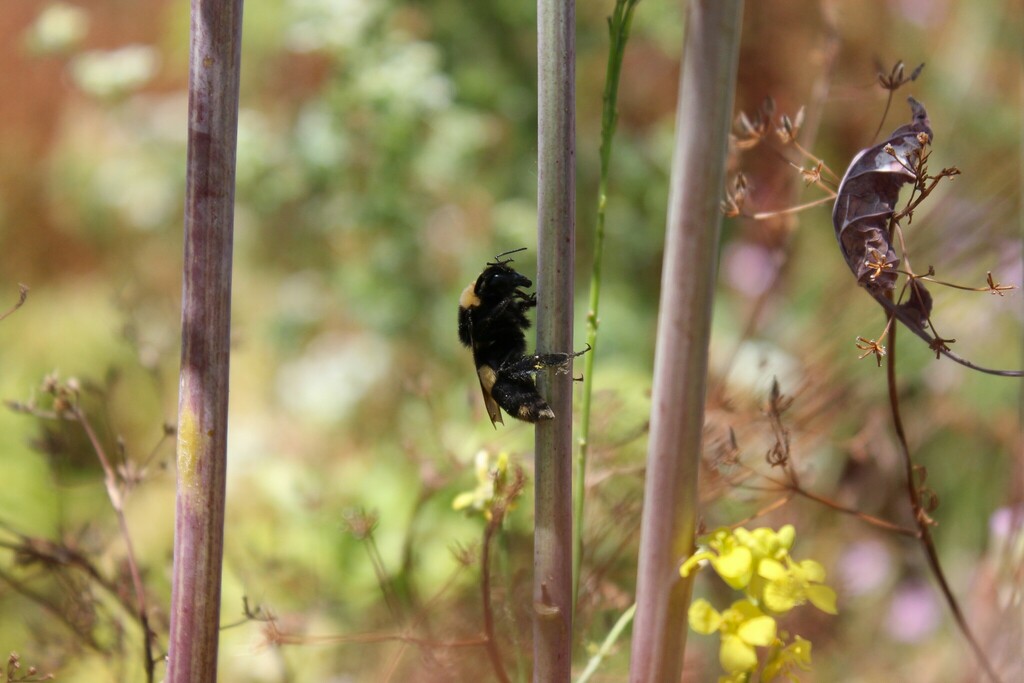
They live in hot, dry grasslands and scrub, nest underground in old rodent burrows, and are found mainly in California, with some presence in Baja California and Nevada.
Source: Wikipedia
How to recognize it
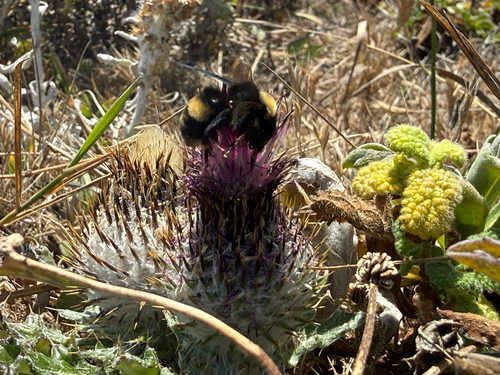
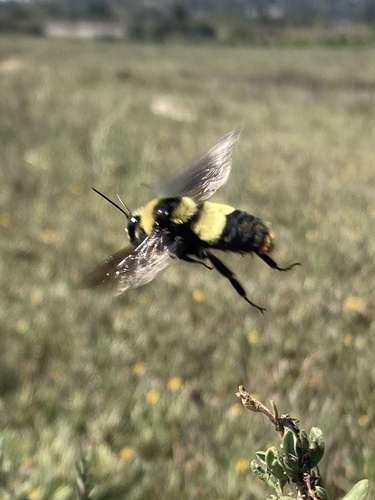
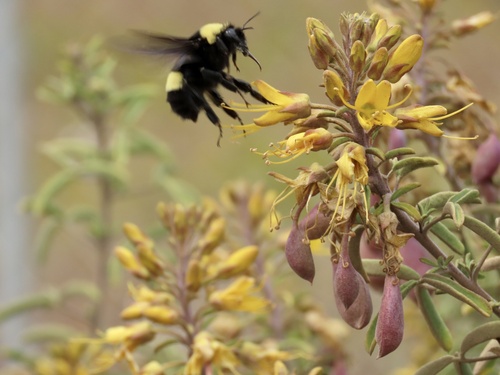
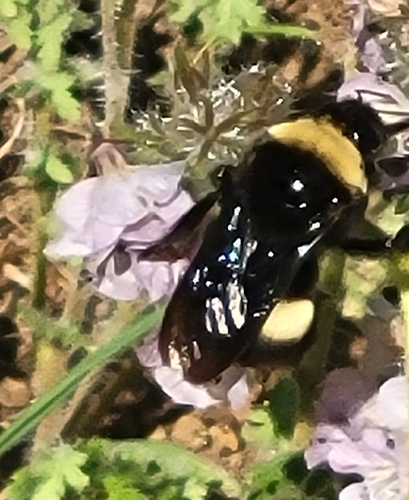
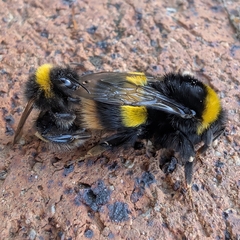
Queens and workers have a black head and thorax, yellow on the dorsal front of the thorax, sometimes yellow on the scutellum, and a patterned abdomen with black, yellow, and orange tergites. Males have very large eyes, yellow facial hair, a broad black stripe on the mid-thorax, a yellow front abdomen, and the rest of the abdomen is mostly black with reddish-yellow tones.
Source: Wikipedia
Does it bite or sting?
Neonicotinoid insecticides are especially harmful to this bee.
Source: Wikipedia
Where it lives
Prefers hot, dry grassland and scrub habitats and can only survive within a narrow climate range. Nests underground, often using abandoned rodent dens.
Source: Wikipedia
What it eats
Visits many flowers such as milkweeds, lupines, medics, phacelias, sages, snapdragons, Clarkia, poppies, and wild buckwheats. Considered a dietary generalist because it uses a wide range of host plants.
Source: Wikipedia
Life cycle
Males are present from May to September, peaking in July. Workers are active April to August, peaking May-June; queens are active March to May, peaking in April.
Source: Wikipedia
When you see it
Males appear May-September with a July peak; workers April-August; queens March-May.
Source: Wikipedia
Where it comes from
Primarily found in California, USA, with uncommon populations in Baja California, Mexico, and Nevada.
Source: Wikipedia
Lookalikes
Can be mistaken for Bombus californicus or Bombus occidentalis because of similar coloration.
Source: Wikipedia
Where it is found in the US
Recorded in 5 of 51 states and DC. Most records: California, Nevada, Oregon, Pennsylvania, Utah.
Darker = more records. Counts are museum and citizen-science records, not population size.
Source: GBIF
Status: native in North America; native in United States. Source: iNaturalist
Months it is reported in the US
Source: GBIF
More photos
Questions people ask
When can I expect to see Crotch's bumble bee?
Queens are active March to May, workers April to August, and males May to September, with peaks in April, May-June, and July respectively.
Source: Wikipedia
What plants does Crotch's bumble bee visit?
It forages on many flowers including milkweeds, lupines, medics, phacelias, sages, snapdragons, Clarkia, poppies, and wild buckwheats.
Source: Wikipedia
Where does this bee live?
It lives mainly in California, prefers hot dry grasslands and scrub, and nests underground in old rodent burrows.
Source: Wikipedia
Same family (Apidae)


Sources
- Wikipedia: https://en.wikipedia.org/wiki/Bombus_crotchii
Look it up elsewhere: GBIF · iNaturalist · BugGuide · ITIS · Wikipedia
Text written 2026-10-23 from the sources above and checked sentence by sentence against them. Data fetched 2026-10-22.