 Bug FAQ
Crimson Patch
Chlosyne janais · Order: Lepidoptera · Family: Nymphalidae
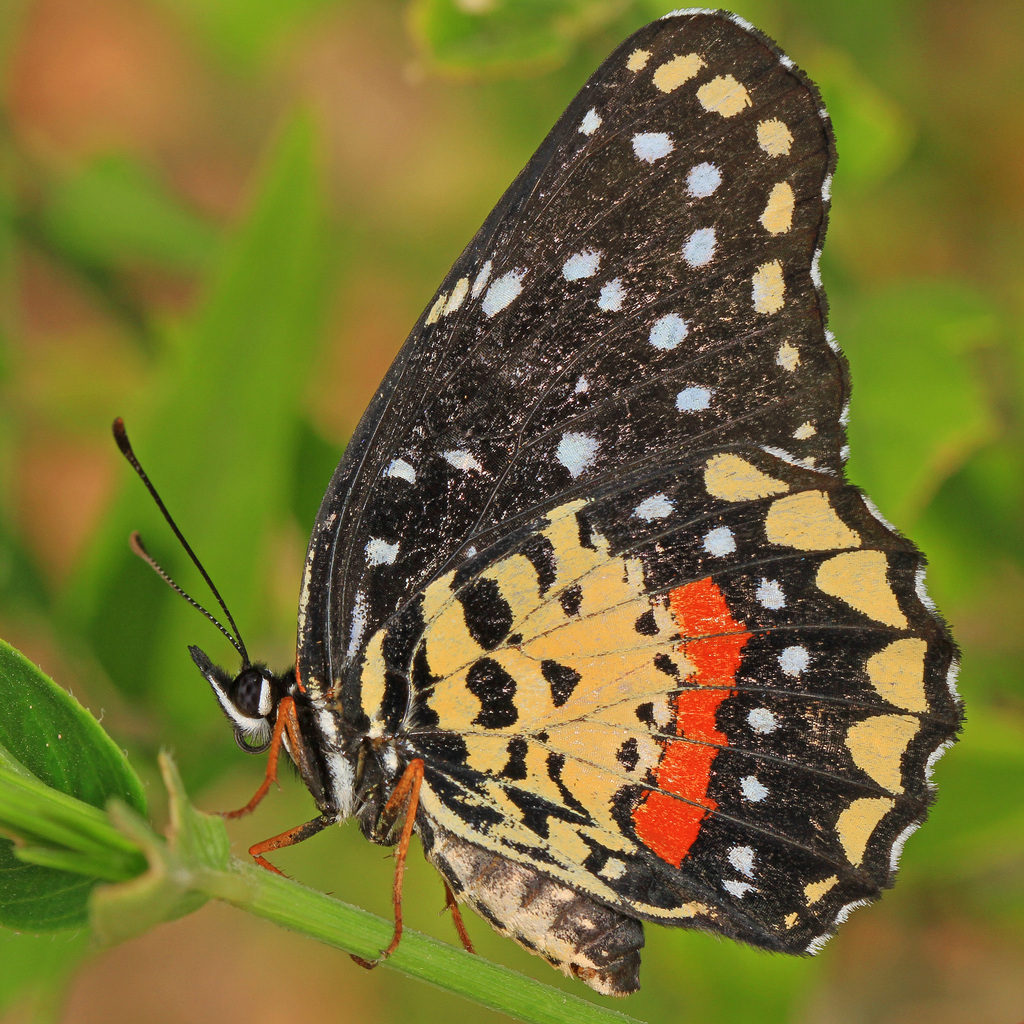
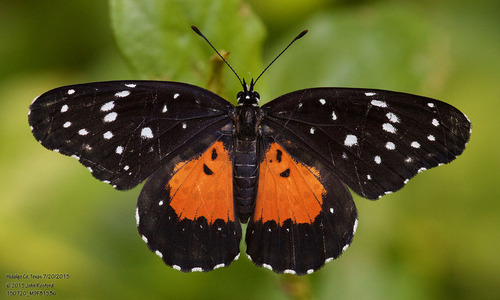
The crimson patch butterfly has a wingspan of about 5 to 7 cm and is black with rows of small white spots on the forewings and orange-red patches on the hindwings. It lives on the edges of lowland tropical and subtropical forests, in fields and along streams, ranging from Colombia through Central America into Mexico and southern Texas, with occasional sightings in northern Texas.
Source: Wikipedia
How to recognize it
Each dorsal hindwing bears a medial orange-red patch near the front edge. The ventral hindwings show a fragmented yellow patch near the base, bordered by a thick red band that does not reach the wing edges.
Source: Wikipedia
Size
Maximum wingspan ranges from 4.8 to 6.7 cm.
Source: Wikipedia
How to get rid of it
Populations can become abundant in the Rio Grande Valley but are periodically eliminated by cold snaps, after which the area is recolonized from Mexican populations.
Source: Wikipedia
Life cycle
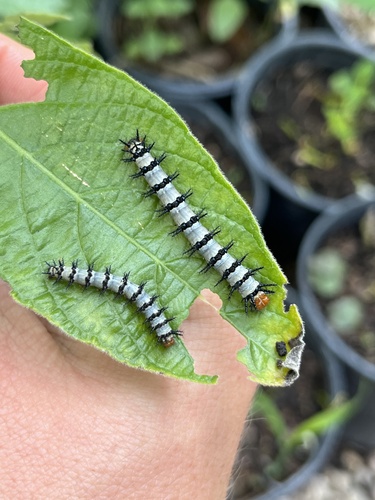
Caterpillars are grey-white to green and have several transverse rows of fleshy black spines.
Source: Wikipedia
When you see it
Several broods appear from July through November.
Source: Wikipedia
Lookalikes
It resembles the rosita patch (C. rosita) but can be told apart because the rosita lacks the white spots along the wing margins.
Source: Wikipedia
Where it is found in the US
Recorded in 4 of 51 states and DC. Most records: Texas, New Hampshire, Florida, Arizona.
Darker = more records. Counts are museum and citizen-science records, not population size.
Source: GBIF
Status: native in North America. Source: iNaturalist
Months it is reported in the US
Source: GBIF
More photos

Questions people ask
How many generations does the crimson patch produce each year?
In tropical regions it reproduces continuously, while in temperate zones it produces several broods from July to November.
Source: Wikipedia
What are the key identification marks of the crimson patch?
It has black wings with rows of small white spots on the forewings and margins, an orange-red patch on each dorsal hindwing, and a fragmented yellow patch with a thick red band on the ventral hindwing.
Source: Wikipedia
Where is the crimson patch butterfly found?
It lives on the edges of lowland tropical and subtropical forests, in fields and along streams, ranging from Colombia through Central America into Mexico and southern Texas.
Source: Wikipedia
How is the crimson patch controlled when it becomes abundant?
Cold snaps naturally reduce its numbers in the Rio Grande Valley, after which the area is recolonized from nearby Mexican populations.
Source: Wikipedia
Same family (Nymphalidae)




Sources
- Wikipedia: https://en.wikipedia.org/wiki/Chlosyne_janais
Look it up elsewhere: GBIF · iNaturalist · BugGuide · ITIS · Wikipedia
Text written 2026-10-24 from the sources above and checked sentence by sentence against them. Data fetched 2026-10-24.