 Bug FAQ
Cranberry Blue
Vacciniina optilete · Order: Lepidoptera · Family: Lycaenidae
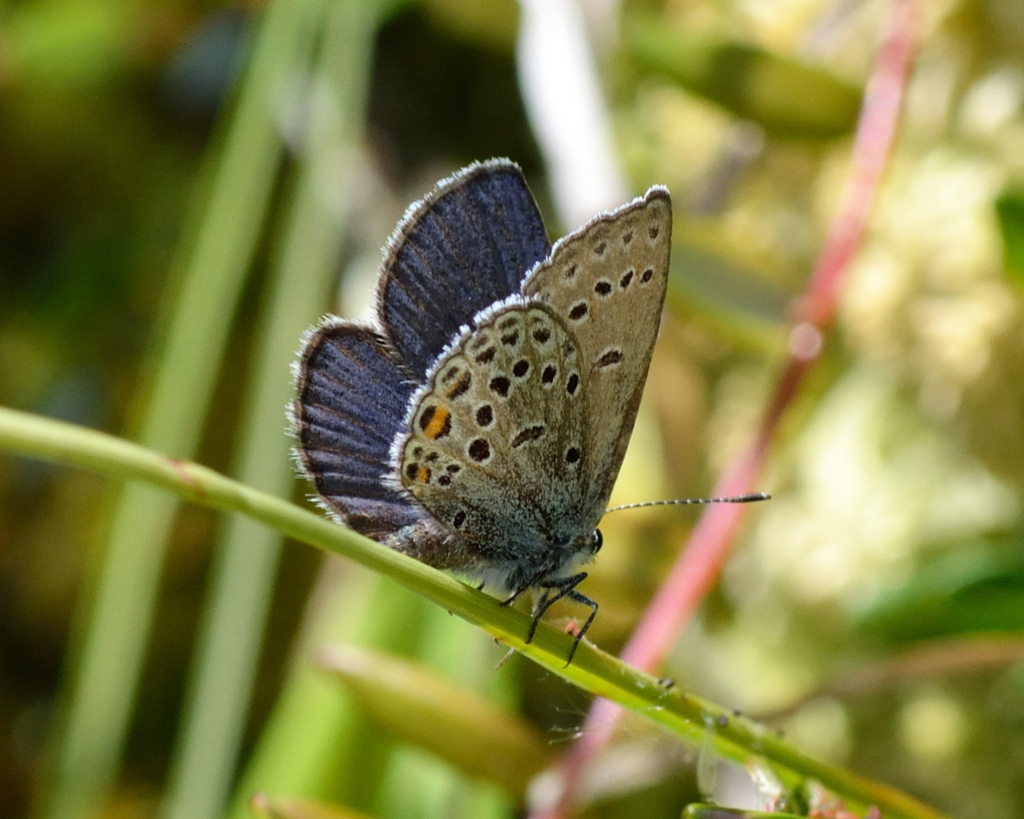
The Cranberry Blue butterfly has forewings about 14 mm long and shows dull dark violet-blue males, while females have only the basal half of the upperside dusted with glossy blue scales.
Source: Wikipedia
How to recognize it
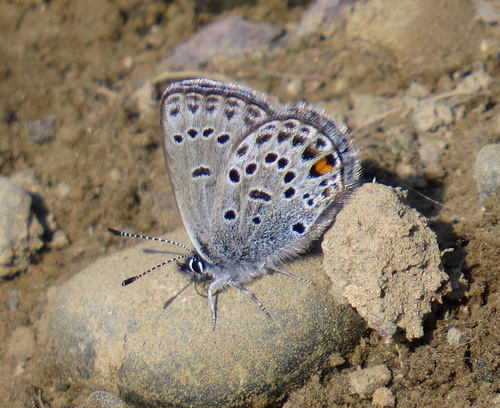
Females have only the basal half of the upperside dusted with glossy blue scales. The underside is dirty dust-grey with very large, often distorted ocelli.
Source: Wikipedia
Size
Forewing length is about 14 mm.
Source: Wikipedia
Where it lives
In the Ural region a form occurs with a black-grey ground colour on the underside.
Source: Wikipedia
What it eats
Larvae feed on cranberry and Empetrum species such as Vaccinium oxycoccos, Empetrum nigrum, bilberry, and other related plants. They also feed on Vaccinium myrtillus until June.
Source: Wikipedia
Life cycle
The larva is pale green, densely covered with minute silky reddish-yellow hairs and has a light-yellow stripe bordered in black along the side. The pupa is rounded, obtuse, with small yellowish-red hairs on the front, green with yellow abdominal segments.
Source: Wikipedia
When you see it
Adults fly from June to August, varying with location. They are locally plentiful from the end of June toward September.
Source: Wikipedia
Lookalikes
It differs markedly from other Lycaena species and is considered out of place in that group. It may be confused with cyparissus Hbn. (illustrated as 79 b).
Source: Wikipedia
Where it is found in the US
Recorded in 1 of 51 states and DC. Most records: Alaska.
Darker = more records. Counts are museum and citizen-science records, not population size.
Source: GBIF
Status: native in North America; native in Canada. Source: iNaturalist
Months it is reported in the US
Source: GBIF
More photos
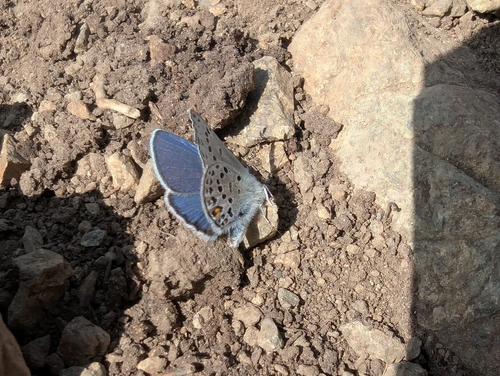
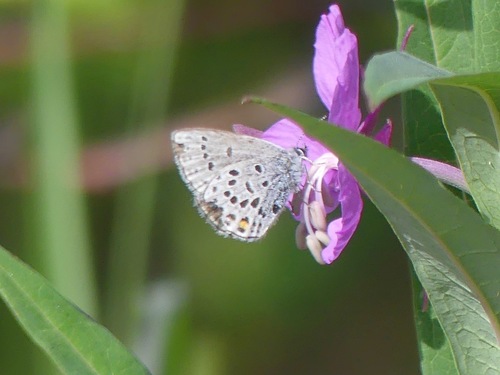
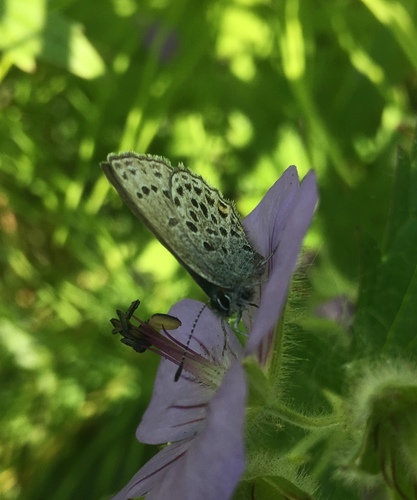
Questions people ask
When can I see the Cranberry Blue butterfly?
Adults are on the wing from June through August, with peak numbers from late June to September depending on the area.
Source: Wikipedia
What plants do the caterpillars eat?
The caterpillars feed on cranberry-related plants such as Vaccinium oxycoccos, bilberry, Empetrum nigrum and other Vaccinium species, and also on Vaccinium myrtillus until June.
Source: Wikipedia
How can I tell a male Cranberry Blue from a female?
Males are uniformly dull dark violet-blue, sometimes with a black margin, while females have only the basal half of the upperside dusted with glossy blue scales.
Source: Wikipedia
Same family (Lycaenidae)

Sources
- Wikipedia: https://en.wikipedia.org/wiki/Agriades_optilete
Look it up elsewhere: GBIF · iNaturalist · BugGuide · Wikipedia
Text written 2026-10-24 from the sources above and checked sentence by sentence against them. Data fetched 2026-10-24.