 Bug FAQ
Cotton Tipworm Moth
Crocidosema plebejana · Order: Lepidoptera · Family: Tortricidae
Also called: Tortricid moth, Southern Bell
Source: Wikipedia
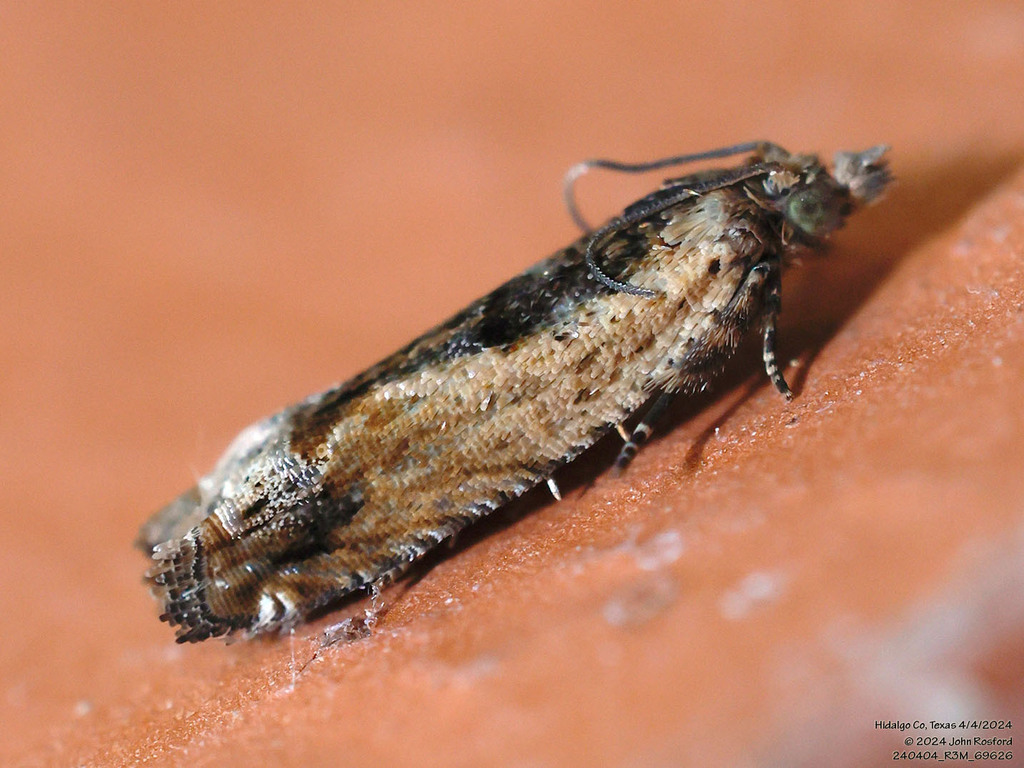
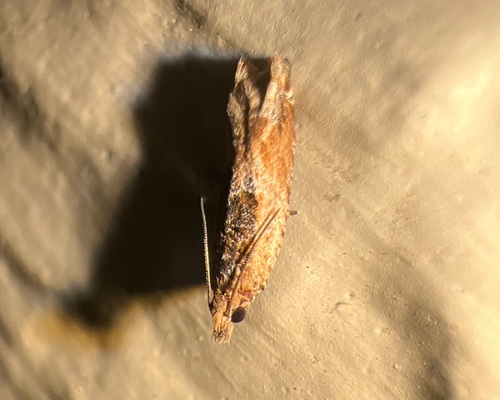
Adults are tiny moths with a wingspan of about 12 to 16 mm. Males are dark with a white eye-spot and a dorsal patch, while females are lighter brown with a dark base that stops short of the wing edge. They occur across tropical and subtropical regions worldwide, also showing up in some temperate parts of Europe.
Source: Wikipedia
How to recognize it
Males are dark brown to black, showing a white ocellus and a dorsal patch on the wings.
Source: Wikipedia
Size
The adult moth’s wingspan ranges from 12 to 16 mm.
Source: Wikipedia
Where it lives
It lives in subtropical and tropical zones worldwide, including many oceanic islands such as Polynesia and Saint Helena. It is also found in some cooler European areas, except the far east and north.
Source: Wikipedia
What it eats
Larvae feed inside seed capsules and shoots of plants in the mallow family, such as China jute, marsh mallow, tree mallow, arrowleaf sida, cotton species, and common mallows. Occasionally they become pests of cotton crops.
Source: Wikipedia
Life cycle
In regions with seasons, adults are on the wing from midsummer to early autumn, for example July to October in southern England.
Source: Wikipedia
When you see it
Their flight period in temperate areas runs from midsummer through early autumn.
Source: Wikipedia
Where it comes from
Its current distribution matches the subtropical and tropical world, likely spread by human activity.
Source: Wikipedia
Lookalikes
It has been placed in several related tortrix genera such as Epinotia, Eucosma, Grapholita, and Hedya in past classifications.
Source: Wikipedia
Where it is found in the US
Recorded in 9 of 51 states and DC. Most records: California, Texas, Hawaii, Louisiana, Florida, Alabama, Georgia, Mississippi.
Darker = more records. Counts are museum and citizen-science records, not population size.
Source: GBIF
Status: native in North America; native in United States. Source: iNaturalist
Months it is reported in the US
Source: GBIF
More photos
Questions people ask
Do cotton tipworm moths damage crops?
Yes, their larvae can chew inside seed pods and shoots of cotton and other mallow plants, sometimes becoming a cotton pest.
Source: Wikipedia
When are the adults active?
Adults fly from midsummer to early autumn and are most active at night, often drawn to lights.
Source: Wikipedia
How can I tell male and female moths apart?
Males are dark with a white eye-spot and a dorsal wing patch, while females are lighter brown with a dark base that stops before the wing edge.
Source: Wikipedia
Where might I find this moth?
It is widespread in tropical and subtropical areas worldwide and also appears in some temperate parts of Europe.
Source: Wikipedia
Same family (Tortricidae)
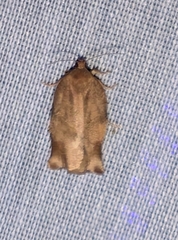 Oblique-banded Leafroller MothChoristoneura rosaceanaDamages trees, gardens or crops
 Garden TortrixClepsis peritanaDamages trees, gardens or crops
 Common MarbleSyricoris lacunanaDamages trees, gardens or crops
 Red-banded Leafroller MothArgyrotaenia velutinanaDamages trees, gardens or crops
 Light Brown Apple MothEpiphyas postvittanaDamages trees, gardens or crops
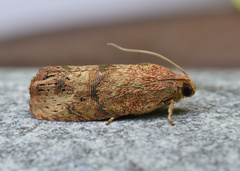 Filbertworm MothCydia latiferreanaDamages trees, gardens or crops
Sources
- Wikipedia: https://en.wikipedia.org/wiki/Crocidosema_plebejana
Look it up elsewhere: GBIF · iNaturalist · BugGuide · Wikipedia
Text written 2026-10-22 from the sources above and checked sentence by sentence against them. Data fetched 2026-10-22.