 Bug FAQ
Cordylospasta opaca
Cordylospasta opaca · Order: Coleoptera · Family: Meloidae
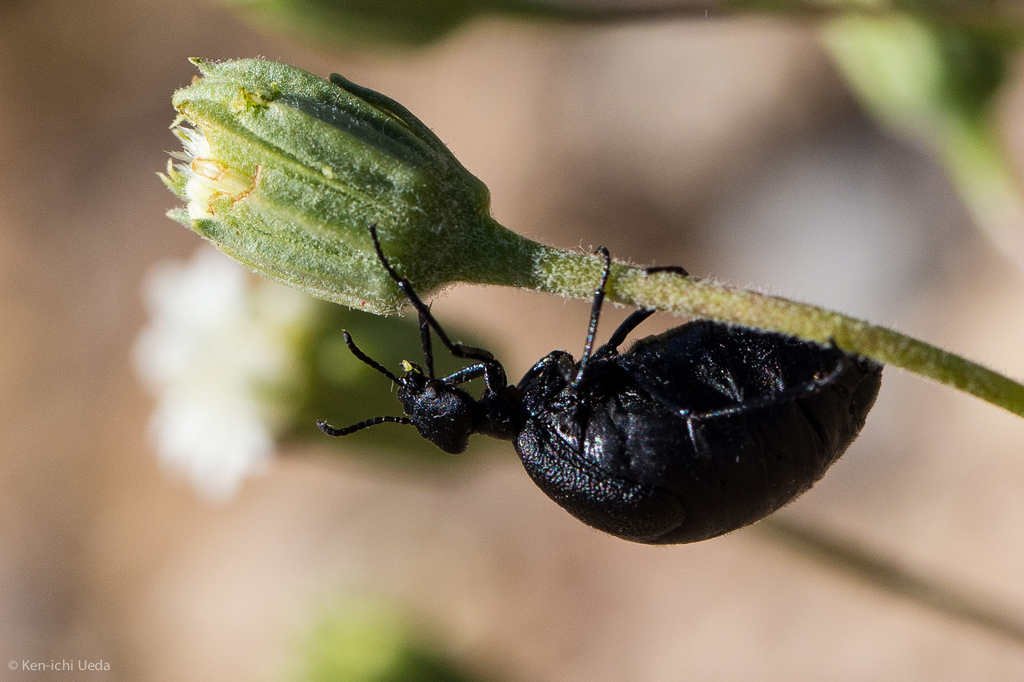
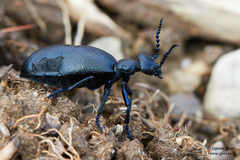
Males have full wings and are about 12 mm long, while females are wing-less, have shortened elytra and grow to roughly 19 mm. It is a blister beetle that lives in the dry parts of central and southern California.
Source: Wikipedia
How to recognize it
It can be distinguished from the similar Cordylospasta fulleri by having 11 antennal segments, whereas C. fulleri has only 8 to 10.
Source: Wikipedia
Size
Females are flightless, have reduced elytra and grow to roughly 19 mm.
Source: Wikipedia
Where it lives
Cordylospasta opaca inhabits arid regions of central and southern California.
Source: Wikipedia
Where it comes from
Its native range is the arid central and southern parts of California.
Source: Wikipedia
Where it is found in the US
Recorded in 3 of 51 states and DC. Most records: California, Kansas, Nevada.
Darker = more records. Counts are museum and citizen-science records, not population size.
Source: GBIF
Months it is reported in the US
Source: GBIF
More photos
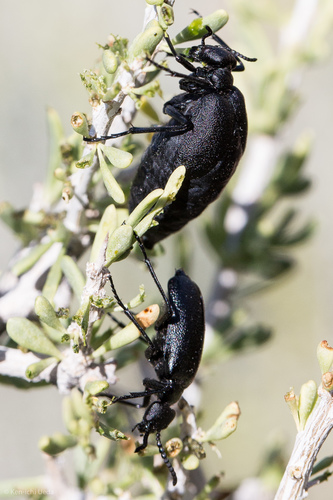
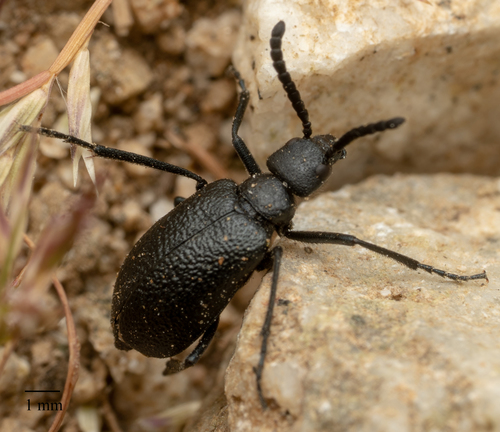

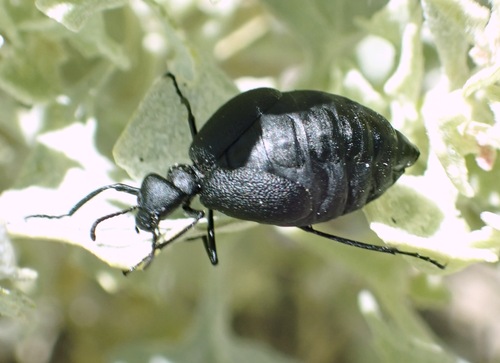
Questions people ask
How can I tell Cordylospasta opaca apart from similar beetles?
Check the antennae: C. opaca has 11 segments, while the look-alike C. fulleri has only 8 to 10.
Source: Wikipedia
Same family (Meloidae)




Sources
- Wikipedia: https://en.wikipedia.org/wiki/Cordylospasta_opaca
Look it up elsewhere: GBIF · iNaturalist · BugGuide · ITIS · Wikipedia
Text written 2026-10-27 from the sources above and checked sentence by sentence against them. Data fetched 2026-10-27.