 Bug FAQ
Coral Pink Sand Dunes Tiger Beetle
Cicindela albissima · Order: Coleoptera · Family: Carabidae
Also called: Coral Pink Dunes Tiger Beetle
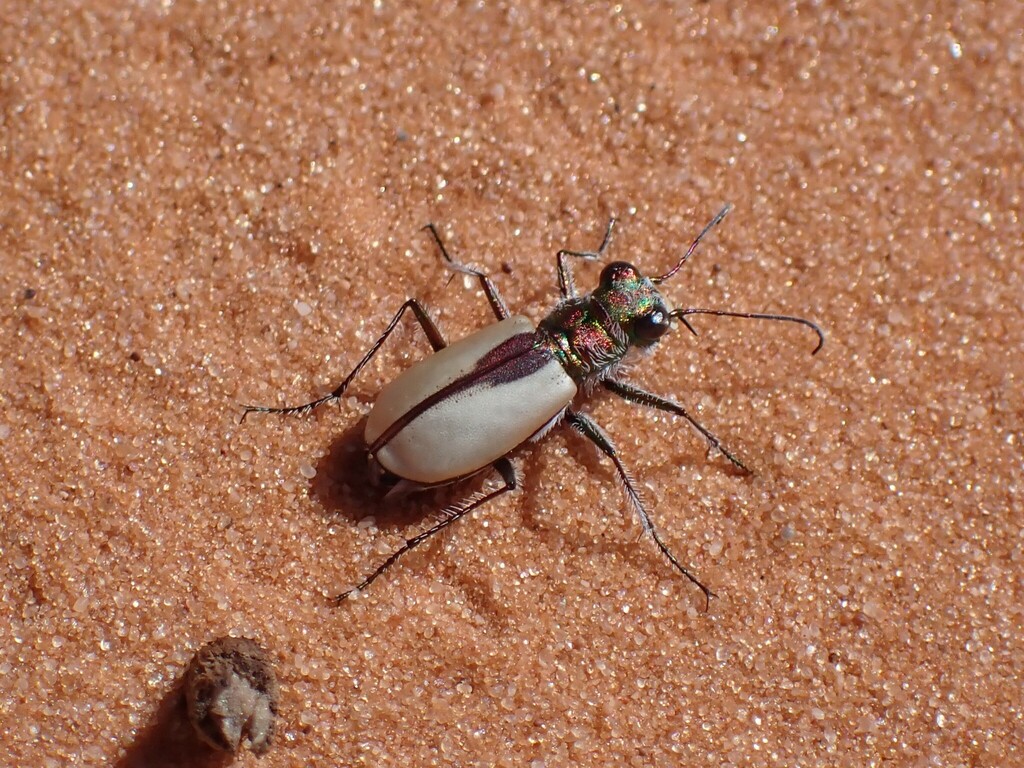
Adults are about 10.5 to 12 mm long and 4.4 to 4.7 mm wide, with females generally larger than males. They live only in a small part of the Coral Pink Sand Dunes State Park in Utah, a 3,500-acre dune system near the Arizona border. The beetles hunt flies and other arthropods on the dunes and also scavenge dead insects that blow in from surrounding areas.
Source: Wikipedia
How to recognize it
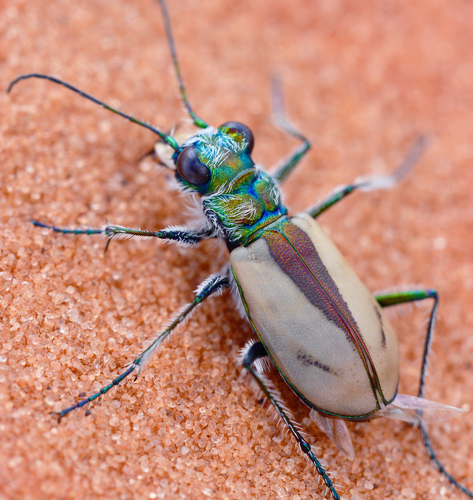
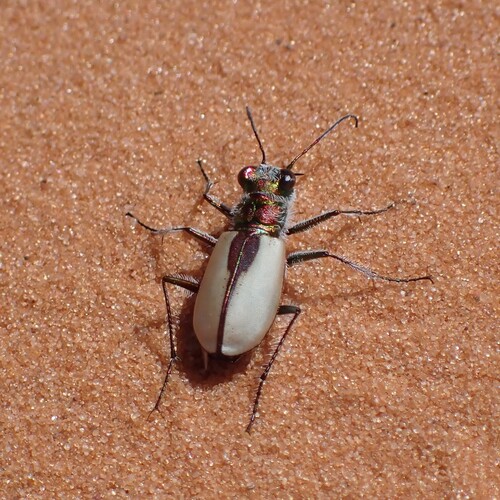
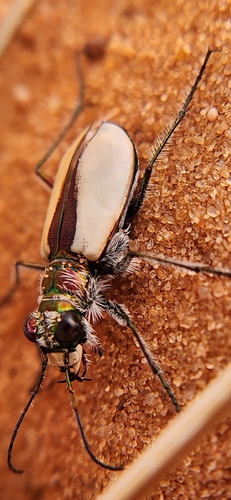
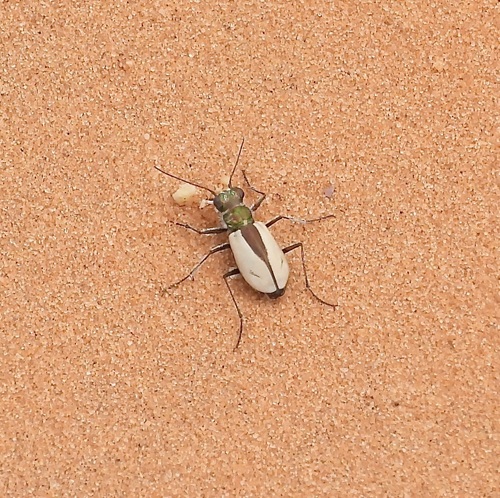
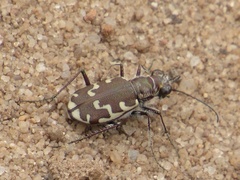
The thorax is brown to bronze, while the wing covers (elytra) are almost white with very little pigment. It can be told apart from other tiger beetles by its very limited range and the lack of color on its elytra.
Source: Wikipedia
Size
Adults measure 10.5 mm to 12 mm in length and 4.4 mm to 4.7 mm in width. Females are generally larger than males.
Source: Wikipedia
Where it lives
The species is endemic to about 20 % of the 3,500-acre Coral Pink Sand Dunes in Kane County, Utah. The dunes lie roughly 7 miles west of Kanab, with their southern edge less than a mile north of the Arizona border.
Source: Wikipedia
What it eats
Adults mainly capture flies and other arthropods that live on the dunes. They also feed on dead arthropods that are blown onto the dunes from nearby habitats.
Source: Wikipedia
Life cycle
The larvae spend the winter in hibernation and emerge as adults in the following spring.
Source: Wikipedia
When you see it
Adults start to appear in March, reach their highest numbers from mid-April to early May, and some can still be seen from late August to early October.
Source: Wikipedia
Where it comes from
It is native only to the Coral Pink Sand Dunes State Park in Utah, USA.
Source: Wikipedia
Lookalikes
It was first described as a subspecies of Cicindela limbata, but DNA and its distinct morphology and range show it is a separate species.
Source: Wikipedia
Where it is found in the US
Recorded in 1 of 51 states and DC. Most records: Utah.
Darker = more records. Counts are museum and citizen-science records, not population size.
Source: GBIF
Status: endemic in North America; endemic in United States. Source: iNaturalist
Months it is reported in the US
Source: GBIF
More photos
Questions people ask
When are Coral Pink Sand Dunes tiger beetles active?
Adults emerge in March, peak in mid-April to early May, and a few may still be seen through early October.
Source: Wikipedia
How can I recognize this beetle?
Look for a brown-to-bronze thorax and almost white elytra with little pigment; its limited Utah dune range also helps distinguish it.
Source: Wikipedia
Same family (Carabidae)


Sources
- Wikipedia: https://en.wikipedia.org/wiki/Cicindela_albissima
Look it up elsewhere: GBIF · iNaturalist · BugGuide · ITIS · Wikipedia
Text written 2026-10-26 from the sources above and checked sentence by sentence against them. Data fetched 2026-10-26.