 Bug FAQ
Copper Chafer
Protaetia cuprea · Order: Coleoptera · Family: Scarabaeidae
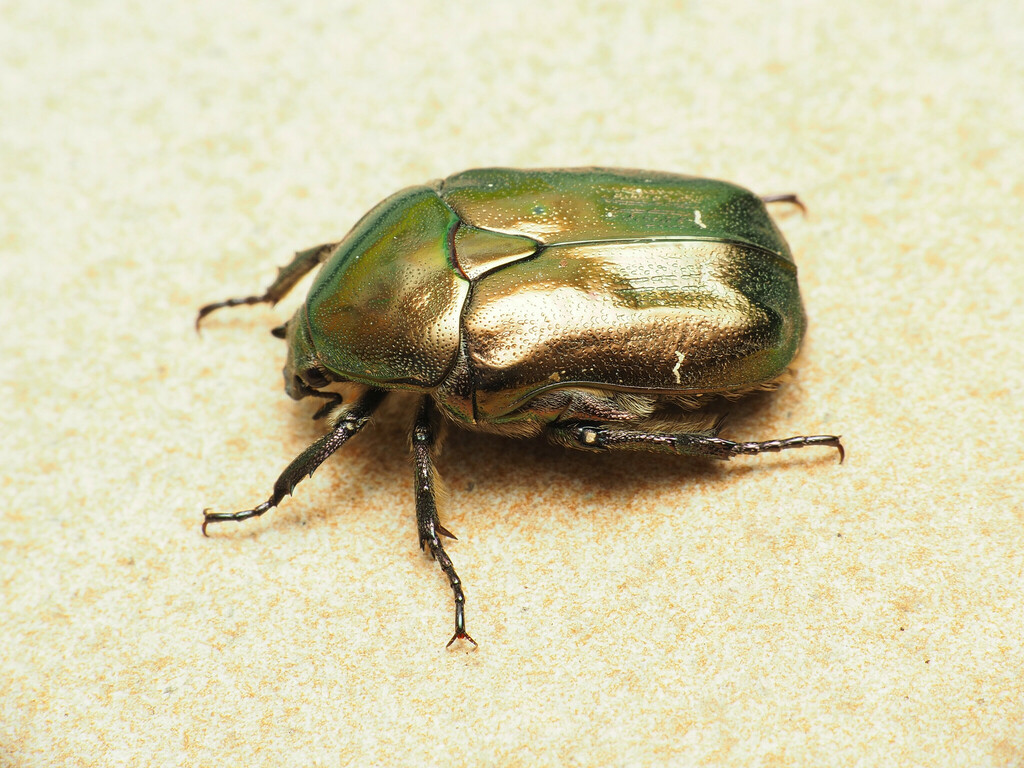
The copper chafer, also called the rose chafer, lives in many habitats from forests to open steppe areas across Europe and Asia. Both adults and larvae feed on decaying plant material, with adults also chewing ripening fruit and flowers, which can harm orchard and garden plants. It usually has a one-year life cycle, though it can sometimes reach adulthood within the same year the eggs are laid.
Source: Wikipedia
How to recognize it
This beetle is commonly known as the rose chafer. The subspecies P. cuprea obscura is missing from Germany but occurs in many Central and Eastern European countries.
Source: Wikipedia
Is it a pest in the house?
Applying insecticides is limited during flowering and pre-harvest to protect bees and avoid health risks.
Source: Wikipedia
How to get rid of it
Mass trapping can be effective if a good trapping system is used. Researchers are developing selective floral attractant-baited traps for this beetle.
Source: Wikipedia
Where it lives
It thrives in a wide range of environments, from dense forests to open, dry steppe regions.
Source: Wikipedia
What it eats
Larvae feed primarily on rotting wood and plant material.
Source: Wikipedia
Life cycle
The typical life cycle lasts one year. Under some conditions, the beetle can develop to adulthood within the same year the eggs are laid.
Source: Wikipedia
Where it comes from
The species is found throughout Europe and Asia.
Source: Wikipedia
Lookalikes
A related subspecies, P. cuprea metallica, occurs in northern Europe, including Norway, Sweden, northern England and southern Scotland.
Source: Wikipedia
Questions people ask
How can I control copper chafers in my garden?
Mass trapping with effective traps and upcoming floral attractant-baited traps are recommended control methods.
Source: Wikipedia
What plants do copper chafers damage?
They feed on flowers, ripening fruit and other reproductive parts of fruit trees and ornamental plants.
Source: Wikipedia
Same family (Scarabaeidae)
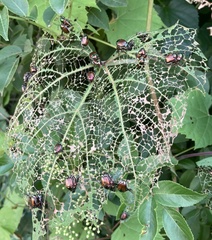 Japanese BeetlePopillia japonicaDamages trees, gardens or crops
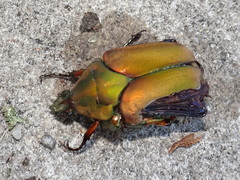 Common Green June BeetleCotinis nitidaDamages trees, gardens or crops
 Phyllophaga crinitaPhyllophaga crinitaDamages trees, gardens or crops
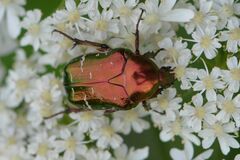 European Rose ChaferCetonia aurata
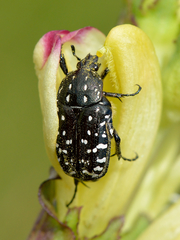 Mediterranean Spotted ChaferOxythyrea funestaDamages trees, gardens or crops
 Oriental BeetleExomala orientalisDamages trees, gardens or crops
Sources
- Wikipedia: https://en.wikipedia.org/wiki/Protaetia_cuprea
Look it up elsewhere: GBIF · iNaturalist · BugGuide · Wikipedia
Text written 2026-10-22 from the sources above and checked sentence by sentence against them. Data fetched 2026-10-22.