 Bug FAQ
Common Sailer
Neptis hylas · Order: Lepidoptera · Family: Nymphalidae
Also called: Common Sailor
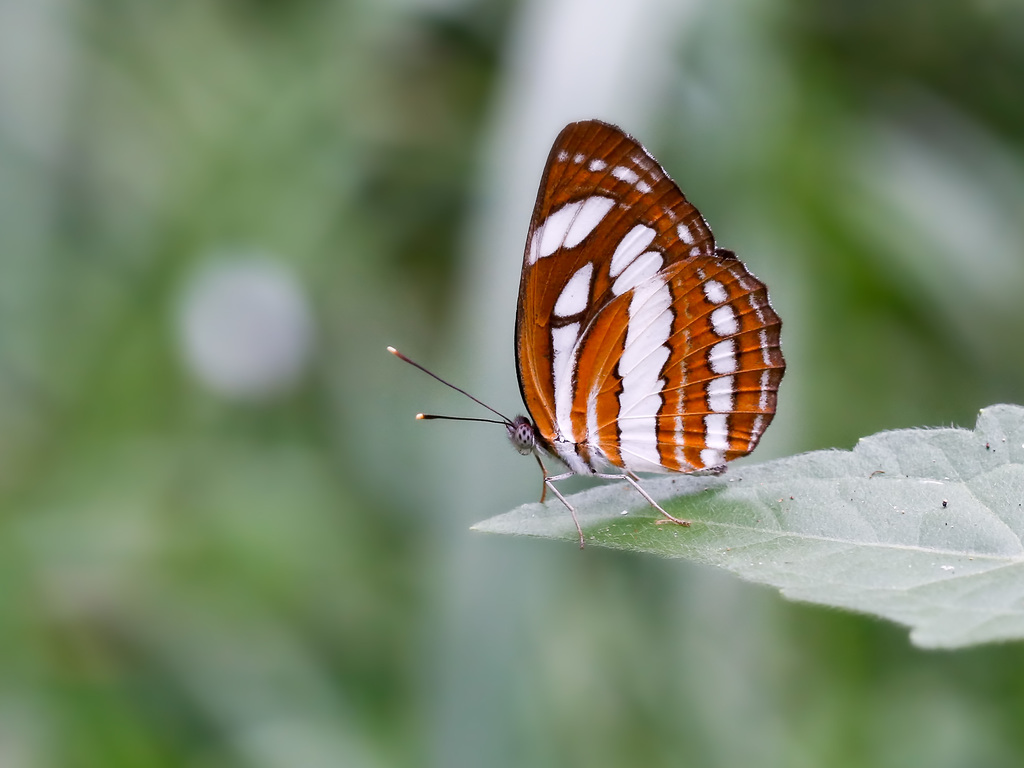
The Common Sailer has a black upperside with clean white markings and a underside that ranges from pale golden to dark chocolate, also with white markings edged in black. It lives across the Indian subcontinent and southeast Asia and is also found in a humid area near Gorizia in Italy. More than twenty subspecies are known, and the species has been observed making sounds of unknown function.
Source: Wikipedia
How to recognize it
Upperside is black with pure white markings; underside varies from pale golden ochraceous to dark chocolate, showing the same white patterns but broader and outlined in black.
Source: Wikipedia
Does it bite or sting?
The butterfly has been observed producing sounds, but their purpose is not known.
Source: Wikipedia
Where it lives
Found throughout the Indian subcontinent, southeast Asia, and in a limited humid zone near Gorizia, Italy.
Source: Wikipedia
Life cycle
More than twenty subspecies have been described for this species.
Source: Wikipedia
Where it comes from
Native to the Indian subcontinent, Sri Lanka, Assam, Nepal, Myanmar, extending into China and the broader Indomalayan region.
Source: Wikipedia
Lookalikes
There are over twenty described subspecies, which can make identification tricky.
Source: Wikipedia
Questions people ask
Can I identify this butterfly by its wing pattern?
Yes, look for a black background with clean white markings on the upperside and broader white markings edged in black on the underside.
Source: Wikipedia
Where might I see a Common Sailer in my garden?
They are common in the Indian subcontinent and southeast Asia, and also appear in a humid area near Gorizia, Italy.
Source: Wikipedia
Same family (Nymphalidae)






Sources
- Wikipedia: https://en.wikipedia.org/wiki/Neptis_hylas
Look it up elsewhere: GBIF · iNaturalist · BugGuide · Wikipedia
Text written 2026-10-22 from the sources above and checked sentence by sentence against them. Data fetched 2026-10-22.