 Bug FAQ
Common Rose Swallowtail
Pachliopta aristolochiae · Order: Lepidoptera · Family: Papilionidae
Also called: Common Rose, Common Rose Butterfly

Males are velvety black on top; females look alike but have broader wings. They live up to 2,400 m in the Western Ghats, visit gardens and even crowded cities, and are found across much of Asia.
Source: Wikipedia
How to recognize it
The forewing has pale streaks near the veins that stop before the edge, and the hindwing shows long white spots in the middle spaces beyond the cell.
Source: Wikipedia
Life cycle
Caterpillars are velvety maroon with a white band around the middle, and females select vigorous Aristolochia plants to lay eggs for their voracious caterpillars.
Source: Wikipedia
When you see it
They are extremely abundant during and after the monsoon and stay active from early morning until dusk.
Source: Wikipedia
Where it comes from
Their range covers much of Asia, including Afghanistan, Pakistan, India, the Andaman and Nicobar Islands, Nepal, Sri Lanka, Myanmar, Thailand, southwestern Okinawa (Japan), Laos, Vietnam, Cambodia, Malaysia, Brunei, the Philippines, Indonesia, Bangladesh and Taiwan.
Source: Wikipedia
Lookalikes
Because they are rarely attacked by predators, other butterflies such as the female form stichius of Papilio polytes mimic them.
Source: Wikipedia
More photos
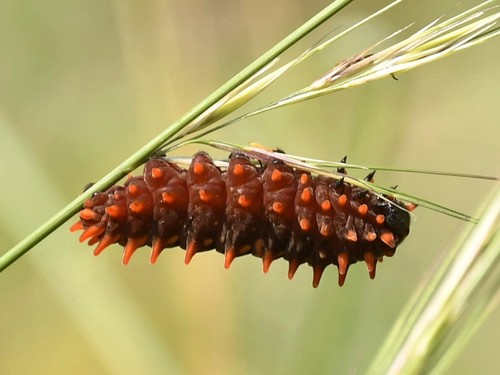
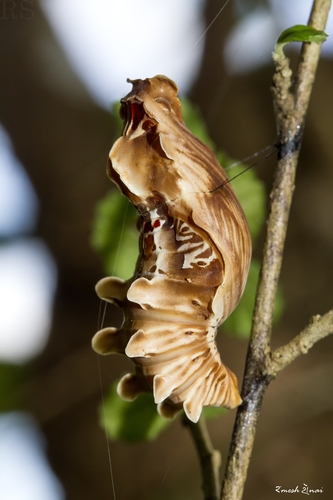
Same family (Papilionidae)
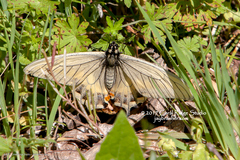

Sources
- Wikipedia: https://en.wikipedia.org/wiki/Pachliopta_aristolochiae
Look it up elsewhere: GBIF · iNaturalist · BugGuide · Wikipedia
Text written 2026-10-22 from the sources above and checked sentence by sentence against them. Data fetched 2026-10-22.