 Bug FAQ
Common Ringlet
Coenonympha california · Order: Lepidoptera · Family: Nymphalidae
Also called: California Ringlet
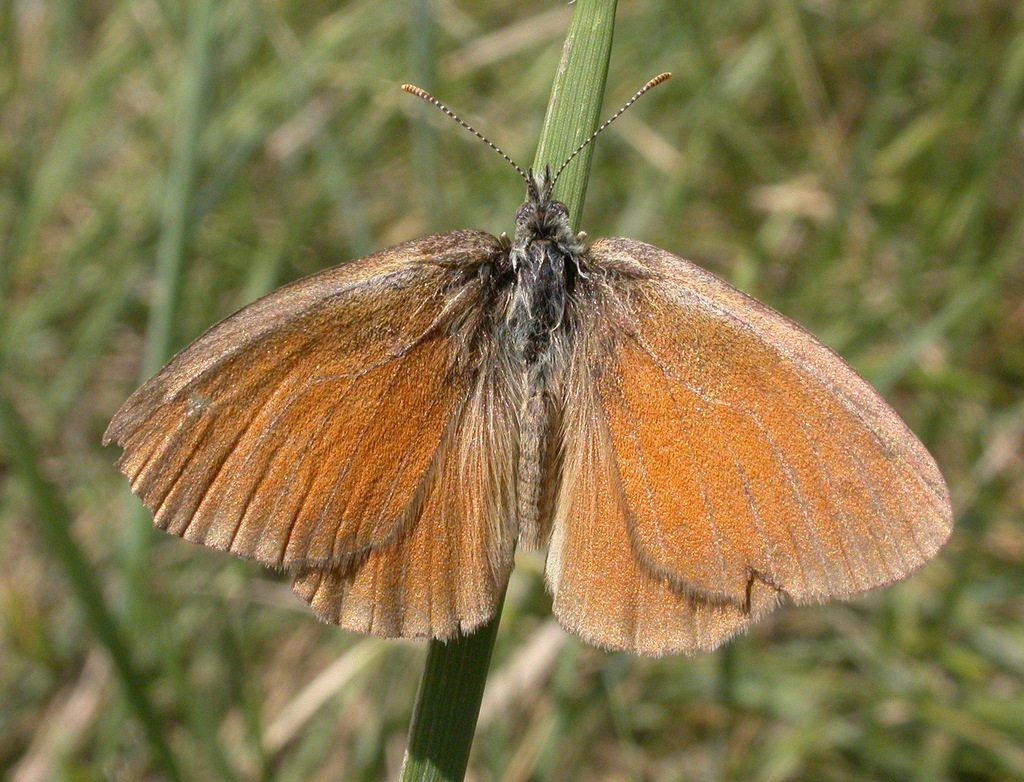
The common ringlet shows a wide range of dorsal wing colors from pale white to deep orange-ochre. It lives in open fields, pastures, foothill woods and grasslands, with some isolated groups in more specialized habitats. Larvae feed on meadow grasses such as Carex inops, and adults nectar on a variety of flowers, especially Daucus carota and Leucanthemum vulgare.
Source: Wikipedia
How to recognize it
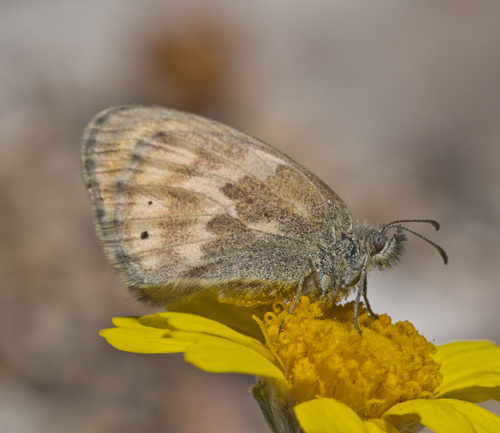
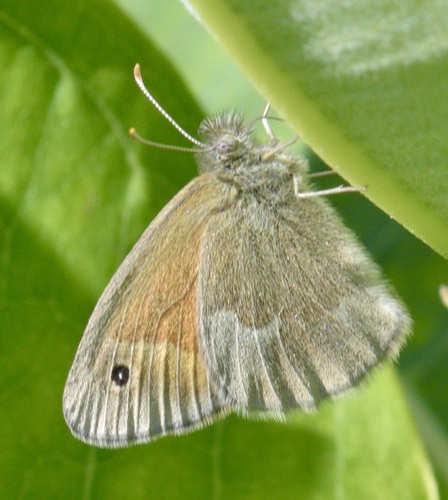
The upper side of the wings can be mild ochre, deep orange-ochre, yellow, or pale/white. The underside of the hind wing may have a variable row of small eyespots that matches the color form.
Source: Wikipedia
Where it lives
Some small populations have adapted to very specific, limited environments away from typical grasslands.
Source: Wikipedia
What it eats
Caterpillars eat meadow grasses like Carex inops and thatch. Adult butterflies sip nectar from many flowers; they most often visit carrot (Daucus carota) and oxeye daisy (Leucanthemum vulgare).
Source: Wikipedia
Life cycle
The life cycle varies with location, altitude and subspecies. In higher-elevation areas the species usually has one generation per year.
Source: Wikipedia
When you see it
In areas with two generations, the second brood appears in late summer after the spring brood. Spring adults tend to be darker and grayer than the brighter, buff-colored summer adults.
Source: Wikipedia
Where it comes from
It is a North American species, also called the California ringlet.
Source: Wikipedia
Lookalikes
It was once thought to be a subspecies of Coenonympha tullia, but genetics now treat it as a separate species.
Source: Wikipedia
Where it is found in the US
Recorded in 32 of 51 states and DC. Most records: California, Vermont, New Hampshire, New York, Oregon, Massachusetts, Maine, Colorado.
Darker = more records. Counts are museum and citizen-science records, not population size.
Source: GBIF
Status: native in North America; native in Canada; native in United States. Source: iNaturalist
Months it is reported in the US
Source: GBIF
More photos
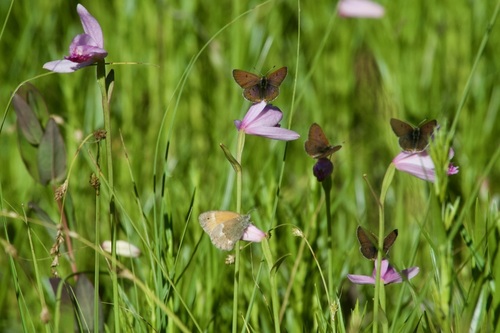
Same family (Nymphalidae)






Sources
- Wikipedia: https://en.wikipedia.org/wiki/Coenonympha_california
Look it up elsewhere: GBIF · iNaturalist · BugGuide · Wikipedia
Text written 2026-10-22 from the sources above and checked sentence by sentence against them. Data fetched 2026-10-22.