 Bug FAQ
Common Nettle Flower Bug
Plagiognathus arbustorum · Order: Hemiptera · Family: Miridae
Also called: Plant bug, Stripe-legged Nettle Bug
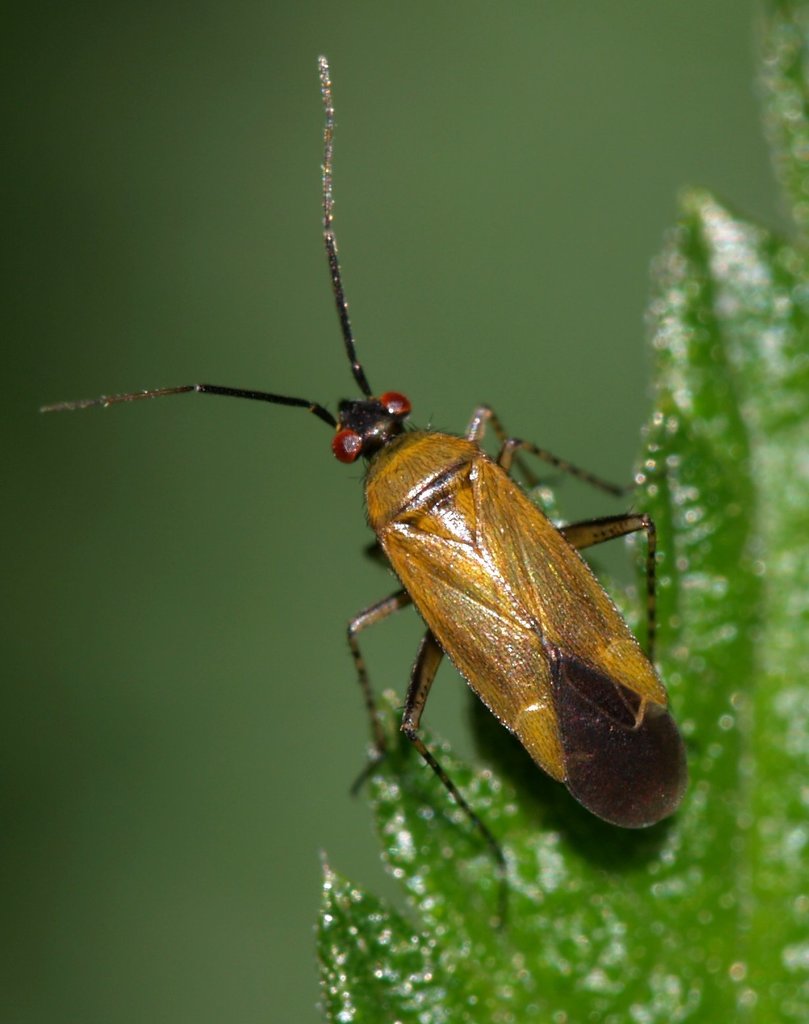
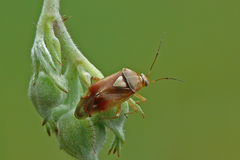
The Common Nettle Flower Bug is a small mirid about 3.6 to 4.5 mm long and varies in colour from almost black to pale olive-green, with dark heads, pronotum, first two antennal segments and hind-femur margins. It lives in high-altitude herbaceous areas, ruderal sites and even salty spots, up to over 2000 m in the Alps, and is widespread across the Nearctic, most of Europe, Siberia and Central Asia. Both adults and nymphs feed on many herbaceous plants, especially buds, flowers and young fruits of families such as nettles, asters, mints, beans, roses and carrots, and can be seen from July to October.
Source: Wikipedia
How to recognize it
Colour ranges from almost black to pale olive-green, with the head, pronotum, first two antennal segments and hind-femur margins completely dark.
Source: Wikipedia
Size
Adults measure 3.6 to 4.5 mm (0.14 to 0.18 in) in length.
Source: Wikipedia
Where it lives
Found in high-altitude herbaceous habitats, disturbed (ruderal) areas and salty spots, up to over 2000 m in the Alps.
Source: Wikipedia
What it eats
Polyphagous on many herbaceous plants, especially Urticaceae, Asteraceae, Lamiaceae, Fabaceae, Rosaceae and Apiaceae.
Source: Wikipedia
Life cycle
Adults are present from July through October.
Source: Wikipedia
When you see it
Adults can be found from July to October.
Source: Wikipedia
Where it comes from
Common throughout the Nearctic realm, most of Europe, and extends eastward to Siberia and Central Asia.
Source: Wikipedia
Where it is found in the US
Recorded in 2 of 51 states and DC. Most records: Washington, Oregon.
Darker = more records. Counts are museum and citizen-science records, not population size.
Source: GBIF
Status: introduced in Canada. Source: iNaturalist
Questions people ask
Where are they found?
They live in high-altitude herbaceous sites, disturbed areas and salty spots, up to over 2000 m in the Alps, and are widespread across the Nearctic, Europe, Siberia and Central Asia.
Source: Wikipedia
Same family (Miridae)
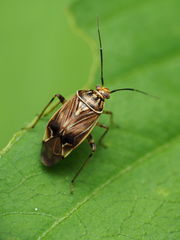 North American Tarnished Plant BugLygus lineolarisDamages trees, gardens or crops
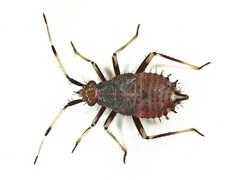 Red-spotted Plant BugDeraeocoris ruber
 Alfalfa Plant BugAdelphocoris lineolatusDamages trees, gardens or crops
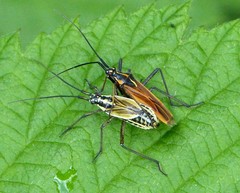 Meadow Plant BugLeptopterna dolabrataDamages trees, gardens or crops
 Four-lined Plant BugPoecilocapsus lineatusDamages trees, gardens or crops
 Lygus pratensisLygus pratensisDamages trees, gardens or crops
Sources
- Wikipedia: https://en.wikipedia.org/wiki/Plagiognathus_arbustorum
Look it up elsewhere: GBIF · iNaturalist · BugGuide · ITIS · Wikipedia
Text written 2026-10-22 from the sources above and checked sentence by sentence against them. Data fetched 2026-10-22.