 Bug FAQ
Common Methana
Methana marginalis · Order: Blattodea · Family: Blattidae
Also called: Methana Cockroach
Source: Wikipedia
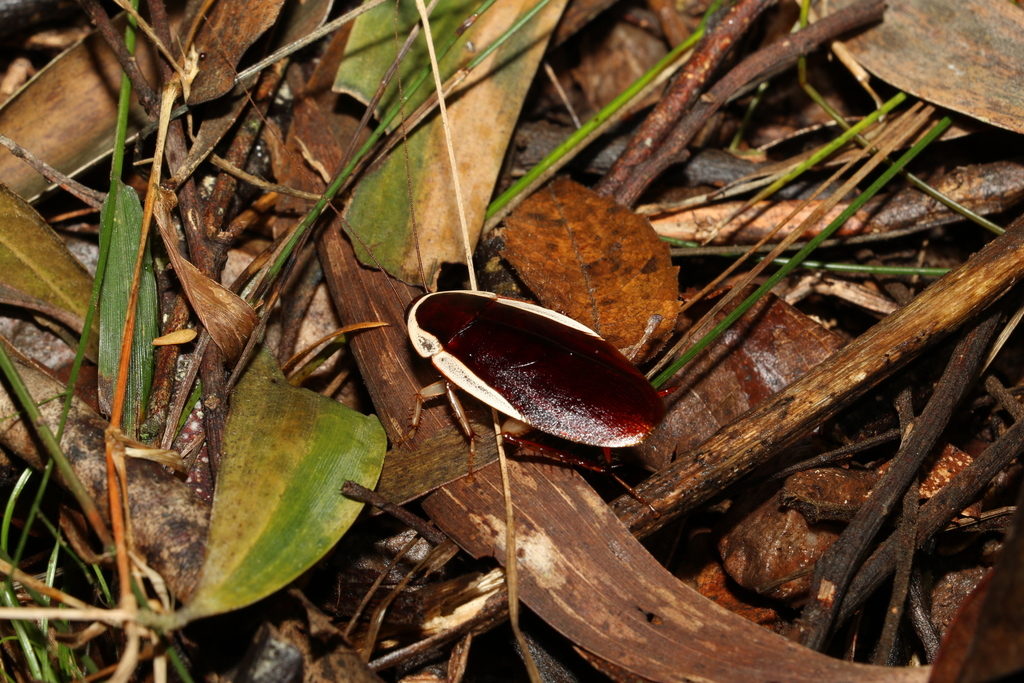
Adult common methana are about 27 to 28.5 mm long (roughly 1 inch). Originally found under bark of dead trees and in banana plantations on the Queensland coast, they have begun living inside Australian homes and are out-competing German cockroaches.
Source: Wikipedia
How to recognize it
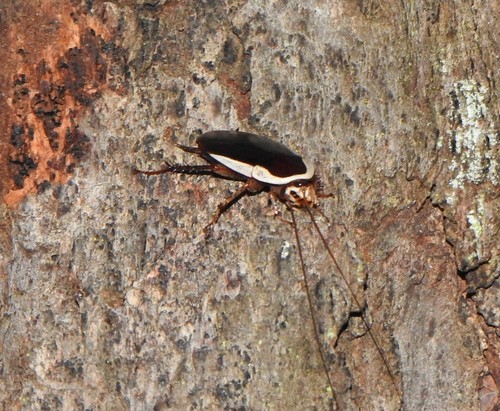
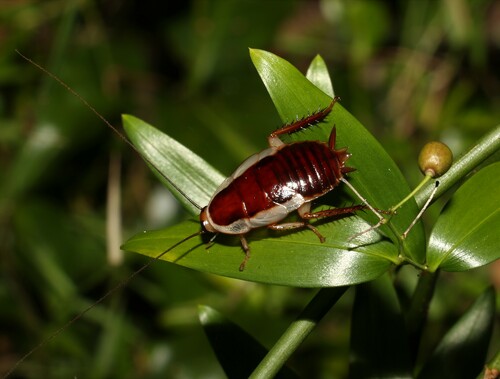
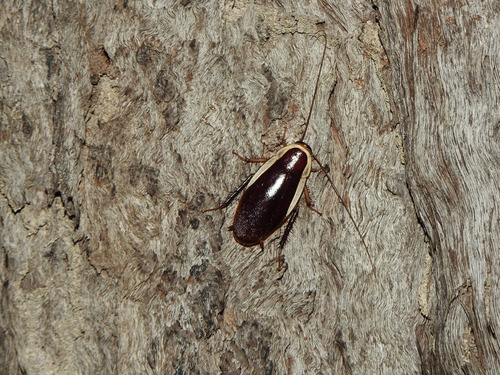
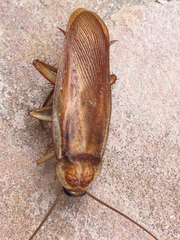
They are dark brown with a light yellow band around the body edge, yellow-brown legs, and their tegmina completely cover the abdomen.
Source: Wikipedia
Is it a pest in the house?
By the 2000s they have increasingly adapted to live within Australian homes and are out-competing the German cockroach.
Source: Wikipedia
Where it lives
Since the 2000s they have increasingly been reported living inside Australian homes, where they out-compete the German cockroach.
Source: Wikipedia
What it eats
They serve as hosts for the parasitic worm Beatogordius lineatus.
Source: Wikipedia
Where it comes from
The species is native to the Queensland coast of Australia.
Source: Wikipedia
More photos
Questions people ask
What do common methana look like?
They are dark brown with a light yellow band around the body edge, yellow-brown legs, and their wings fully cover the abdomen.
Source: Wikipedia
Where are common methana usually found?
They are typically under bark of dead trees and in banana plantations, and increasingly inside Australian homes.
Source: Wikipedia
Are common methana a problem in homes?
Yes, they have been adapting to live inside homes and are out-competing the German cockroach.
Source: Wikipedia
Same family (Blattidae)
 American CockroachPeriplaneta americanaCan spread germs or disease
 Oriental CockroachBlatta orientalisCan spread germs or disease
 Smokybrown CockroachPeriplaneta fuliginosaNuisance, not dangerous
 Australian CockroachPeriplaneta australasiaeNuisance, not dangerous
 Turkestan CockroachPeriplaneta lateralis
 Florida Woods CockroachEurycotis floridana
Sources
- Wikipedia: https://en.wikipedia.org/wiki/Methana_marginalis
Look it up elsewhere: GBIF · iNaturalist · BugGuide · Wikipedia
Text written 2026-10-23 from the sources above and checked sentence by sentence against them. Data fetched 2026-10-23.