 Bug FAQ
Common Mestra
Mestra amymone · Order: Lepidoptera · Family: Nymphalidae
Also called: Northern Mestra
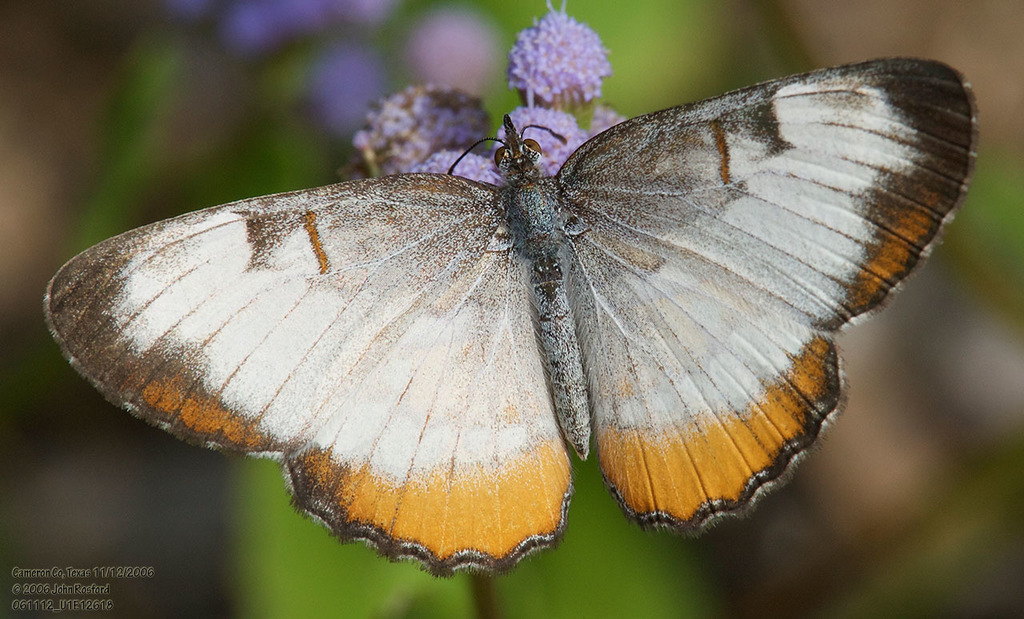
The adult butterfly has a wingspan of about 35 to 50 mm. In southern Texas they can be seen flying all year, but they are most common from June through November. They have been observed sipping nectar from Lantana flowers.
Source: Wikipedia
Size
Wingspan ranges from 35 to 50 mm.
Source: Wikipedia
What it eats
They feed on the nectar of Lantana flowers.
Source: Wikipedia
When you see it
Adults are present year-round in southern Texas, with peak numbers June-November.
Source: Wikipedia
Where it is found in the US
Recorded in 8 of 51 states and DC. Most records: Texas, Arizona, New Mexico, Oklahoma, Kansas, Colorado, Florida, Louisiana.
Darker = more records. Counts are museum and citizen-science records, not population size.
Source: GBIF
Status: native in North America; native in United States. Source: iNaturalist
Months it is reported in the US
Source: GBIF
More photos
Questions people ask
When are Common Mestra butterflies most common?
They are most numerous from June through November in southern Texas.
Source: Wikipedia
Same family (Nymphalidae)






Sources
- Wikipedia: https://en.wikipedia.org/wiki/Mestra_dorcas
Look it up elsewhere: GBIF · iNaturalist · BugGuide · ITIS · Wikipedia
Text written 2026-10-23 from the sources above and checked sentence by sentence against them. Data fetched 2026-10-23.