 Bug FAQ
Common Mapwing
Cyrestis thyodamas · Order: Lepidoptera · Family: Nymphalidae
Also called: Common Map
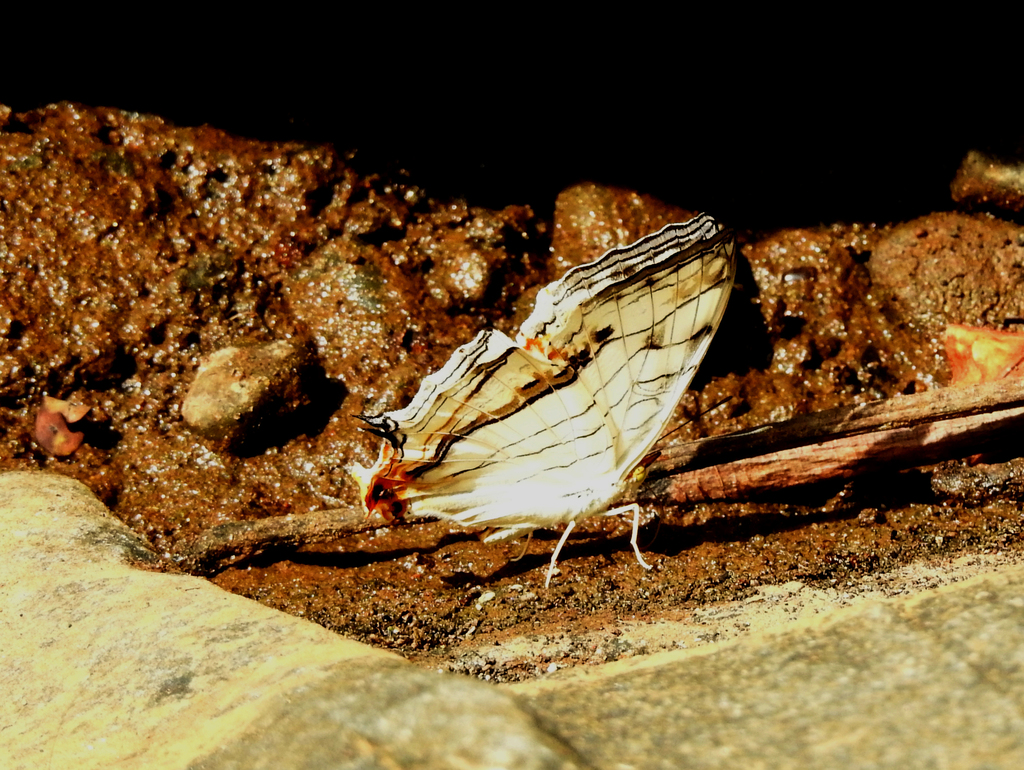
The Common Mapwing has a wingspan of about 58 to 70 mm and its upper side is white or pale ochre-yellow with black veins and several thin black lines on the forewing. It is found across the Indian subcontinent and Southeast Asia, from the Himalayas to southern India, Assam, Manipur, Burma, Tenasserim, and extends to China and Japan. The species migrates to southern India, mud-puddles, and females lay eggs on tender leaves and buds of banian trees in early October.
Source: Wikipedia
How to recognize it
Upper side of both sexes is white or pale ochre-yellow with black veins; the forewing shows four thin, wavy black lines and additional short lines in the cell, plus incomplete series of white-centered fuscous rings near the tornus.
Source: Wikipedia
Size
Wingspan ranges from 58 to 70 mm.
Source: Wikipedia
Life cycle
Eggs are high-domed or conical with a dentate cap; the pupa hangs by its tail, is compressed with a dorsal ridge and a recurved snout, brown with fine dark lines.
Source: Wikipedia
When you see it
A female was observed laying eggs on banian tree buds on 10 October.
Source: Wikipedia
Where it comes from
Occurs throughout the Indian subcontinent and Southeast Asia, from the Himalayas down to Travancore, avoiding hot dry plains, and also in Assam, Manipur, Burma, Tenasserim, extending to China and Japan.
Source: Wikipedia
Lookalikes
The Andaman race (C. t. andamanica) looks very similar but usually has darker, more pronounced markings; some specimens from the Anaimalai Hills resemble the lighter Andaman form.
Source: Wikipedia
More photos
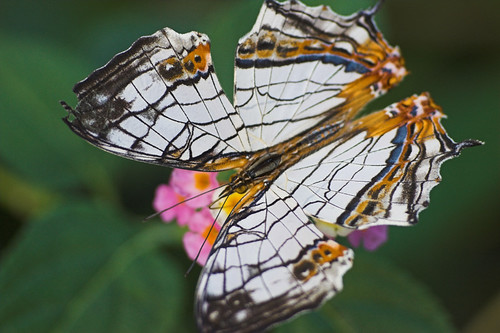

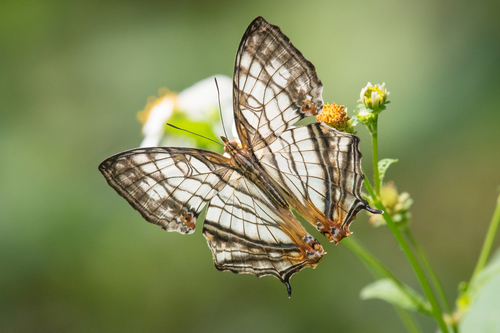
Same family (Nymphalidae)






Sources
- Wikipedia: https://en.wikipedia.org/wiki/Cyrestis_thyodamas
Look it up elsewhere: GBIF · iNaturalist · BugGuide · Wikipedia
Text written 2026-10-22 from the sources above and checked sentence by sentence against them. Data fetched 2026-10-22.