 Bug FAQ
Common Leopard
Phalanta phalantha · Order: Lepidoptera · Family: Nymphalidae
Also called: Spotted Rustic
Source: Wikipedia

It is a medium-sized butterfly with a 5-cm wingspan and glossy undersides; males and females look alike. It perches on the edges of clearings in plains, gardens and hill areas across South Asia and Sub-Saharan Africa. Caterpillars feed on a wide range of plants, including coffee, mango, various trees and garden species, so they can become garden or crop pests.
Source: Wikipedia
How to recognize it
The underside is shinier than the top side, and both sexes look similar. In the dry-season form the underside shows a stronger purple gloss.
Source: Wikipedia
Size
Wingspan ranges from 50 to 55 mm.
Source: Wikipedia
Where it lives
Found in plains, gardens and at the edges of clearings, where it often perches with wings half open.
Source: Wikipedia
Life cycle
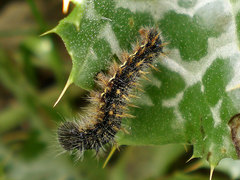
Caterpillars feed on many host plants from families such as Acanthaceae, Compositae, Flacourtiaceae, Primulaceae, Salicaceae, Rubiaceae and Violaceae, including coffee, mango, various trees and shrubs.
Source: Wikipedia
When you see it
Most common in dry areas and during dry weather; absent from wetter regions during the monsoon.
Source: Wikipedia
Where it comes from
Widely distributed from Sri Lanka and southern India up to 3000 m in the Himalayas and throughout Sub-Saharan Africa.
Source: Wikipedia
Where it is found in the US
Recorded in 3 of 51 states and DC. Most records: Indiana, Texas, Colorado.
Darker = more records. Counts are museum and citizen-science records, not population size.
Source: GBIF
More photos


Questions people ask
Do common leopard butterflies damage garden plants?
Yes, their larvae feed on many garden and crop plants such as coffee, mango, and various trees, which can cause leaf damage.
Source: Wikipedia
Where are they usually seen?
They are often seen perched on the edges of clearings in plains and gardens.
Source: Wikipedia
Same family (Nymphalidae)





Sources
- Wikipedia: https://en.wikipedia.org/wiki/Phalanta_phalantha
Look it up elsewhere: GBIF · iNaturalist · BugGuide · Wikipedia
Text written 2026-10-22 from the sources above and checked sentence by sentence against them. Data fetched 2026-10-22.