 Bug FAQ
Common Glider
Tramea loewii · Order: Odonata · Family: Libellulidae
Also called: Common Glider Dragonfly

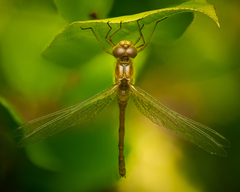
The common glider is a medium-to-large dragonfly about 45 mm long with an 85 mm wingspan. Males have a red abdomen, a striped purplish thorax and dark red patches at the base of the hindwings; females are dull brown with brown wing patches. It lives around still waters such as ponds, swamps and lagoons across Indonesia, New Guinea, Australia, the western Pacific and New Caledonia, and has recently appeared in New Zealand.
Source: Wikipedia
How to recognize it
Males show a red abdomen, a striped thorax on a purplish background and red patches at the hindwing bases; females are dull brown with brown wing patches.
Source: Wikipedia
Size
Body length is about 45 mm and wingspan about 85 mm.
Source: Wikipedia
Where it lives
It inhabits a variety of still-water sites including ponds, swamps and lagoons.
Source: Wikipedia
Where it comes from
It has recently become self-introduced in New Zealand.
Source: Wikipedia
Lookalikes
It resembles Tramea stenoloba but differs in thorax colouration and the shape of the secondary genitalia.
Source: Wikipedia
More photos


Questions people ask
Where is the common glider found?
It lives around ponds, swamps and lagoons from Indonesia and New Guinea through Australia to the western Pacific and New Caledonia, and has recently appeared in New Zealand.
Source: Wikipedia
Same family (Libellulidae)


Sources
- Wikipedia: https://en.wikipedia.org/wiki/Tramea_loewii
Look it up elsewhere: GBIF · iNaturalist · BugGuide · Wikipedia
Text written 2026-10-23 from the sources above and checked sentence by sentence against them. Data fetched 2026-10-22.