 Bug FAQ
Common Cockchafer
Melolontha melolontha · Order: Coleoptera · Family: Scarabaeidae
Also called: European Cockchafer, cockchafer maybeetle, May Beetle, May Bug
Source: Wikipedia
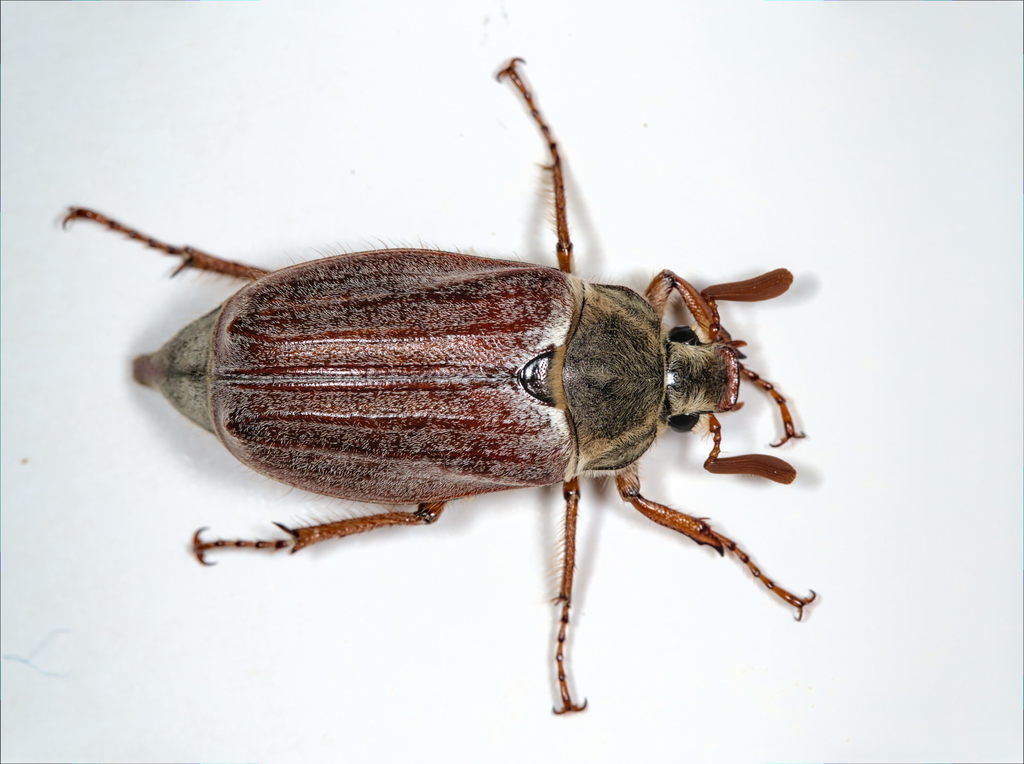
Adult cockchafers appear from late April to early June and live for about five to seven weeks, feeding on the foliage of many broad-leaf trees. They are native to Europe and stay close to the fields or grasslands where they emerge, usually moving only a few kilometres.
Source: Wikipedia
Where it lives
They are widespread across temperate Europe where the soil is suitable for their larvae. Adults usually stay within 2 to 3 km of the fields or grasslands where they emerge.
Source: Wikipedia
What it eats
Both adults and larvae feed on plants. Adults especially eat leaves of oak, sycamore, maple, hornbeam, beech, plum and sometimes chestnut.
Source: Wikipedia
Life cycle
They develop through egg, larva, pupa and adult stages. The larva, called a white grub, hatches 4 to 6 weeks after the egg is laid and begins feeding.
Source: Wikipedia
When you see it
Adults emerge from late April to early June and live for about five to seven weeks.
Source: Wikipedia
Where it comes from
The species is native to Europe.
Source: Wikipedia
Lookalikes
It is one of several similar Melolontha species, such as the forest cockchafer (M. hippocastani).
Source: Wikipedia
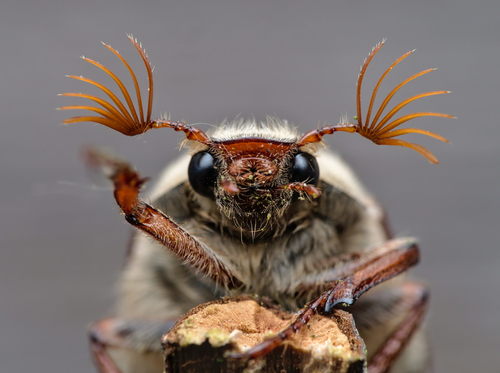
More photos

Questions people ask
What trees do they damage?
They feed on leaves of oak, sycamore, maple, hornbeam, beech, plum and sometimes chestnut, which can harm those trees.
Source: Wikipedia
Same family (Scarabaeidae)
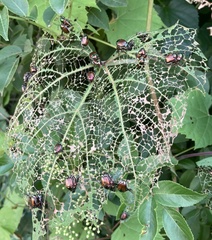 Japanese BeetlePopillia japonicaDamages trees, gardens or crops
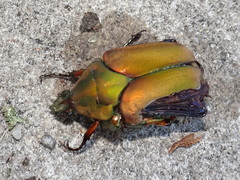 Common Green June BeetleCotinis nitidaDamages trees, gardens or crops
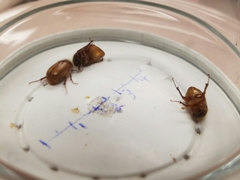 Phyllophaga crinitaPhyllophaga crinitaDamages trees, gardens or crops
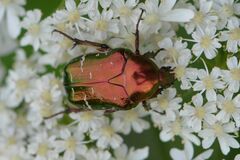 European Rose ChaferCetonia aurata
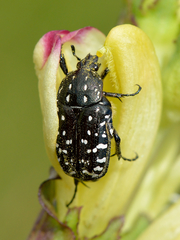 Mediterranean Spotted ChaferOxythyrea funestaDamages trees, gardens or crops
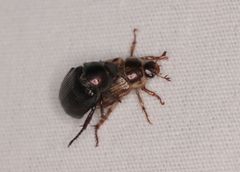 Oriental BeetleExomala orientalisDamages trees, gardens or crops
Sources
- Wikipedia: https://en.wikipedia.org/wiki/Cockchafer
Look it up elsewhere: GBIF · iNaturalist · BugGuide · Wikipedia
Text written 2026-10-22 from the sources above and checked sentence by sentence against them. Data fetched 2026-10-22.