 Bug FAQ
Common Cerulean
Jamides celeno · Order: Lepidoptera · Family: Lycaenidae
Also called: Common Caerulean
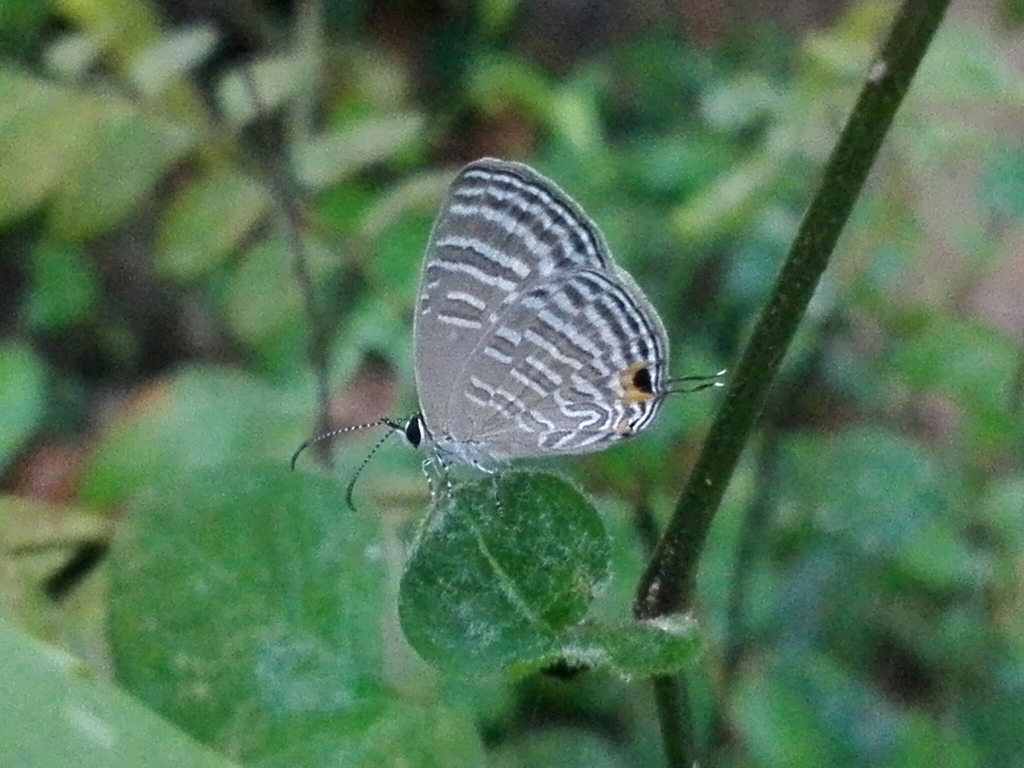
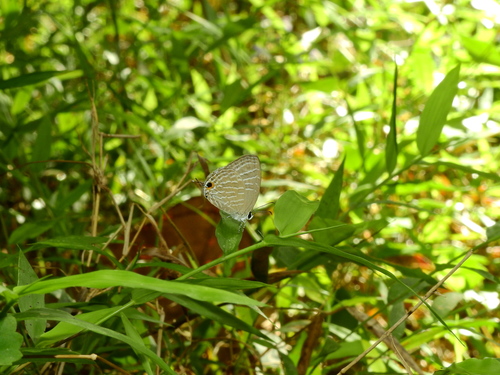
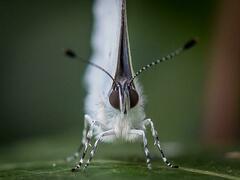
Male common cerulean butterflies have a pale bluish-white upper side. The forewing edge is narrowly black, widening slightly toward the tip, with brown-black fringe. The species occurs in the Indomalayan region and shows seasonal colour changes, with dry-season forms being darker and having broader black markings.
Source: Wikipedia
How to recognize it
Males have a pale bluish-white ground colour on the upperside. The forewing margin is thinly edged in black, widening a bit toward the apex, and the fringe is brownish-black.
Source: Wikipedia
What it eats
Larvae are tended by the ant Camponotus mitis. Larvae feed on the plant Heynea trijuga.
Source: Wikipedia
Life cycle
Adults show seasonal polyphenism, changing appearance with the season.
Source: Wikipedia
When you see it
Dry-season brood individuals are darker overall and have broader black wing markings than wet-season forms.
Source: Wikipedia
Where it comes from
Common cerulean is a small lycaenid butterfly native to the Indomalayan realm.
Source: Wikipedia
Lookalikes
Dry-season males and females look similar to the wet-season ones but are darker with more pronounced black edges.
Source: Wikipedia
More photos
Questions people ask
What plants do common cerulean caterpillars eat?
The caterpillars feed on Heynea trijuga.
Source: Wikipedia
Do ants attend common cerulean larvae?
Yes, the ant Camponotus mitis tends the larvae.
Source: Wikipedia
How can I tell a dry-season common cerulean from a wet-season one?
Dry-season butterflies are generally darker and have broader black wing edges.
Source: Wikipedia
Same family (Lycaenidae)

Sources
- Wikipedia: https://en.wikipedia.org/wiki/Jamides_celeno
Look it up elsewhere: GBIF · iNaturalist · BugGuide · Wikipedia
Text written 2026-10-22 from the sources above and checked sentence by sentence against them. Data fetched 2026-10-22.