 Bug FAQ
Common Archtail
Nannophlebia risi · Order: Odonata · Family: Libellulidae
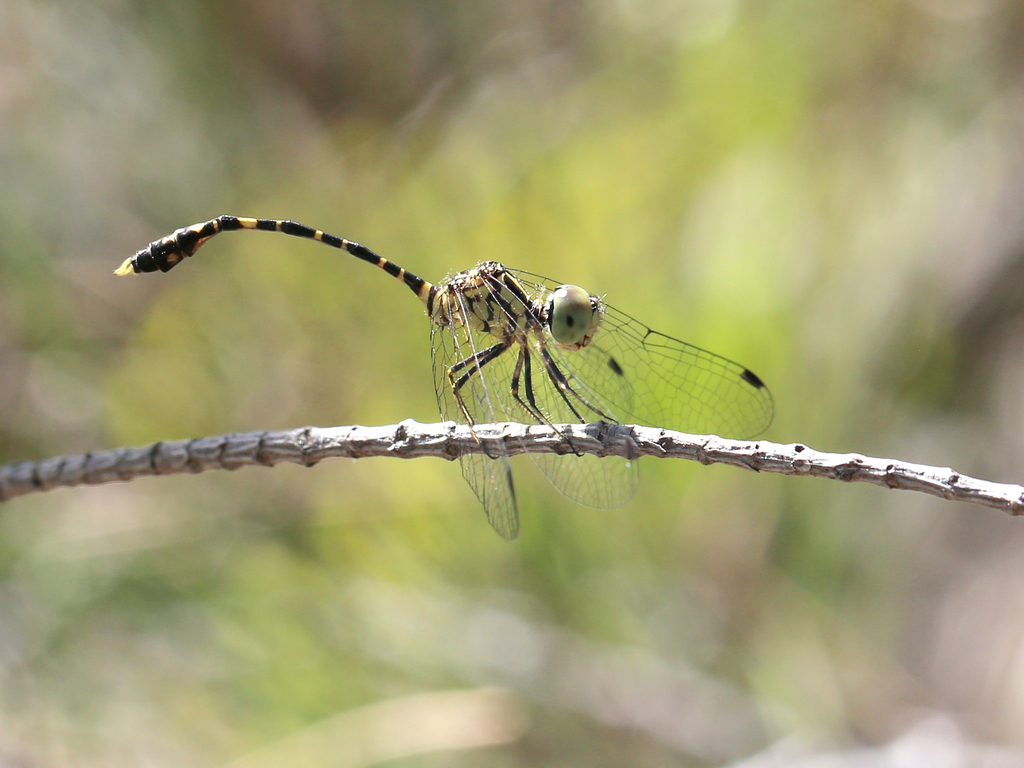
Common archtails are small dragonflies with a wingspan of about 5-6 cm and a body length of 3.5-4 cm. They have a black abdomen marked with yellow bands, an arched shape with swollen rear segments, a black synthorax with yellow-green patches, and clear wings with brown markings near the base. These insects live near streams and rivers in Australia, where their larvae hide among gravel and stones.
Source: Wikipedia
How to recognize it
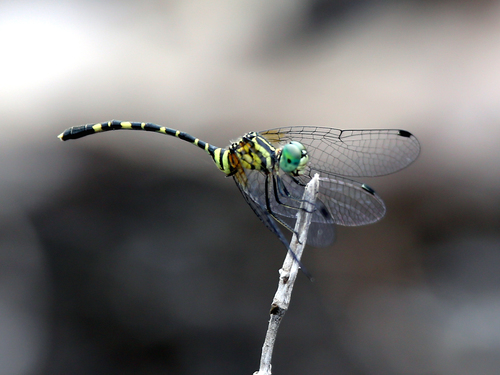
The abdomen is black with small yellow bands or patches, and the tail arches with swollen segments toward the end. The synthorax is black with large yellow-green patches, and the wings are clear with brown markings on the inner third.
Source: Wikipedia
Size
Wingspan ranges from 50 to 60 mm and body length from 35 to 40 mm.
Source: Wikipedia
Where it lives
They are found around streams and rivers, and the larvae live near gravel or stones.
Source: Wikipedia
Where it comes from
The species is endemic to Australia.
Source: Wikipedia
More photos

Questions people ask
How can I identify a common archtail?
Look for a small dragonfly about 5-6 cm wide with a black abdomen bearing yellow bands, an arched tail, and clear wings that have brown markings near the base.
Source: Wikipedia
Where might I find a common archtail?
They live near streams and rivers in Australia, with their larvae hiding among gravel and stones.
Source: Wikipedia
Same family (Libellulidae)

Sources
- Wikipedia: https://en.wikipedia.org/wiki/Nannophlebia_risi
Look it up elsewhere: GBIF · iNaturalist · BugGuide · Wikipedia
Text written 2026-10-23 from the sources above and checked sentence by sentence against them. Data fetched 2026-10-23.