 Bug FAQ
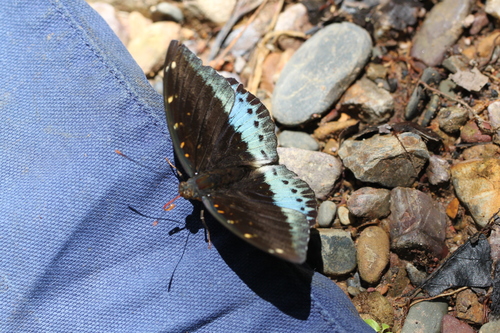
Common Archduke
Lexias pardalis · Order: Lepidoptera · Family: Nymphalidae
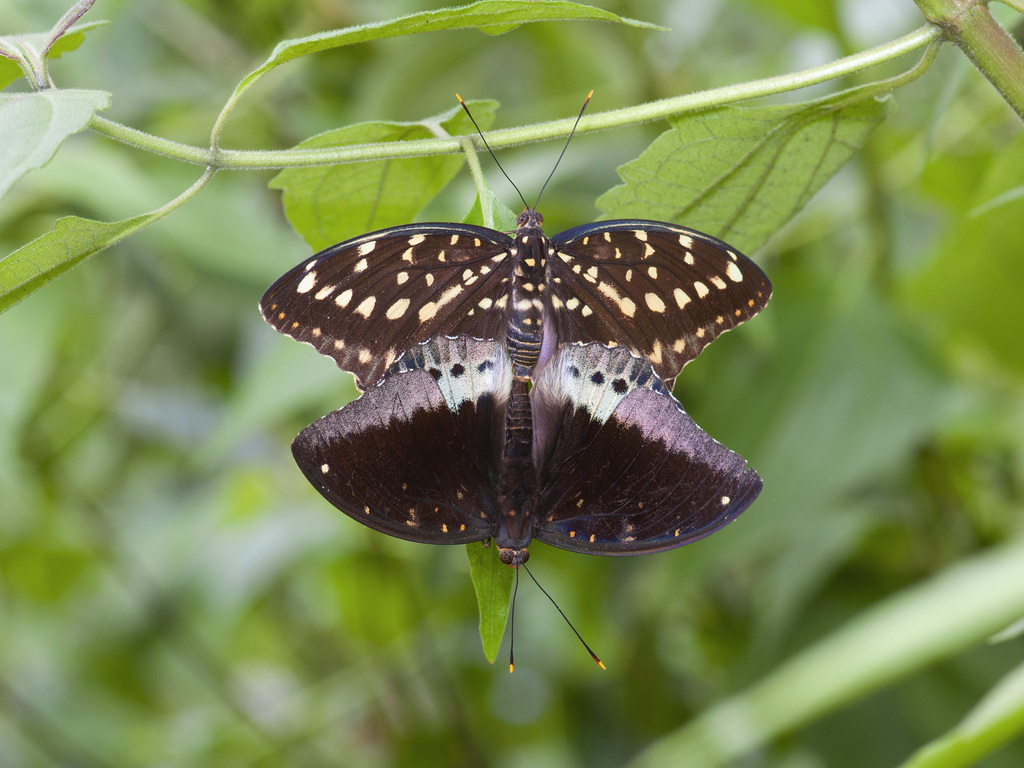
It lives in sunny clearings, paths and forest edges of primary forests in the Indomalayan realm, where adults feed on rotting fruit (especially Garcinia) and flower nectar, and larvae feed on Cratoxylum species.
Source: Wikipedia
How to recognize it
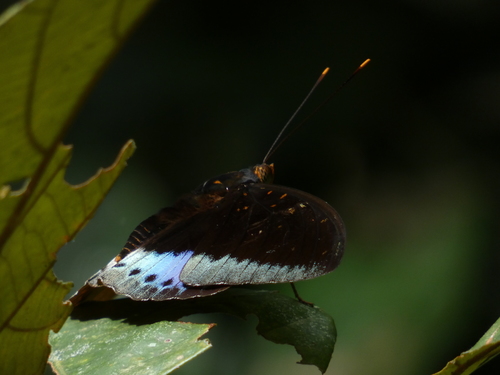
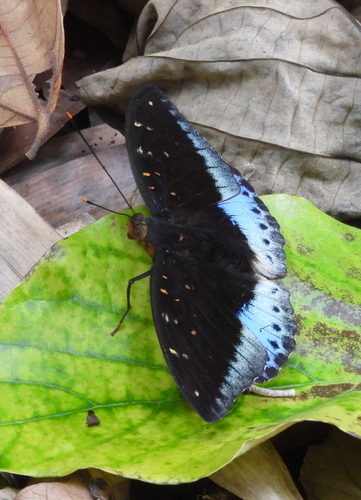
Males have black upper wings with shimmering green-blue margins, especially on the hindwings.
Source: Wikipedia
Size
Wingspan reaches about 80 to 90 mm (3.1 to 3.5 in).
Source: Wikipedia
Where it lives
Prefers paths, clearings and forest edges, often seen in sunny spots on the forest floor.
Source: Wikipedia
What it eats
Adults mainly feed on rotting fruits, especially Garcinia, and also on flower nectar.
Source: Wikipedia
Life cycle
The chrysalis is pale green.
Source: Wikipedia
Where it comes from
Found in the Indomalayan realm.
Source: Wikipedia
Lookalikes
A similar species, Lexias dirtea, has black clubs.
Source: Wikipedia
More photos
Questions people ask
Where am I likely to see a Common Archduke?
Look for them in sunny clearings, paths and forest edges of primary forests in the Indomalayan region.
Source: Wikipedia
What do Common Archduke caterpillars eat?
The caterpillars feed on leaves of Cratoxylum formosum and Cratoxylum cochinchinense.
Source: Wikipedia
What do adult Common Archdukes feed on?
Adults mainly feed on rotting fruits, especially those of Garcinia, and also sip nectar from flowers.
Source: Wikipedia
Same family (Nymphalidae)






Sources
- Wikipedia: https://en.wikipedia.org/wiki/Lexias_pardalis
Look it up elsewhere: GBIF · iNaturalist · BugGuide · Wikipedia
Text written 2026-10-22 from the sources above and checked sentence by sentence against them. Data fetched 2026-10-22.