 Bug FAQ
Commander
Moduza procris · Order: Lepidoptera · Family: Nymphalidae
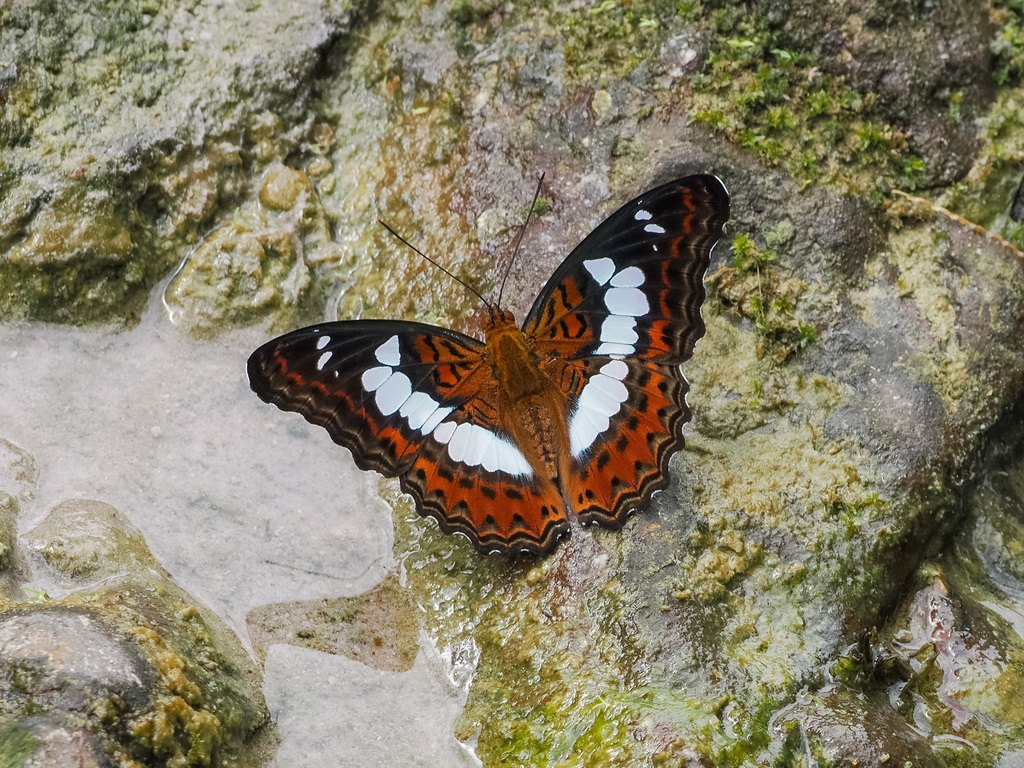
It lives at low elevations up to 900 m, favoring open glades, roadsides, forest clearings and watercourses in dry and moist deciduous forests. Found across South and Southeast Asia, from Sri Lanka and Peninsular India through the Himalayas to Myanmar, it visits a range of flowers and its larvae feed on Rubiaceae plants.
Source: Wikipedia
How to recognize it
The upper side of the wings is bright reddish brown with broad white spots toward the centre. In flight the butterfly shows a bright red-brown colour with a white V-shaped band. The hindwings have scalloped (crenulated) margins.
Source: Wikipedia
What it eats
Larvae feed on plants in the Rubiaceae family, while adults visit a variety of flowers from low herbs to high canopy trees.
Source: Wikipedia
Life cycle
Females lay a single egg on the underside of a leaf tip; the egg hatches in 3 to 4 days. Caterpillars are dirty brown with chestnut tinge and dark splotches; before pupating they wander away from the host plant.
Source: Wikipedia
When you see it
Most commonly seen in the post-monsoon months and winter.
Source: Wikipedia
More photos
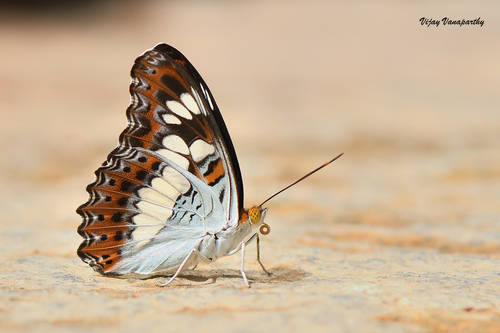
Questions people ask
When can I expect to see commander butterflies?
They are most common after the monsoon and during winter.
Source: Wikipedia
Where does the commander butterfly live?
It lives at low elevations up to about 900 m, favoring open glades, roadsides, forest clearings and watercourses in dry and moist deciduous forests.
Source: Wikipedia
What plants do commander larvae feed on?
Their host plants belong to the Rubiaceae family.
Source: Wikipedia
Same family (Nymphalidae)






Sources
- Wikipedia: https://en.wikipedia.org/wiki/Moduza_procris
Look it up elsewhere: GBIF · iNaturalist · BugGuide · Wikipedia
Text written 2026-10-22 from the sources above and checked sentence by sentence against them. Data fetched 2026-10-22.