 Bug FAQ
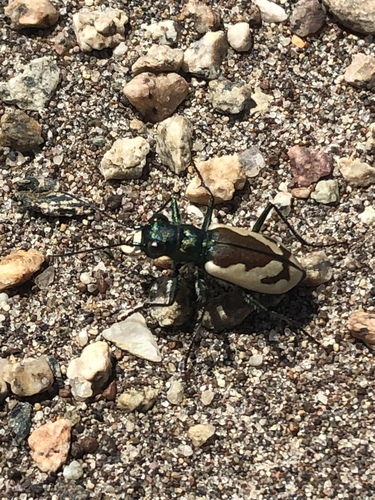
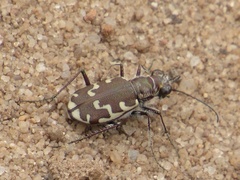
Colorado Dune Tiger Beetle
Cicindela theatina · Order: Coleoptera · Family: Carabidae
Also called: Colorado Tiger Beetle, Great Sand Dunes tiger beetle
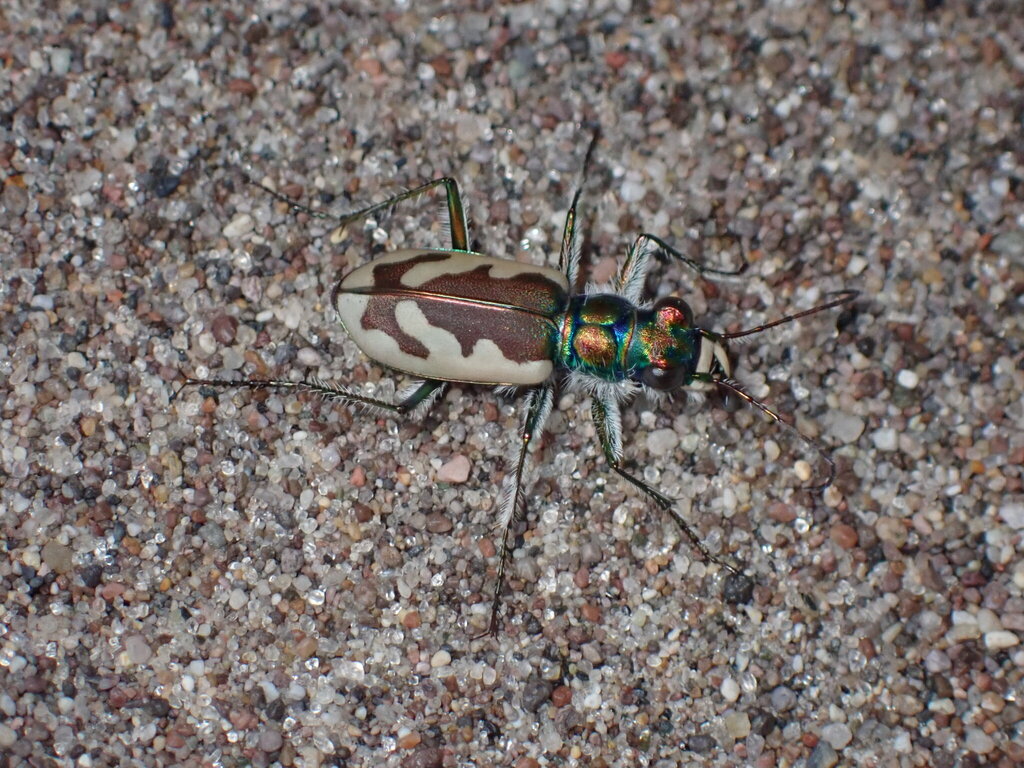
Adult Great Sand Dunes tiger beetles are about 13 mm long and live in sparsely vegetated sandy areas. They are found only in a roughly 290 km² region of Colorado’s Great Sand Dunes National Park. The beetles are predators, live about 2½ years, mate in late May, larvae appear in June, and adults emerge the following July.
Source: Wikipedia
Size
Adults measure around 13 mm (0.51 in) in length.
Source: Wikipedia
Where it lives
They inhabit sparsely vegetated sandy habitats.
Source: Wikipedia
What it eats
They are predatory beetles.
Source: Wikipedia
Life cycle
The species lives roughly 2.5 years. Mating occurs in late May and larvae appear the next month.
Source: Wikipedia
When you see it
Mating takes place in late May, and larvae are seen in June. Adults emerge in July.
Source: Wikipedia
Where it comes from
Their range is limited to about 290 km² within Great Sand Dunes National Park, Colorado.
Source: Wikipedia
Where it is found in the US
Recorded in 1 of 51 states and DC. Most records: Colorado.
Darker = more records. Counts are museum and citizen-science records, not population size.
Source: GBIF
Status: endemic in North America; endemic in United States. Source: iNaturalist
Months it is reported in the US
Source: GBIF
More photos
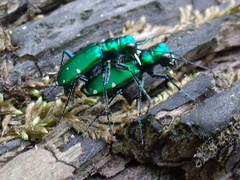
Same family (Carabidae)

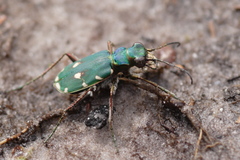

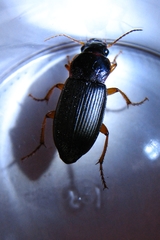
Sources
- Wikipedia: https://en.wikipedia.org/wiki/Cicindela_theatina
Look it up elsewhere: GBIF · iNaturalist · BugGuide · ITIS · Wikipedia
Text written 2026-10-27 from the sources above and checked sentence by sentence against them. Data fetched 2026-10-27.