 Bug FAQ
Cola Nut Gall Wasp
Andricus lignicola · Order: Hymenoptera · Family: Cynipidae
Also called: Cola-Nut Gall
Source: Wikipedia
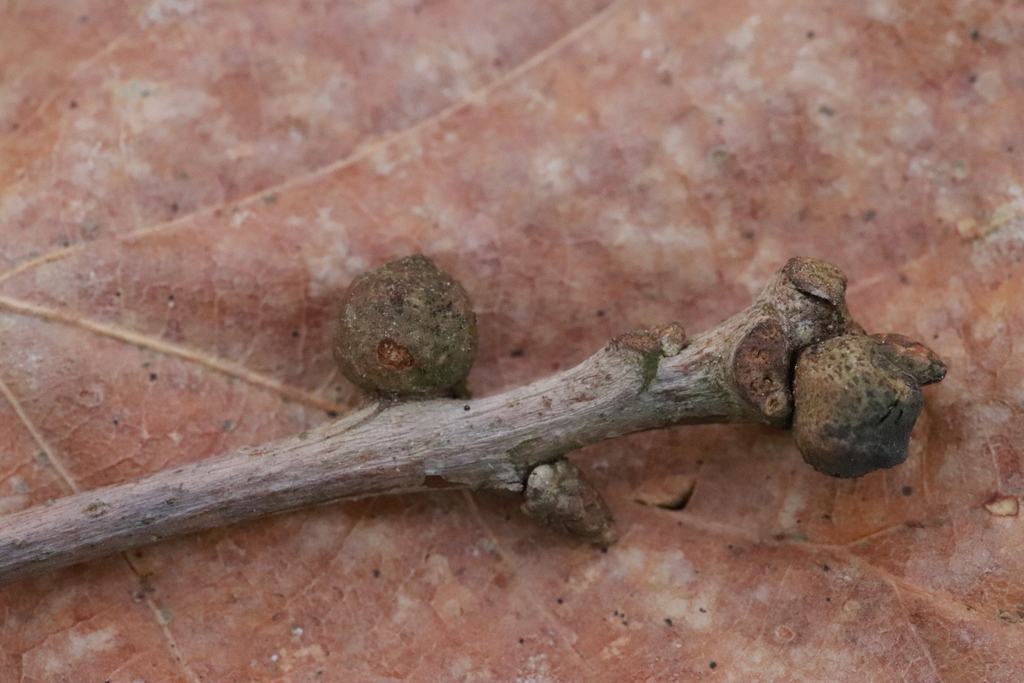
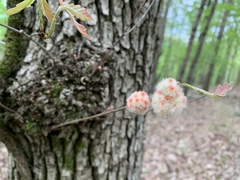
Cola-nut gall wasps make hard, firm galls on oak buds that fall away after the adult emerges. The adult emerges in early summer and the insects do not cause measurable damage even when many are present.
Source: Wikipedia
How to recognize it
The galls are hard and firm but do not stay on the tree for long. When the adult leaves, a small round hole is left behind.
Source: Wikipedia
Size
Galls grow to about 10 mm by 8 mm.
Source: Wikipedia
Is it a pest in the house?
Even in large numbers they cause no measurable harm.
Source: Wikipedia
How to get rid of it
Removing and destroying galls before they dry can reduce their numbers.
Source: Wikipedia
Where it lives
They form on leaf-axil or terminal buds of pedunculate or sessile oak.
Source: Wikipedia
What it eats
Females lay single eggs inside oak leaf buds with their ovipositor.
Source: Wikipedia
Life cycle
The adult of the asexual generation emerges in early summer after the gall forms.
Source: Wikipedia
When you see it
Adults appear in early summer.
Source: Wikipedia
Where it comes from
They are common across continental Europe from Great Britain to Asia Minor.
Source: Wikipedia
Lookalikes
The bisexual generation gall looks very similar to that of Andricus kollari.
Source: Wikipedia
Questions people ask
How can I get rid of cola-nut gall wasps?
Remove and destroy the galls before they dry and the adults emerge.
Source: Wikipedia
Do they damage my oak trees?
They cause no measurable harm to the trees even when many are present.
Source: Wikipedia
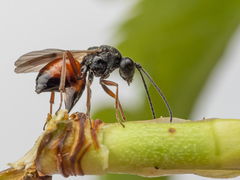
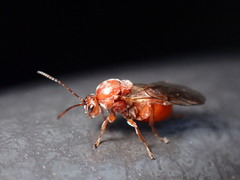
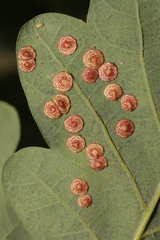
Same family (Cynipidae)


Sources
- Wikipedia: https://en.wikipedia.org/wiki/Andricus_lignicola
Look it up elsewhere: GBIF · iNaturalist · BugGuide · Wikipedia
Text written 2026-10-23 from the sources above and checked sentence by sentence against them. Data fetched 2026-10-22.