 Bug FAQ
Coastal Green Hairstreak
Callophrys viridis · Order: Lepidoptera · Family: Lycaenidae
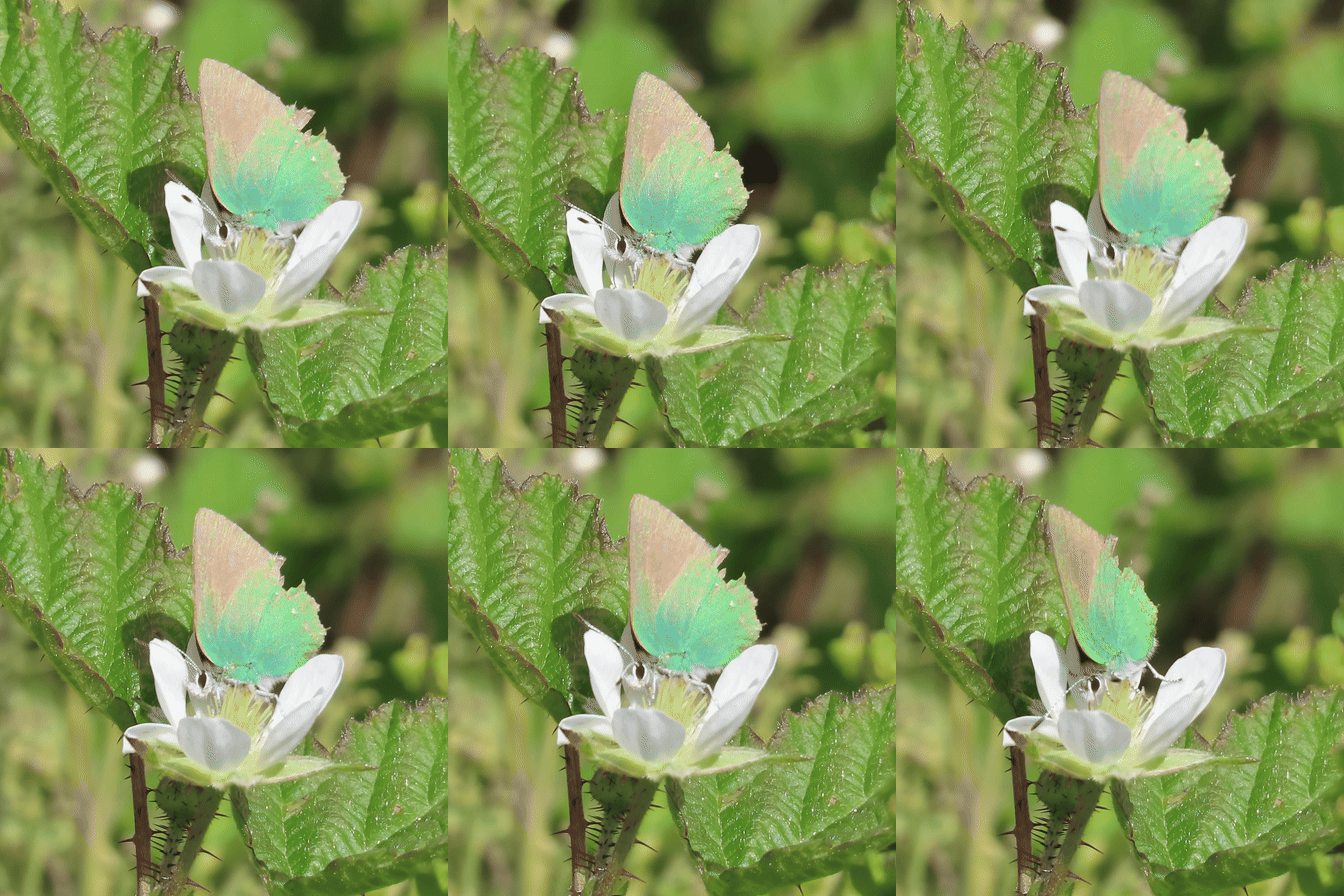
The Coastal Green Hairstreak lives only in California, favoring coastal dunes, shrublands and oak woodlands. Adults sip nectar from beach-side flowers such as strawberry, sea thrift and western daisy, while larvae feed on several buckwheat species and sometimes lotus. Eggs are light green and laid singly on host leaves; caterpillars turn reddish before pupating in leaf litter at the plant’s base.
Source: Wikipedia
How to recognize it
Young caterpillars are whitish with pink spots and become reddish just before they pupate.
Source: Wikipedia
Where it lives
You can find this butterfly in coastal dunes, shrublands and oak woodlands.
Source: Wikipedia
Where it comes from
It is endemic to California.
Source: Wikipedia
Where it is found in the US
Recorded in 5 of 51 states and DC. Most records: California, Idaho, Arizona, Colorado, Oregon.
Darker = more records. Counts are museum and citizen-science records, not population size.
Source: GBIF
Months it is reported in the US
Source: GBIF
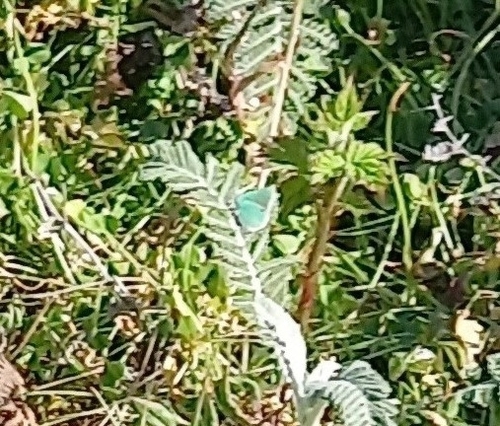
More photos
Questions people ask
Where does the Coastal Green Hairstreak live?
It is found only in California, especially in coastal dunes, shrublands and oak woodlands.
Source: Wikipedia
What do the caterpillars look like?
They start out whitish with pink markings and turn reddish just before they pupate.
Source: Wikipedia
What plants do the adults feed on?
Adults sip nectar from strawberry (Fragaria chiloensis), sea thrift (Armeria maritima) and western daisy (Erigeron glaucus).
Source: Wikipedia
What do the larvae eat?
Larvae feed on buckwheat species Eriogonum latifolium and Eriogonum nudum, and sometimes on Lotus scoparius.
Source: Wikipedia
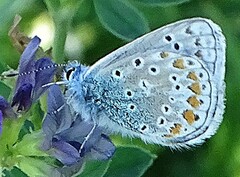
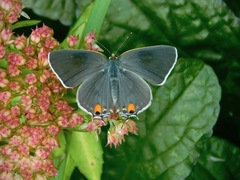
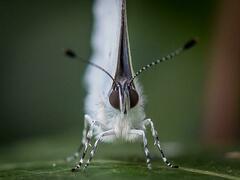
Same family (Lycaenidae)


Sources
- Wikipedia: https://en.wikipedia.org/wiki/Callophrys_viridis
Look it up elsewhere: GBIF · iNaturalist · BugGuide · Wikipedia
Text written 2026-10-24 from the sources above and checked sentence by sentence against them. Data fetched 2026-10-24.