 Bug FAQ
Clustered Midrib Gall Wasp
Andricus dimorphus · Order: Hymenoptera · Family: Cynipidae
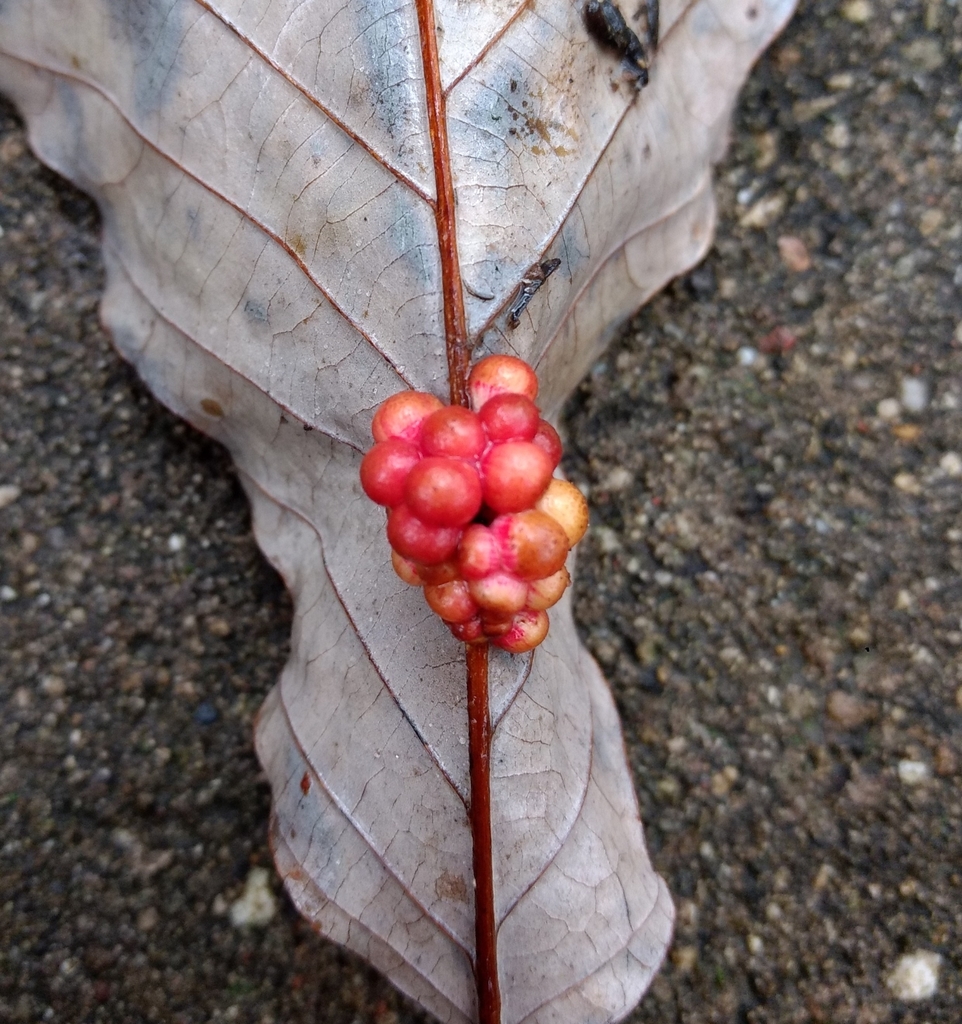
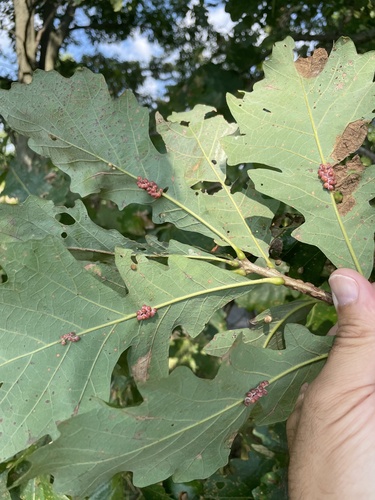
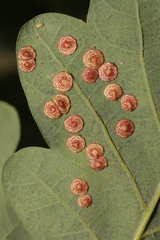
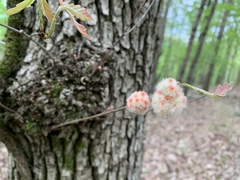
The wasp makes red-brown, globe-shaped galls with a pointed base that grow in clusters of up to fifty on the underside of oak leaf midribs in late summer. These galls appear where the larvae feed and later the adult wasps emerge the following year, sometimes sharing the galls with other insects.
Source: Wikipedia
How to recognize it
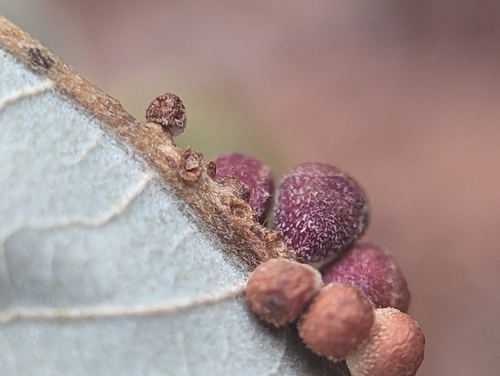
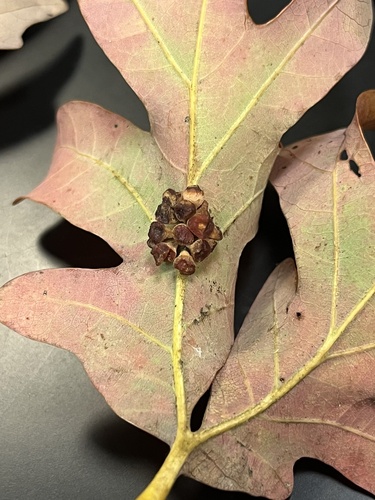
Clusters of up to 50 red-brown, globular galls with a pointed base form on the leaf midrib underside.
Source: Wikipedia
Where it lives
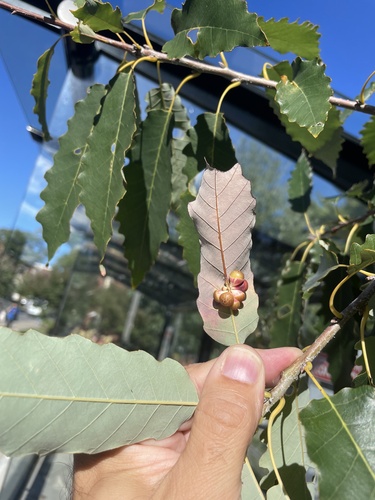
The galls develop on the underside of oak leaves along the midrib.
Source: Wikipedia
Life cycle
Adults emerge from the galls the next year, and the galls may also host inquilines and parasitoids.
Source: Wikipedia
When you see it
Galls are formed in late summer.
Source: Wikipedia
Where it is found in the US
Recorded in 48 of 51 states and DC. Most records: California, Texas, Virginia, Oregon, Florida, Massachusetts, Illinois, Ohio.
Darker = more records. Counts are museum and citizen-science records, not population size.
Source: GBIF
Status: native in North America; native in Canada; native in United States. Source: iNaturalist
Months it is reported in the US
Source: GBIF
More photos
Questions people ask
When do the galls appear?
The galls start forming in late summer on the underside of oak leaf midribs.
Source: Wikipedia
What happens to the galls after they form?
The larvae feed inside the galls, and adult wasps emerge from them the following year.
Source: Wikipedia
Same family (Cynipidae)


Sources
- Wikipedia: https://en.wikipedia.org/wiki/Andricus_dimorphus
Look it up elsewhere: GBIF · iNaturalist · BugGuide · Wikipedia
Text written 2026-10-23 from the sources above and checked sentence by sentence against them. Data fetched 2026-10-22.