 Bug FAQ
Closterotomus biclavatus
Closterotomus biclavatus · Order: Hemiptera · Family: Miridae
Source: Wikipedia
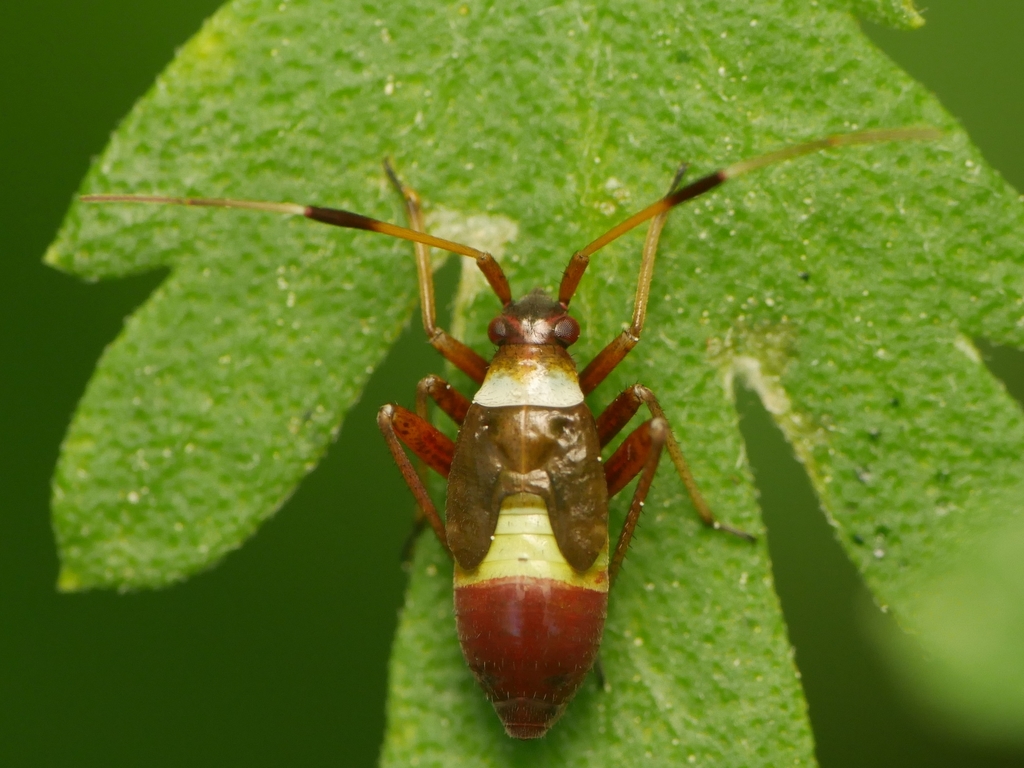
Closterotomus biclavatus is a small plant bug about 5.5 to 7 mm long in males and 6.5 to 7.6 mm in females. It lives on trees, bushes and forest edges across most of Europe and feeds on a variety of shrubs and trees, sometimes also on small insects. Adults appear from late June to September, with nymphs in June, and the species overwinters as eggs, producing one generation per year.
Source: Wikipedia
How to recognize it
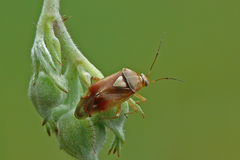
The tip of the second antenna segment is enlarged and darkened, which helps identify the species even when young.
Source: Wikipedia
Size
Males measure 5.5 to 7 mm and females 6.5 to 7.6 mm in length.
Source: Wikipedia
Where it lives
It prefers trees, bushes, wet forest edges and spruce forest margins.
Source: Wikipedia
What it eats
It feeds mainly on blackberries, birch, hazelnut, common honeysuckle, blueberry, common ash and occasionally on small insects.
Source: Wikipedia
Life cycle
It overwinters as eggs and produces a single generation each year.
Source: Wikipedia
When you see it
Nymphs are present in June, while adults are seen from late June through September.
Source: Wikipedia
Where it comes from
The bug is found throughout most of Europe.
Source: Wikipedia
Lookalikes
It belongs to the plant-bug family Miridae, subfamily Mirinae.
Source: Wikipedia
More photos

Questions people ask
How can I identify Closterotomus biclavatus?
Look for the enlarged, darkened tip of the second antennal segment; the bug is also about 6 mm long.
Source: Wikipedia
When will I see these bugs?
Nymphs appear in June and adults are active from late June until September.
Source: Wikipedia
What plants does it damage?
It feeds on and can damage blackberries, birch, hazelnut, honeysuckle, blueberry and ash trees.
Source: Wikipedia
Where does it live?
It lives on trees, bushes, wet forest edges and spruce forest margins across most of Europe.
Source: Wikipedia
Same family (Miridae)
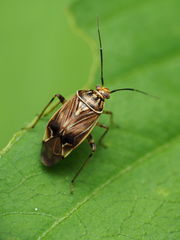 North American Tarnished Plant BugLygus lineolarisDamages trees, gardens or crops
 Red-spotted Plant BugDeraeocoris ruber
 Alfalfa Plant BugAdelphocoris lineolatusDamages trees, gardens or crops
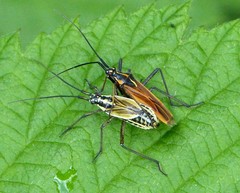 Meadow Plant BugLeptopterna dolabrataDamages trees, gardens or crops
 Four-lined Plant BugPoecilocapsus lineatusDamages trees, gardens or crops
 Lygus pratensisLygus pratensisDamages trees, gardens or crops
Sources
- Wikipedia: https://en.wikipedia.org/wiki/Closterotomus_biclavatus
Look it up elsewhere: GBIF · iNaturalist · BugGuide · Wikipedia
Text written 2026-10-22 from the sources above and checked sentence by sentence against them. Data fetched 2026-10-22.