 Bug FAQ
Clodius Parnassian
Parnassius clodius · Order: Lepidoptera · Family: Papilionidae
Also called: American Apollo, Clodius Apollo
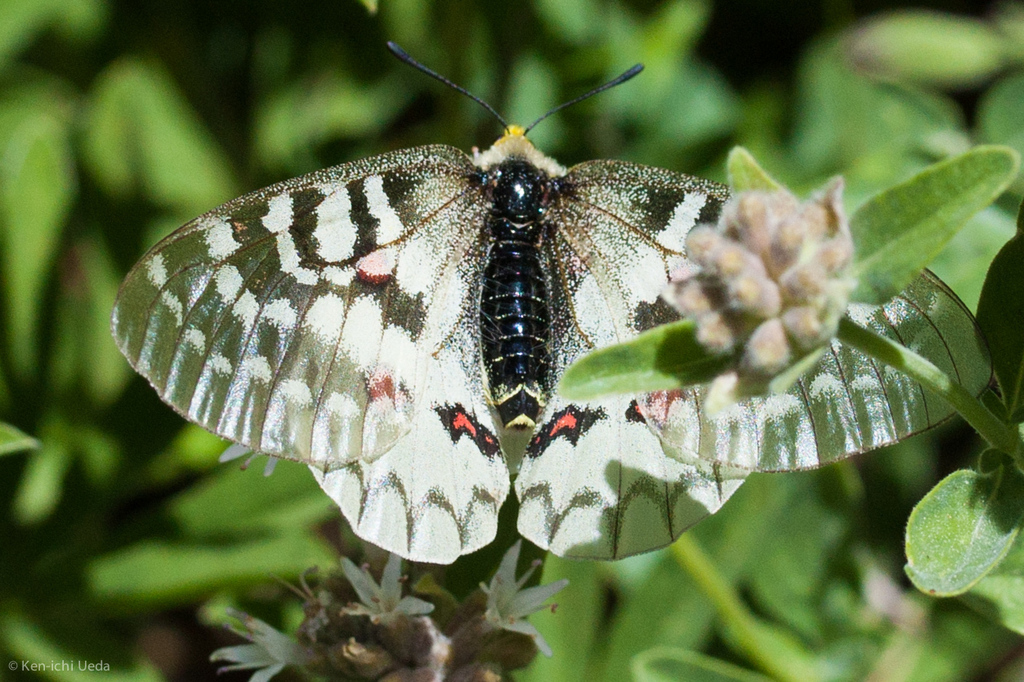
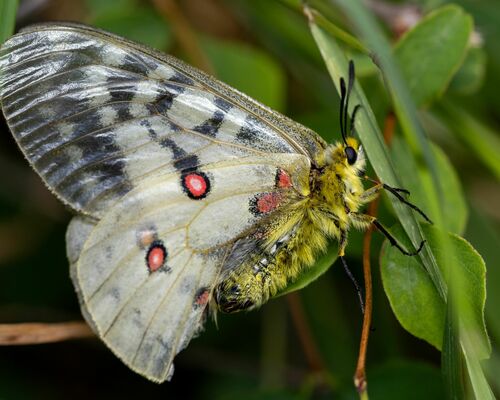
Clodius Parnassian butterflies are larger than average with broad marginal patterns on the forewing and a moderately elongated scale covering on the thorax and abdomen. Females have a white ground colour with a short costal band and a dusty connection to the hind-marginal spot, while males lack most hind-marginal spots and have reduced posterior ocelli. They live in moist meadow and redwood canyon habitats of the Santa Cruz Mountains and the broader Pacific Northwest of western North America.
Source: Wikipedia
How to recognize it
Females show a white base colour, a short costal band outside the cell linked to the hind-marginal spot by a dusty band, and a narrow glossy submarginal band on the forewing; males lack most hind-marginal spots and have reduced posterior ocelli.
Source: Wikipedia
Size
The species is larger than average with a broadened marginal pattern on the forewing. Its body is not heavily hairy; the scales on the thorax and abdomen are moderately elongated.
Source: Wikipedia
Where it lives
It prefers moist meadow habitats rich in flowering plants. It is found in the Santa Cruz Mountains of California, especially in redwood forests, well-lit canyon bottoms, and streams.
Source: Wikipedia
What it eats
Another recorded host plant is the Pacific bleeding-heart (Dicentra formosa).
Source: Wikipedia
Where it comes from
It is native to western North America, including British Columbia, Washington, Oregon, Nevada, and California. Its range includes the Pacific Northwest.
Source: Wikipedia
Lookalikes
It can be distinguished from similar species by its reduced and less sharp wing markings.
Source: Wikipedia
Where it is found in the US
Recorded in 10 of 51 states and DC. Most records: California, Oregon, Washington, Idaho, Utah, Wyoming, Montana, Colorado.
Darker = more records. Counts are museum and citizen-science records, not population size.
Source: GBIF
Status: native in North America; native in United States; native in Canada. Source: iNaturalist
Months it is reported in the US
Source: GBIF
More photos
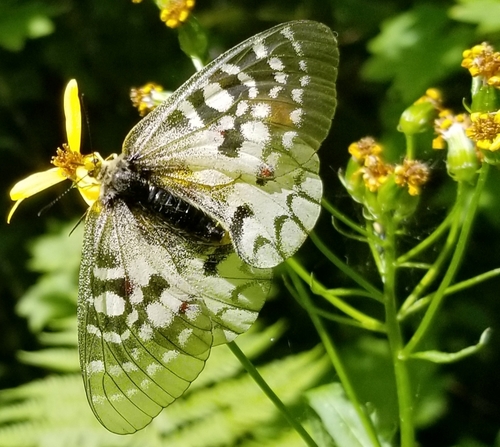
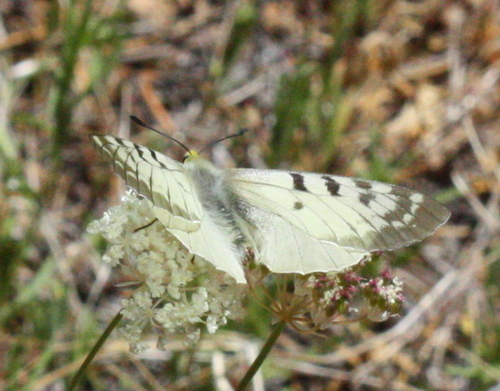
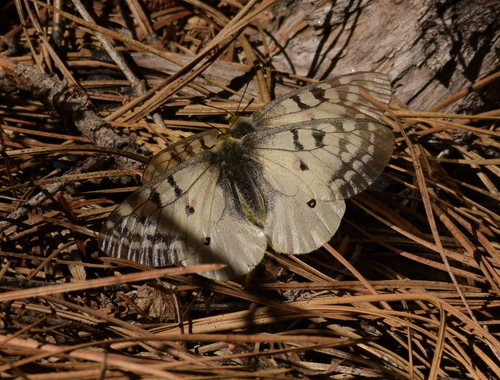
Questions people ask
How can I identify a Clodius Parnassian butterfly?
Look for a larger butterfly with broad marginal forewing patterns, a white ground colour in females with a short costal band, and generally reduced or missing hind-marginal spots and posterior ocelli.
Source: Wikipedia
Where does the Clodius Parnassian live?
It lives in moist meadows and redwood canyon habitats of the Santa Cruz Mountains and throughout the Pacific Northwest of western North America.
Source: Wikipedia
What plants do the larvae feed on?
The larvae feed on longhorn steer's head (Dicentra uniflora) and Pacific bleeding-heart (Dicentra formosa).
Source: Wikipedia
How does it differ from similar butterflies?
Its wing markings are reduced and less sharp compared with look-alike species.
Source: Wikipedia
Same family (Papilionidae)
Sources
- Wikipedia: https://en.wikipedia.org/wiki/Parnassius_clodius
Look it up elsewhere: GBIF · iNaturalist · BugGuide · ITIS · Wikipedia
Text written 2026-10-23 from the sources above and checked sentence by sentence against them. Data fetched 2026-10-23.