 Bug FAQ
Clipper
Parthenos sylvia · Order: Lepidoptera · Family: Nymphalidae
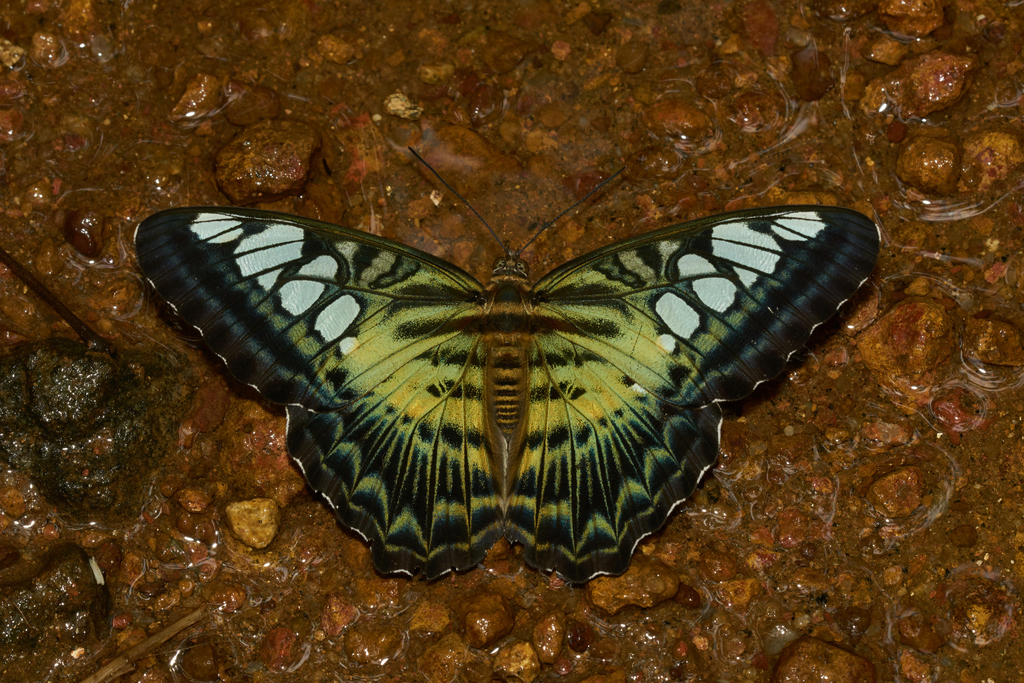
The clipper butterfly has large, broad wings that are triangular with a slightly curved costa and a rounded apex. Its larvae are cylindrical, pale-green with yellowish-white side stripes and bear short spines on the head and anal segment.
Source: Wikipedia
How to recognize it
Forewings are triangular; the costa is only slightly curved, the apex is rounded, and the outer margin is oblique and slightly scalloped.
Source: Wikipedia
Size
The butterfly has large, broad wings and a stout body with a short abdomen.
Source: Wikipedia
Where it lives
It is found in forested regions of South and Southeast Asia. The clipper flies fast, flapping its wings stiffly between horizontal and a few degrees below, and may glide between flaps.
Source: Wikipedia
What it eats
Larvae are pale green with yellowish-white lateral stripes and have short spines on the head and anal segment.
Source: Wikipedia
Life cycle
The pupa is brown and boat-shaped.
Source: Wikipedia
Lookalikes
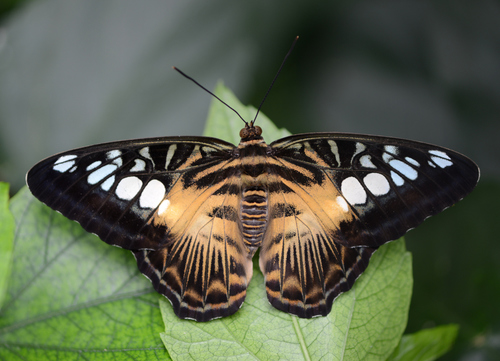
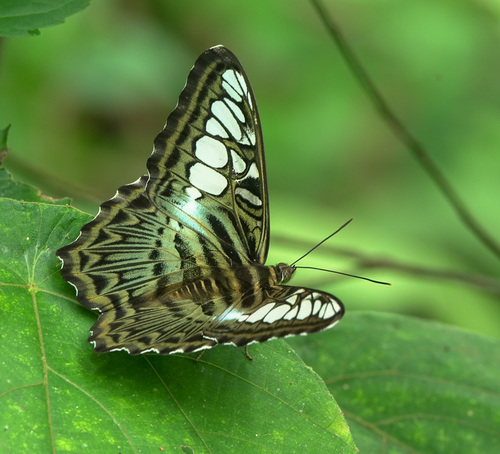
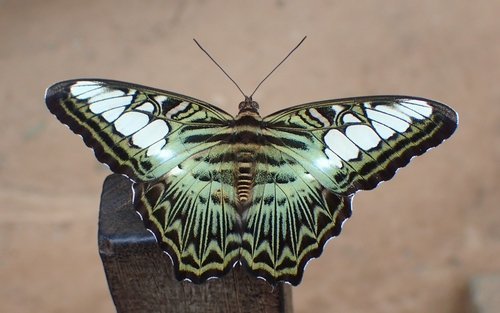
Different forms or subspecies of the clipper look very similar to each other.
Source: Wikipedia
Where it is found in the US
Recorded in 4 of 51 states and DC. Most records: New York, Maryland, Ohio, Arizona.
Darker = more records. Counts are museum and citizen-science records, not population size.
Source: GBIF
More photos
Questions people ask
How can I identify a clipper butterfly?
Look for large, broad, triangular forewings with a slightly curved costa, rounded apex, and a slightly scalloped outer margin.
Source: Wikipedia
What do clipper caterpillars look like?
The caterpillars are cylindrical, pale green with yellowish-white side stripes, and have short spines on the head and anal segment.
Source: Wikipedia
Same family (Nymphalidae)






Sources
- Wikipedia: https://en.wikipedia.org/wiki/Parthenos_sylvia
Look it up elsewhere: GBIF · iNaturalist · BugGuide · Wikipedia
Text written 2026-10-22 from the sources above and checked sentence by sentence against them. Data fetched 2026-10-22.