 Bug FAQ
Clemens' False Skeletonizer
Acoloithus falsarius · Order: Lepidoptera · Family: Zygaenidae
Also called: Clemens' False Skeletonizer Moth
Source: Wikipedia
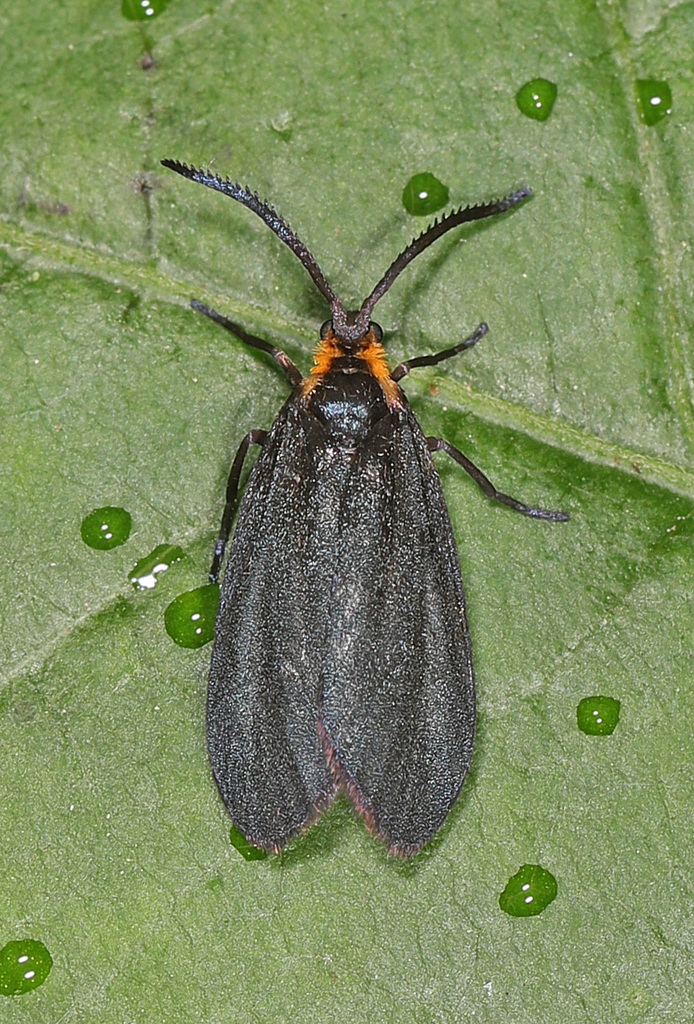
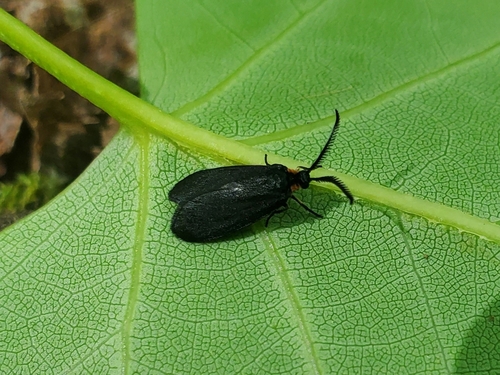
Adults have a wingspan of about 15 mm and a body length of 9 to 10 mm. They are black with a broken orange collar and live in North America. Larvae feed on grape-vine (Vitis) and Ampelopsis species, and in Florida they produce two generations each year.
Source: Wikipedia
How to recognize it
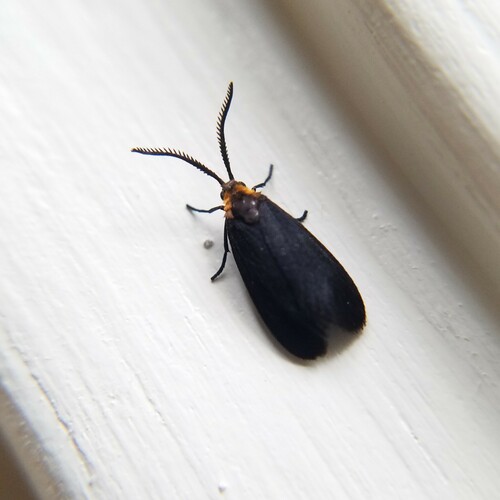
The moth is black with a broken orange collar around the thorax.
Source: Wikipedia
Size
Adults have a wingspan of roughly 15 mm and a body length of 9 to 10 mm.
Source: Wikipedia
Where it lives
It occurs throughout North America.
Source: Wikipedia
What it eats
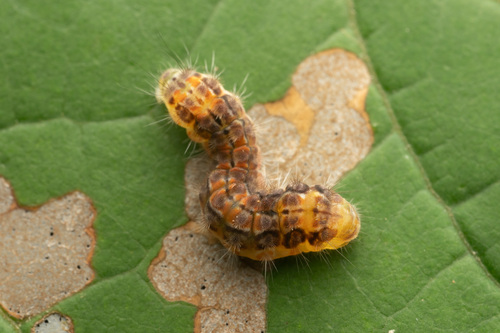
Larvae feed on plants in the Vitis and Ampelopsis genera.
Source: Wikipedia
Life cycle
In Florida the species has two generations per year.
Source: Wikipedia
Where it comes from
Its native range is North America.
Source: Wikipedia
Where it is found in the US
Recorded in 29 of 51 states and DC. Most records: Alabama, North Carolina, Texas, Virginia, Georgia, Maryland, Ohio, Vermont.
Darker = more records. Counts are museum and citizen-science records, not population size.
Source: GBIF
Status: native in North America; native in United States; native in Canada. Source: iNaturalist
Months it is reported in the US
Source: GBIF
More photos
Questions people ask
What plants do the larvae eat?
The larvae feed on grape-vine (Vitis) and Ampelopsis species.
Source: Wikipedia
How many generations are produced each year?
In Florida the moth produces two generations per year.
Source: Wikipedia
How big are the adult moths?
Adults have a wingspan of about 15 mm and a length of 9 to 10 mm.
Source: Wikipedia
Same family (Zygaenidae)

Sources
- Wikipedia: https://en.wikipedia.org/wiki/Acoloithus_falsarius
Look it up elsewhere: GBIF · iNaturalist · BugGuide · Wikipedia
Text written 2026-10-24 from the sources above and checked sentence by sentence against them. Data fetched 2026-10-24.