 Bug FAQ
Six-spot Burnet
Zygaena filipendulae · Order: Lepidoptera · Family: Zygaenidae
Also called: 6-spot Burnet
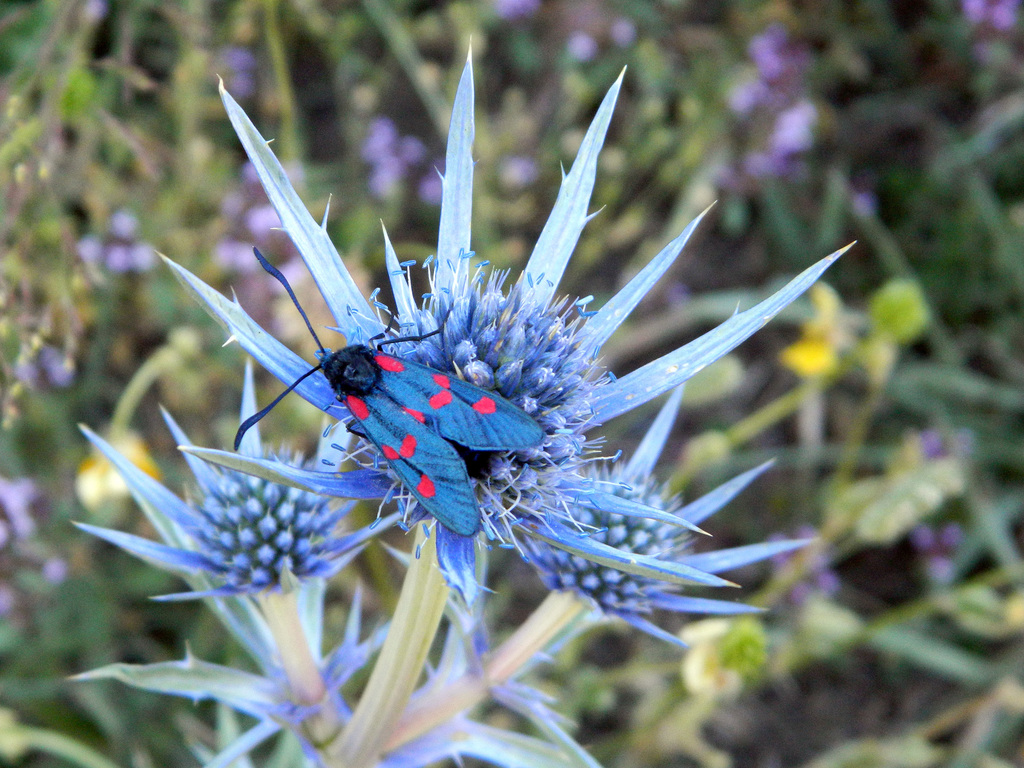
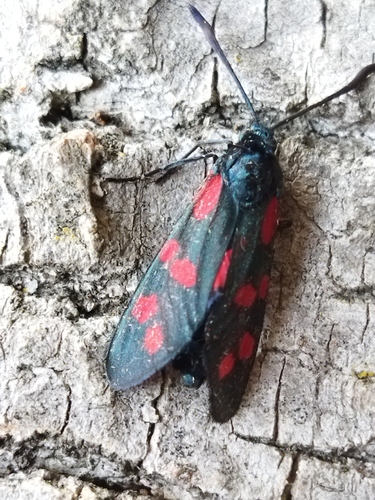
The six-spot burnet is a medium-sized moth with a wingspan of about 30 to 40 mm and bright metallic green forewings marked with six red spots; the hindwings are red with a dark fringe. It lives in sunny meadows, woodland clearings, sea-cliffs and other grass-rich places up to 2000 m altitude across most of Europe and parts of western Asia.
Source: Wikipedia
Size
Wingspan ranges from 30 to 40 mm (1.2 to 1.6 in).
Source: Wikipedia
Does it bite or sting?
When threatened it releases a cyanide-containing liquid, making it toxic to predators such as birds and lizards.
Source: Wikipedia
What it eats
Adults feed on many flowers such as knapweed and scabious; larvae eat bird’s-foot trefoil, Coronilla and clover.
Source: Wikipedia
Lookalikes
Merged spots can cause confusion with the five-spot burnet.
Source: Wikipedia
More photos
Questions people ask
What do six-spot burnet moths look like?
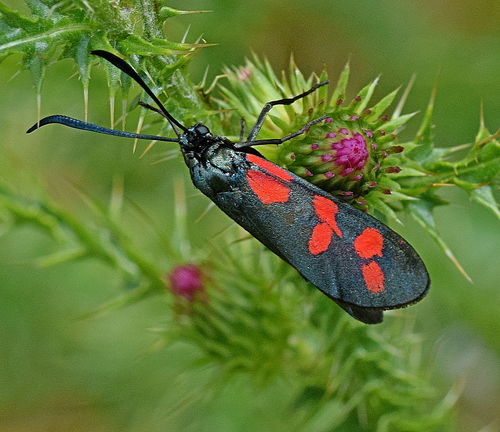
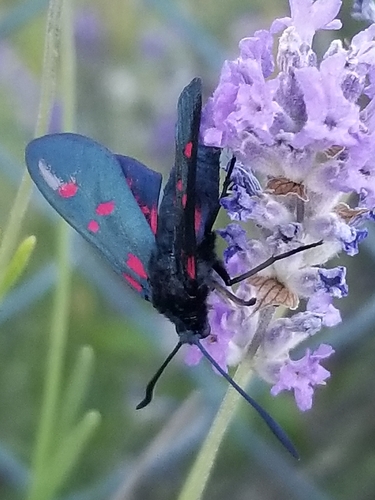
They have metallic green forewings with six red spots and red hindwings edged in black.
Source: Wikipedia
When can I see adult six-spot burnets?
Adults fly on warm, sunny days between June and August.
Source: Wikipedia
Where do six-spot burnets live?
They inhabit meadows, woodland clearings, sea-cliffs and other grassy areas up to 2000 m altitude across most of Europe and parts of western Asia.
Source: Wikipedia
Same family (Zygaenidae)
Sources
- Wikipedia: https://en.wikipedia.org/wiki/Six-spot_burnet
Look it up elsewhere: GBIF · iNaturalist · BugGuide · Wikipedia
Text written 2026-10-22 from the sources above and checked sentence by sentence against them. Data fetched 2026-10-22.