 Bug FAQ
Western Grapeleaf Skeletonizer Moth
Harrisina metallica · Order: Lepidoptera · Family: Zygaenidae
Also called: Western Grapeleaf Skeletonizer
Source: Wikipedia
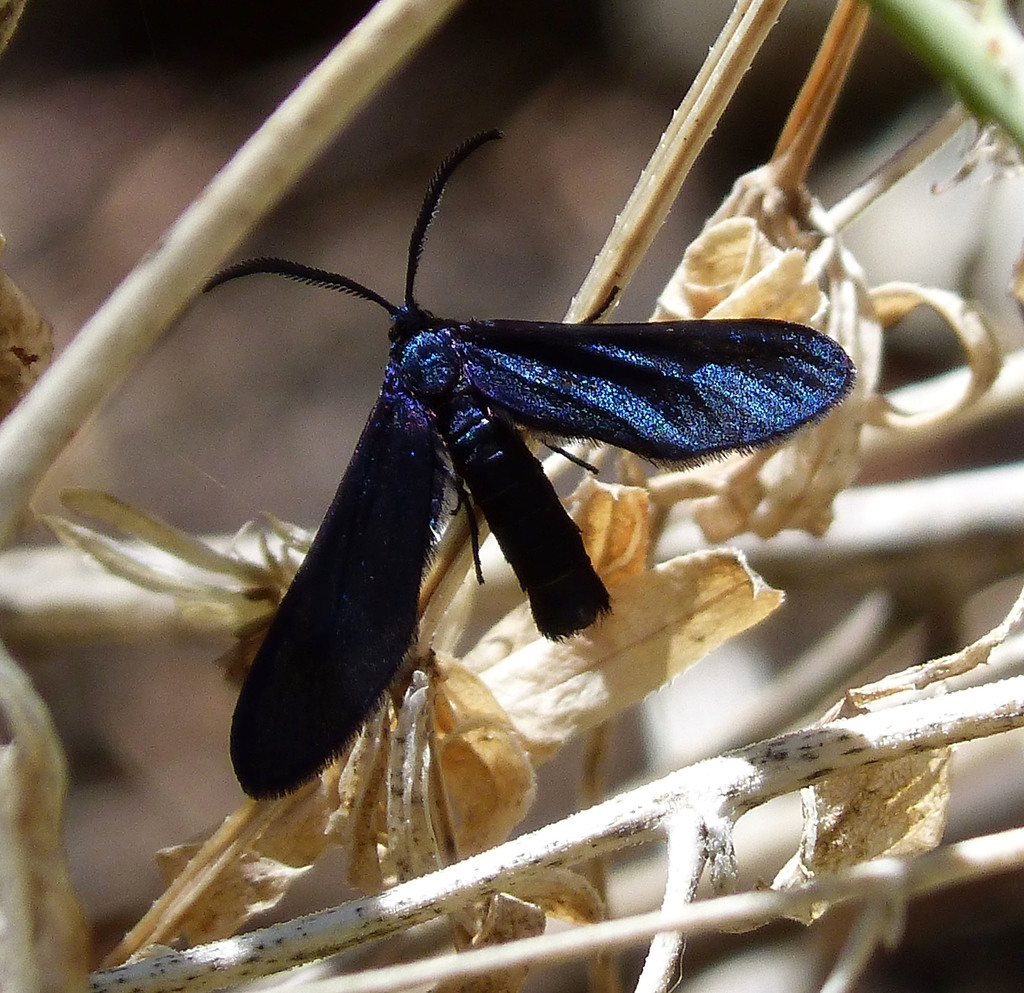
Its larvae feed on grapes and related vines, stripping leaves and reducing crop yields, and their hairs can irritate skin. Adults are active from spring through fall and can be controlled with an organically certified bacteria-based insecticide.
Source: Wikipedia
How to recognize it
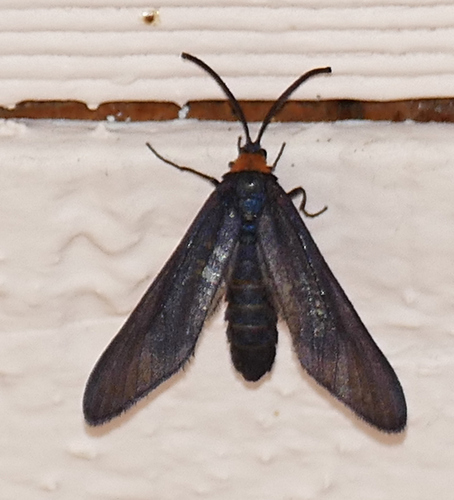
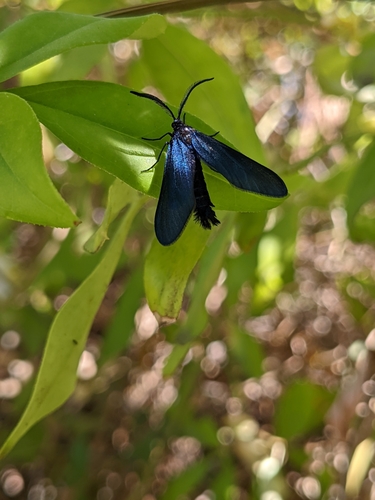
The western grapeleaf skeletonizer is a moth species in the family Zygaenidae.
Source: Wikipedia
Size
Its wingspan ranges from 22 to 30 mm (about 0.9 to 1.2 inches).
Source: Wikipedia
Is it a pest in the house?
They are considered a pest in grape vineyards, lowering the season’s crop yield.
Source: Wikipedia
Does it bite or sting?
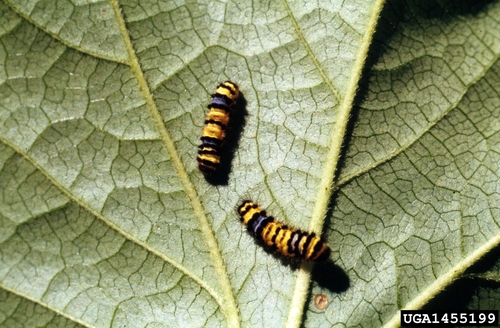
The caterpillars have stinging hairs that can cause a rash or allergic reaction on skin.
Source: Wikipedia
How to get rid of it
A bacteria-based insecticide that is organically certified can effectively control infestations.
Source: Wikipedia
What it eats
The caterpillars feed on grapes and on vines of the genus Parthenocissus.
Source: Wikipedia
Life cycle
Adult moths are on the wing from April through October, depending on location.
Source: Wikipedia
When you see it
They are active during the warmer months, roughly April to October.
Source: Wikipedia
Where it comes from
Its native range includes the southwestern United States and northern Mexico.
Source: Wikipedia
Where it is found in the US
Recorded in 9 of 51 states and DC. Most records: Arizona, California, New Mexico, Colorado, Nevada, Texas, Utah, Wyoming.
Darker = more records. Counts are museum and citizen-science records, not population size.
Source: GBIF
Status: native in North America; native in United States. Source: iNaturalist
Months it is reported in the US
Source: GBIF
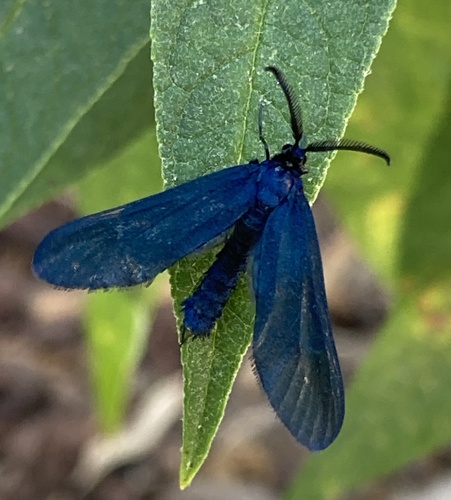
More photos
Questions people ask
How do I get rid of western grapeleaf skeletonizer?
Use an organically certified bacteria-based insecticide to treat the vines.
Source: Wikipedia
When are the adults active?
Adults are on the wing from April through October, varying by region.
Source: Wikipedia
Do the caterpillars sting?
Yes, their hairs can cause skin rash or allergic reactions.
Source: Wikipedia
What do the larvae eat?
They feed on grape leaves and on vines of Parthenocissus species.
Source: Wikipedia
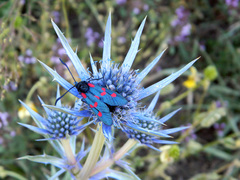
Same family (Zygaenidae)
Sources
- Wikipedia: https://en.wikipedia.org/wiki/Harrisina_metallica
Look it up elsewhere: GBIF · iNaturalist · BugGuide · Wikipedia
Text written 2026-10-24 from the sources above and checked sentence by sentence against them. Data fetched 2026-10-24.