 Bug FAQ
Chinese Yellow Swallowtail
Papilio xuthus · Order: Lepidoptera · Family: Papilionidae
Also called: Asian Swallowtail, Asian Yellow Swallowtail, Chinese Swallowtail, Japanese Swallowtail
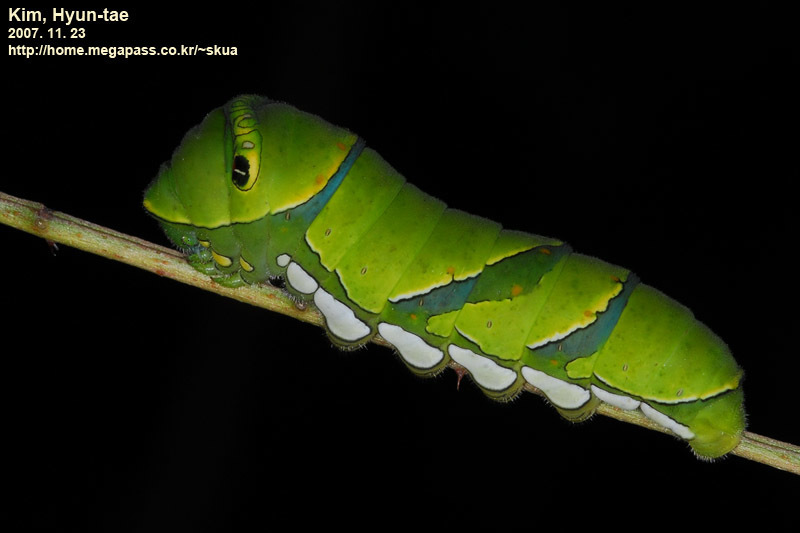
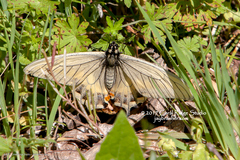
The Asian swallowtail is a medium-large yellow butterfly with a 90 to 110 mm wingspan and black markings on yellow wings. It lives in urban, suburban, woodland and orchard areas across northeast Asia, including China, Korea, Japan and nearby regions. Adults fly from May to August, and males search through foliage for mates during this period.
Source: Wikipedia
How to recognize it
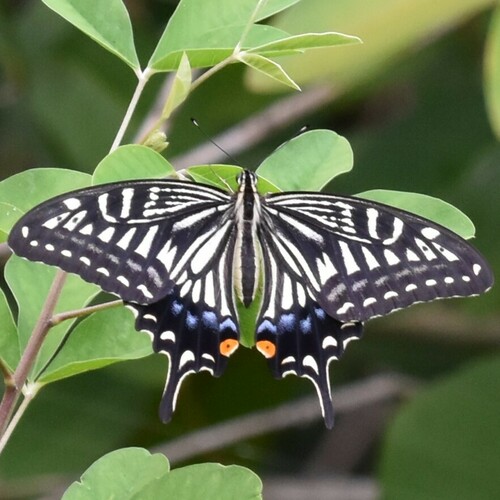
Its typical pattern is black markings on a yellow background.
Source: Wikipedia
Size
Wingspan ranges from 90 to 110 mm.
Source: Wikipedia
Where it lives
Found in cities, suburbs, woods and orange orchards. Preyed upon by tree crickets, ants and various wasps.
Source: Wikipedia
What it eats
Adults use color vision to locate Rutaceae plants for nectar.
Source: Wikipedia
Life cycle
Females typically mate more than once, increasing genetic diversity of offspring.
Source: Wikipedia
When you see it
Flight period runs from May through August. Males fly among tree foliage while searching for mates.
Source: Wikipedia
Lookalikes
Females have broader marginal bands on the hindwing than males.
Source: Wikipedia
Where it is found in the US
Recorded in 1 of 51 states and DC. Most records: Hawaii.
Darker = more records. Counts are museum and citizen-science records, not population size.
Source: GBIF
Status: introduced in United States. Source: iNaturalist
Months it is reported in the US
Source: GBIF
More photos

Same family (Papilionidae)

Sources
- Wikipedia: https://en.wikipedia.org/wiki/Papilio_xuthus
Look it up elsewhere: GBIF · iNaturalist · BugGuide · ITIS · Wikipedia
Text written 2026-10-22 from the sources above and checked sentence by sentence against them. Data fetched 2026-10-22.